
Introduction
Have you ever wondered why horse bridles are so crucial in horse riding? Whether you’re a seasoned rider or just starting out, the right bridle can make all the difference in your connection with your horse. Horse bridles are not just accessories; they are essential tools that play a significant role in communication and control between you and your horse. Without the proper bridle, even the most well-trained horse may not respond as intended, leading to frustration and potential safety issues.
In this blog, we’ll explore different types of horse bridles and break down their parts, explaining how each component contributes to a better riding experience. In the end, you’ll know exactly what to look for in a bridle to ensure it suits both your needs and your horse’s comfort, setting you up for more enjoyable and effective rides.
What Are Horse Bridles?
Basic Definition of Horse Bridles
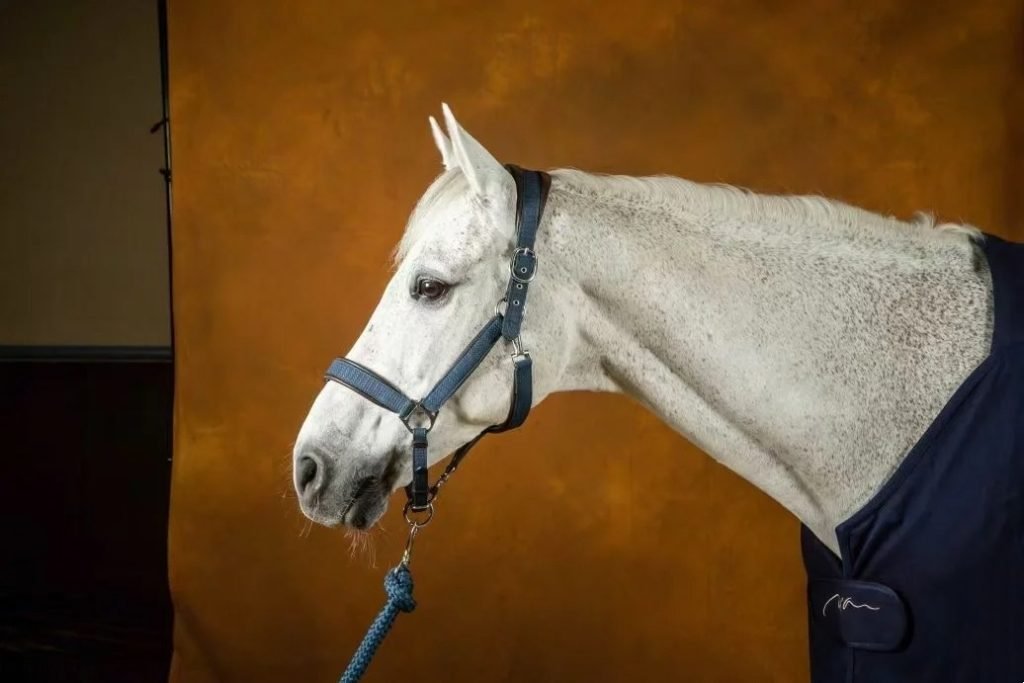
A horse bridle is the most essential piece of tack used in horse riding. Simply put, it’s a set of straps that fit over the horse’s head, connecting to the bit and reins. The primary function of a bridle is to allow the rider to communicate with and control the horse. When you gently pull on the reins, the bridle helps transmit signals through the bit in the horse’s mouth, guiding the horse’s movements.
Without a well-fitting and appropriate bridle, it’s nearly impossible to achieve the level of control and communication needed for safe and effective riding. Think of it as the steering wheel of a car—without it, you’re not going anywhere, or at least not where you intend to go.
Sizes and Fitting of Horse Bridles
When it comes to horse bridles, one size doesn’t fit all. They come in various sizes to accommodate different breeds and head shapes. Here’s a quick breakdown:
- Pony Size: Designed for smaller ponies with more petite head shapes.
- Cob Size: Suited for medium-sized horses, often used for breeds with shorter heads.
- Horse (Full) Size: Standard size for most average-sized horses.
- Oversized: Also known as “Warmblood” size, for larger horses with bigger heads.
Getting the right size is crucial. A poorly fitted bridle can cause discomfort, leading to miscommunication between you and your horse. For instance, if a bridle is too tight, it can pinch the horse’s skin or rub against sensitive areas, making it hard for the horse to respond to your commands. On the other hand, if it’s too loose, it might slip, causing you to lose control at a critical moment.
A well-fitted bridle should sit snugly on the horse’s head without pinching or creating pressure points. The bit should rest comfortably in the horse’s mouth, and the reins should allow you to maintain gentle, clear contact. As the saying goes, “A happy horse is a responsive horse,” and getting the fit right is a big part of that happiness.
By understanding these basic elements, you’ll be better equipped to choose a horse bridle that not only suits your horse but also enhances your overall riding experience.
Types of Horse Bridles
Understanding the different types of horse bridles is key to choosing the right one for your riding style and your horse’s comfort. Let’s dive into the two main categories: English bridles and Western bridles.
English Horse Bridles
English horse bridles are commonly used in English riding disciplines like dressage, jumping, and eventing. These bridles are designed with a focus on precision and control, which is crucial in competitive and technical riding.
- Snaffle Bridles:
- The most basic and widely used type of riding is in English.
- It consists of a single bit (the snaffle) and a simple arrangement of straps.
- Snaffle bridles are favored for their direct and straightforward communication between the rider’s hands and the horse’s mouth.
- Double Bridles:
- Used primarily in higher-level dressage.
- Includes two bits: a snaffle and a curb, each with its own set of reins.
- This setup provides the rider with more nuanced control over the horse, allowing for more refined movements and adjustments.
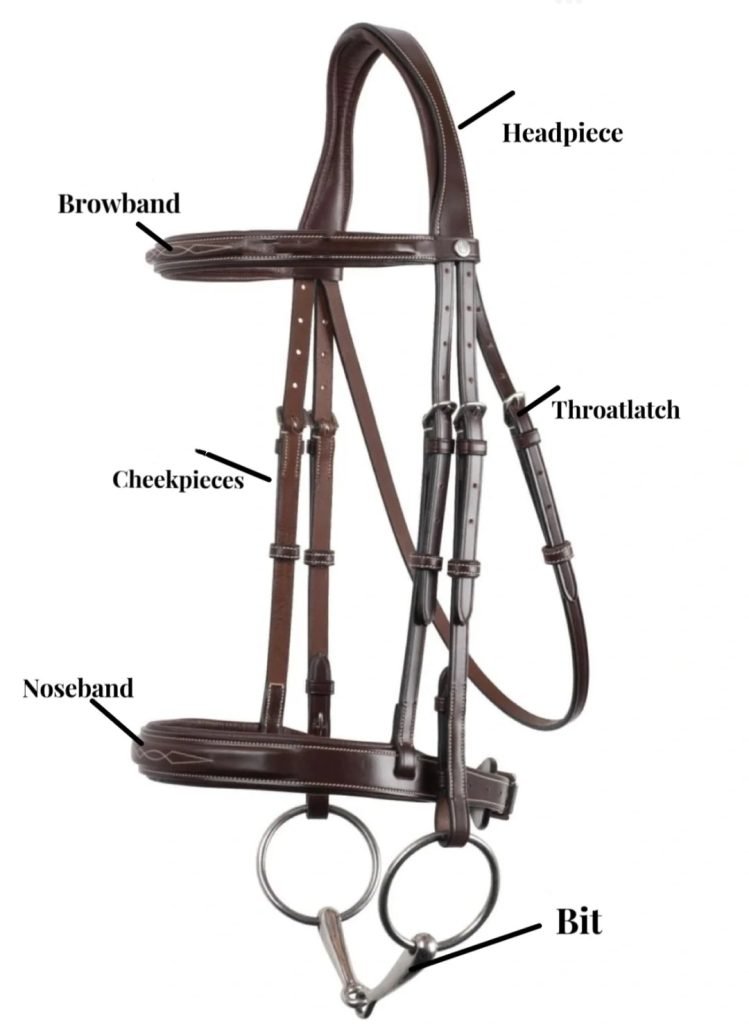
English bridles typically include a browband, noseband, and throatlatch, all designed to keep the bridle securely in place while providing a structured, clean appearance.

Western Horse Bridles
Western horse bridles are used in Western riding disciplines like reining, roping, and barrel racing. These bridles are more minimalist, often lacking some of the components that are standard in English bridles.
- One-Ear and Two-Ear Bridles:
- Common in Western riding, these bridles feature a simple headstall with a single or double loop over one or both ears.
- They do not have a browband or noseband, offering more freedom and flexibility for the horse.
- Split-Ear Bridles:
- A variation of the one-ear design, where the ear loop is split, giving the bridle a distinctive look while still maintaining functionality.
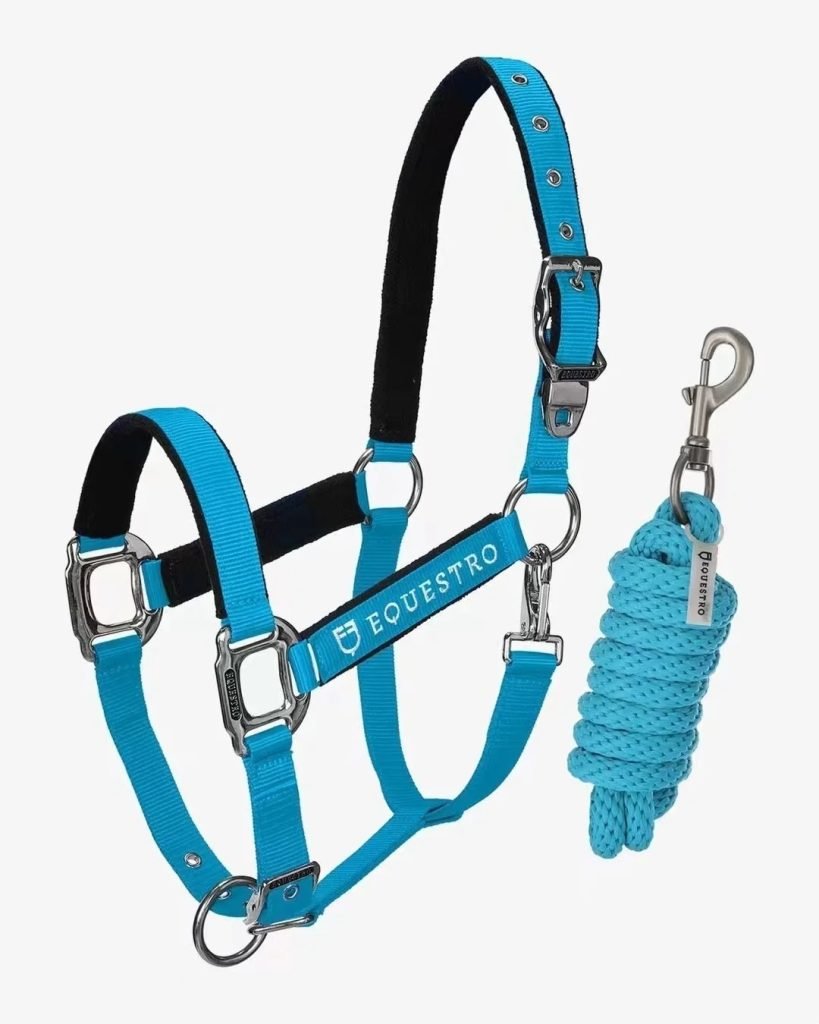
Western bridles generally lack the nosebands and browbands found in English bridles, giving them a more open and unrestricted design. This simplicity aligns with the practical, working nature of Western riding, where comfort and quick adjustments are key.
To order a bridle, please browse our collection by clicking this link.
Comparison of English vs. Western Horse Bridles
While both English and Western horse bridles serve the same fundamental purpose, they cater to different riding styles and requirements.
- Structure: English bridles are more structured and often include additional components like nosebands and browbands, which help keep the bridle secure and give it a polished look. Western bridles are simpler and less restrictive, designed for ease of use and practicality.
- Use: English bridles are used in disciplines that require precise communication and control, making them ideal for competitive riding. Western bridles, with their relaxed fit, are perfect for the more laid-back and utilitarian aspects of Western riding.
- Comfort: Western bridles are often preferred for longer rides, as they place less pressure on the horse’s head. English bridles, while secure and precise, can be more restrictive, making them better suited for shorter, more intense riding sessions.
Each type of horse bridle aligns with the specific needs of different riding disciplines, so choosing the right one depends on your riding style and horse’s comfort.
Parts of an English Horse Bridle
When it comes to English horse bridles, understanding the different components is essential for ensuring proper fit, comfort, and control. Each part plays a specific role in how the bridle functions and communicates with your horse. Let’s break down the key parts of an English horse bridle.
Crownpiece
The crownpiece is the central part of the bridle, running over the top of the horse’s head and holds everything together. It connects to the cheekpieces, browband, and noseband, ensuring the bridle stays in place. A well-fitted crownpiece is crucial as it evenly distributes pressure across the horse’s poll, which is a sensitive area just behind the ears.
Browband
The browband runs across the horse’s forehead, just below the ears, and attaches to the crownpiece. Its main function is to prevent the bridle from sliding back towards the neck. The browband ensures the bridle stays correctly positioned, which is essential for maintaining control and comfort. Many riders also choose decorative browbands, adding a personal touch to their horse’s gear.
Noseband
The noseband wraps around the horse’s nose and plays a significant role in keeping the horse’s mouth closed, preventing it from opening wide or crossing its jaw. This part of the bridle is particularly important for maintaining control, especially in disciplines like dressage where precision is key.
Cavesson
A cavesson is a specific type of noseband, often used in dressage. It sits higher on the horse’s nose than a standard noseband and is designed to apply even pressure across the face. The cavesson helps in refining communication between the rider and the horse, allowing for more precise commands and responses.
Throatlatch
The throatlatch is a strap that goes under the horse’s throat, connecting to the crownpiece. Its purpose is to ensure that the bridle doesn’t slip off over the horse’s head. While it’s not supposed to be tight, it should be snug enough to keep the bridle secure during riding.
Cheekpieces
Cheekpieces are the straps that run down the sides of the horse’s face, connecting the crownpiece to the bit. They play a critical role in aligning the bit correctly in the horse’s mouth. Properly adjusted cheekpieces are essential for effective communication between the rider and the horse.
Reins
The reins are the rider’s direct link to the horse, connecting from the bit to the rider’s hands. They come in various materials, such as leather or synthetic, and are available in different lengths and widths to suit various disciplines. The reins allow the rider to give subtle signals, guiding the horse’s movements with precision.
Bit
The bit is perhaps the most crucial component, as it sits inside the horse’s mouth and directly influences its movement. Bits come in various styles, each designed to suit different horses and riding techniques. The bit’s placement and the rider’s use of the reins determine how effectively the horse responds to commands.
Flash
The flash is a small strap that attaches to the noseband and runs down to stabilize the bit. It helps prevent the horse from opening its mouth too wide and crossing its jaw, thus ensuring better control. The flash is particularly useful in situations where extra stability is needed, such as in competitive riding.
Each part of the English horse bridle has a specific purpose, and together, they create a system that enhances communication, control, and comfort during riding. Understanding these components will help you make more informed decisions about your horse’s gear and improve your overall riding experience.
Types of English Horse Bridles
Understanding the different types of English horse bridles is key to choosing the right one for your riding discipline and your horse’s comfort. Each type of bridle has unique features designed to meet specific needs in various equestrian activities. Let’s dive into the most common types of English horse bridles.
Jumping/Snaffle Bridles
Jumping or Snaffle bridles are among the most commonly used types in English riding, especially in jumping disciplines. These bridles are designed for versatility and simplicity, typically featuring a plain or raised browband and a simple cavesson noseband. The focus here is on allowing clear communication with the horse without too much restriction, which is crucial for the agility required in jumping.
- Common Uses: Show jumping, general riding.
- Features: A simple design with a snaffle bit, allowing for clear and direct communication between the rider and horse.
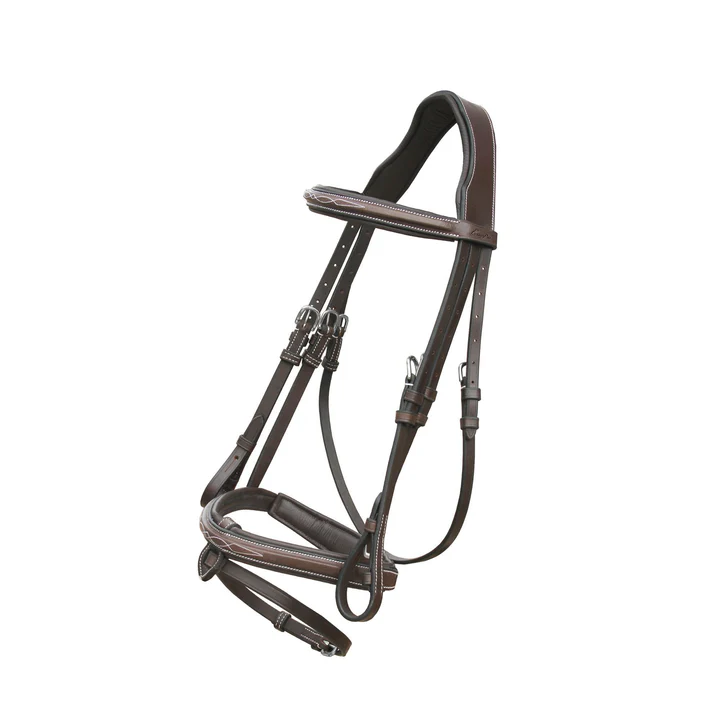
Dressage/Crank Bridles
Dressage or Crank bridles are specifically designed for the precision and finesse required in dressage. These bridles often feature a padded crank noseband that offers more control by applying even pressure around the horse’s nose. This design helps keep the horse’s mouth closed and encourages a relaxed jaw, which is essential for refined movements in dressage.
- Design: Wider and more padded noseband, often with a crank mechanism.
- Purpose: To provide better control and promote a relaxed jaw during intricate movements of dressage.
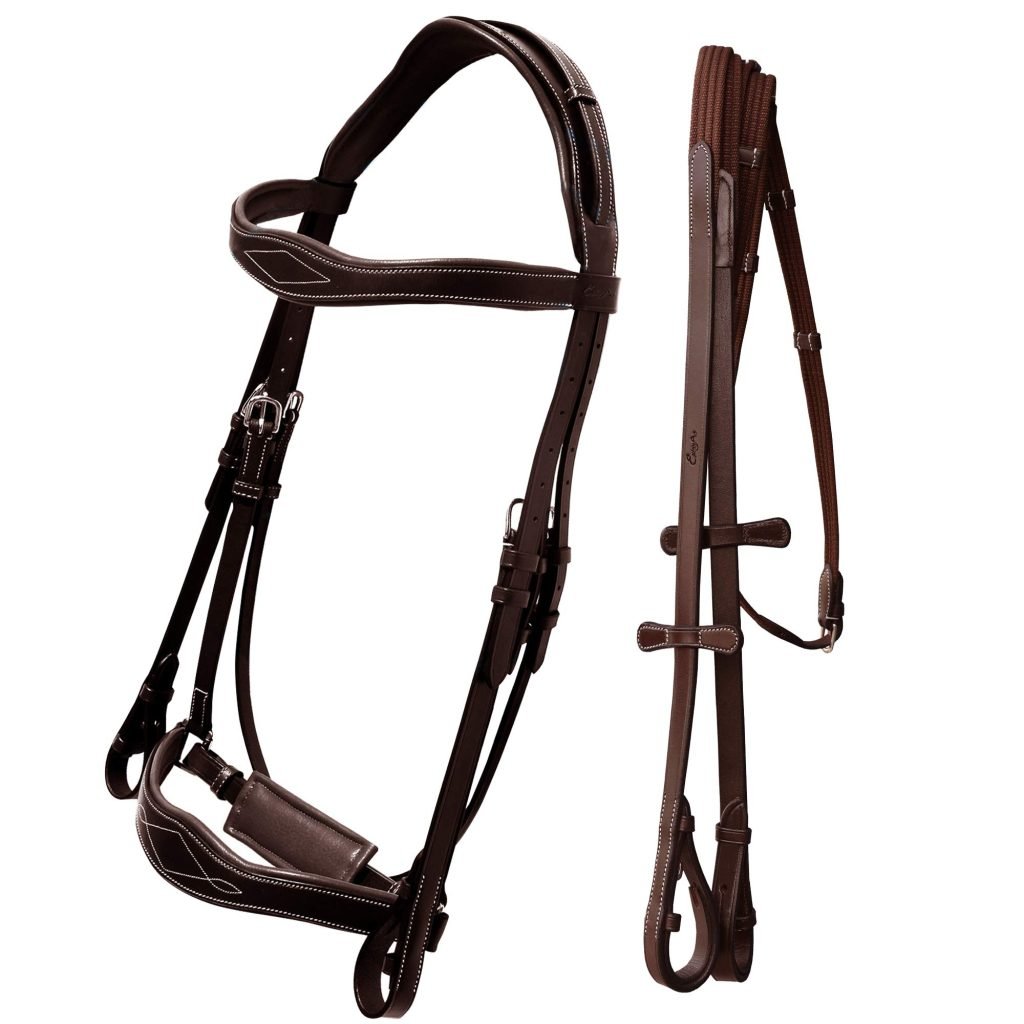
Figure 8/Mexican/Grackle Bridles
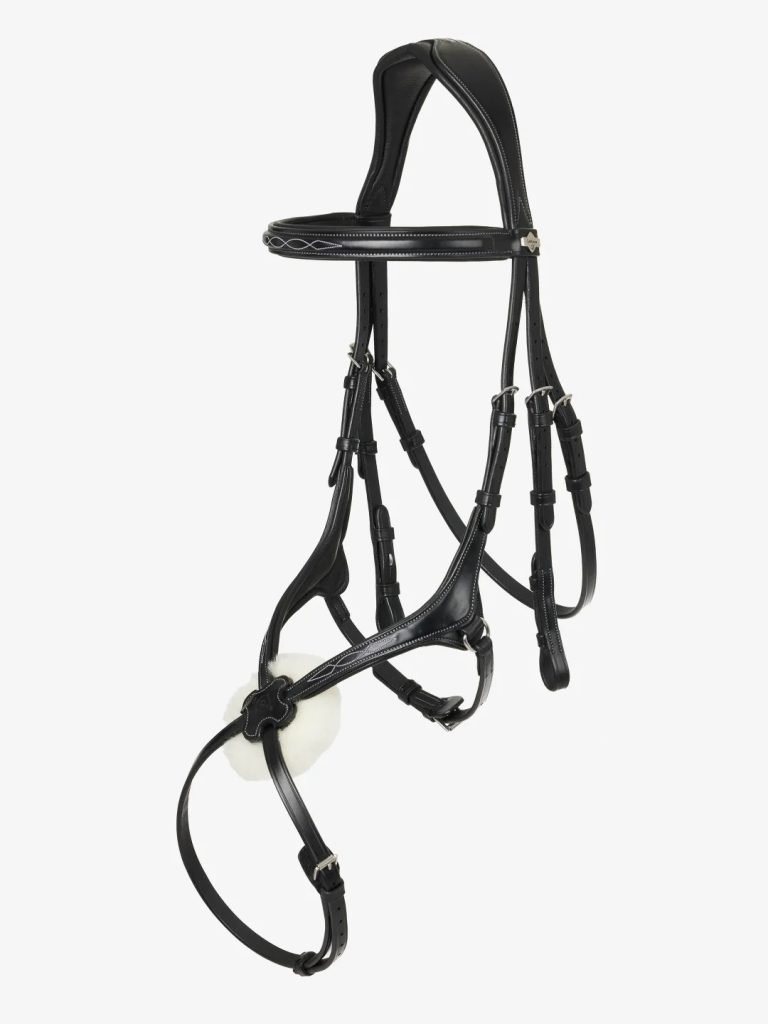
The Figure 8, Mexican, or Grackle bridles are designed to keep the horse’s mouth closed, particularly effective for horses that tend to cross their jaws or resist the bit. The unique figure-eight pattern across the nose provides a secure fit, ensuring that the horse remains responsive to the rider’s commands.
- Structure: The noseband crosses over the nose in a figure-eight pattern.
- Usage: Often used in eventing, cross-country, or with horses that require extra control to prevent jaw-crossing.
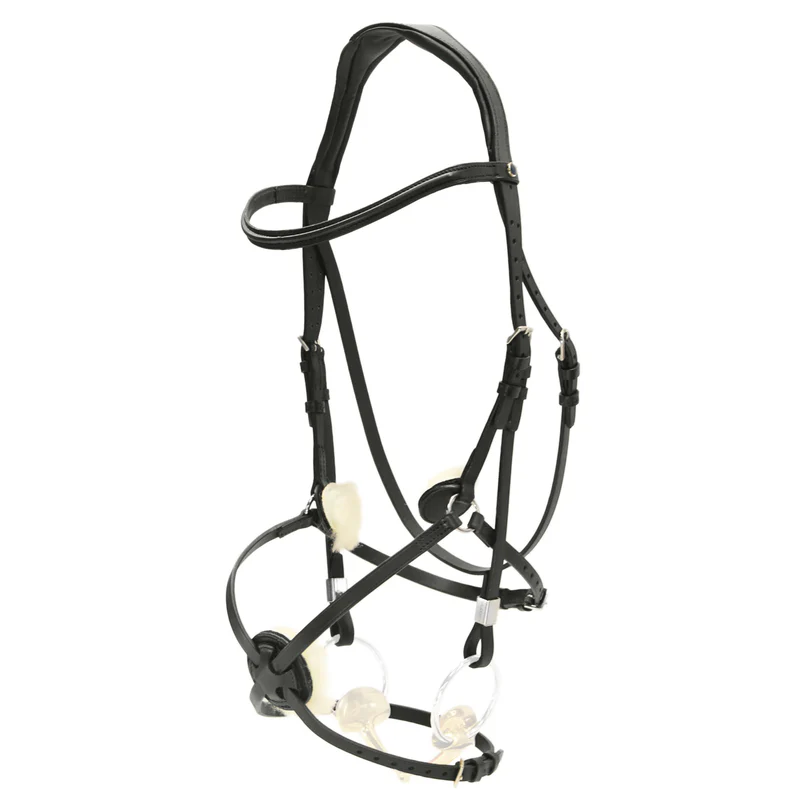
Hunter Bridles
Hunter bridles are known for their traditional and elegant appearance, often used in hunting and show jumping. These bridles are typically more understated, featuring flat leather and simple stitching. The design is meant to be functional yet stylish, fitting the formal requirements of hunter classes.
- Traditional Look: Flat leather with minimal decoration.
- Application: Primarily used in hunting and show jumping, where tradition and simplicity are valued.
Weymouth/Double Bridles
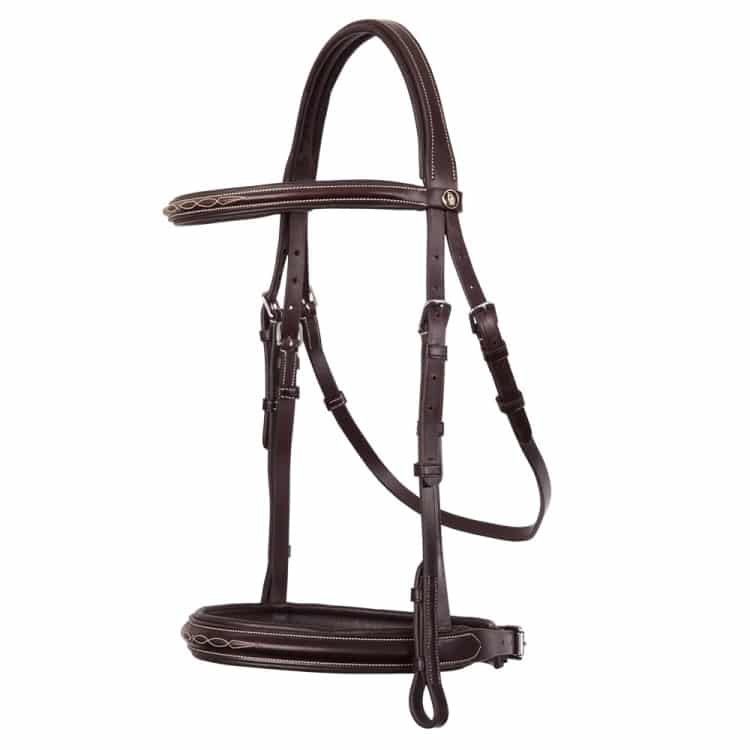
Weymouth or Double bridles are used in upper-level dressage and require a skilled hand. These bridles feature two bits – a curb and a bradoon – and two sets of reins, allowing for precise control over the horse’s head and neck position. The combination of bits helps achieve the high level of collection and finesse needed in advanced dressage.
- Usage: Exclusively in upper-level dressage.
- Features: Two bits and two sets of reins for refined control and communication.
Bitless Bridles
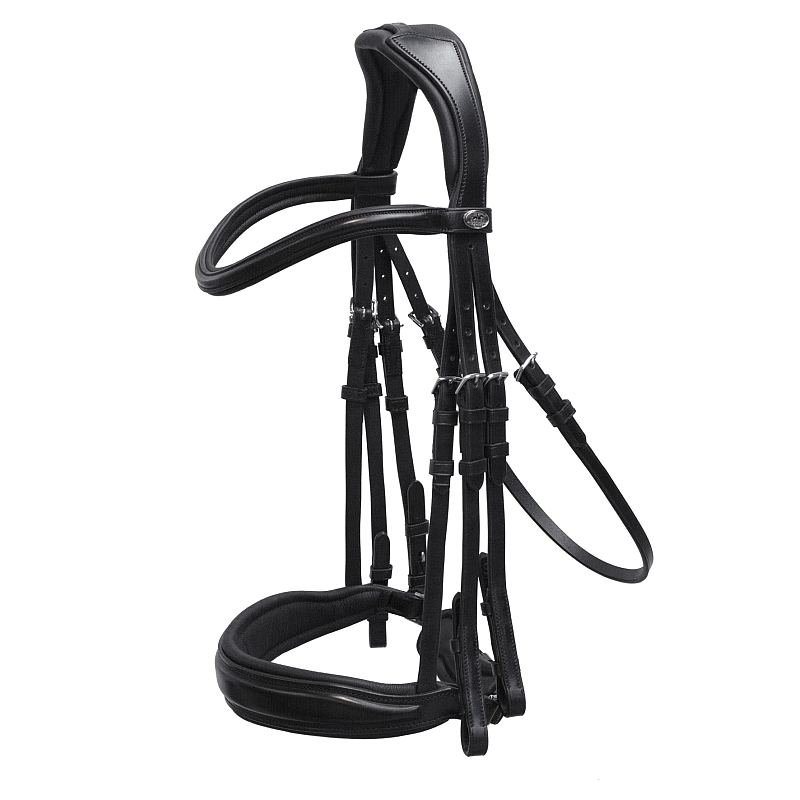
Bitless bridles are an alternative for horses that don’t tolerate a bit well. Instead of using a bit, these bridles use pressure points on the horse’s head to communicate commands. They are often used in training or with horses that have sensitive mouths.
- Description: Operates without a bit, using nose pressure and cheek straps.
- Reasons for Use: Ideal for horses with mouth sensitivity or for training purposes.
Drop Noseband Bridles
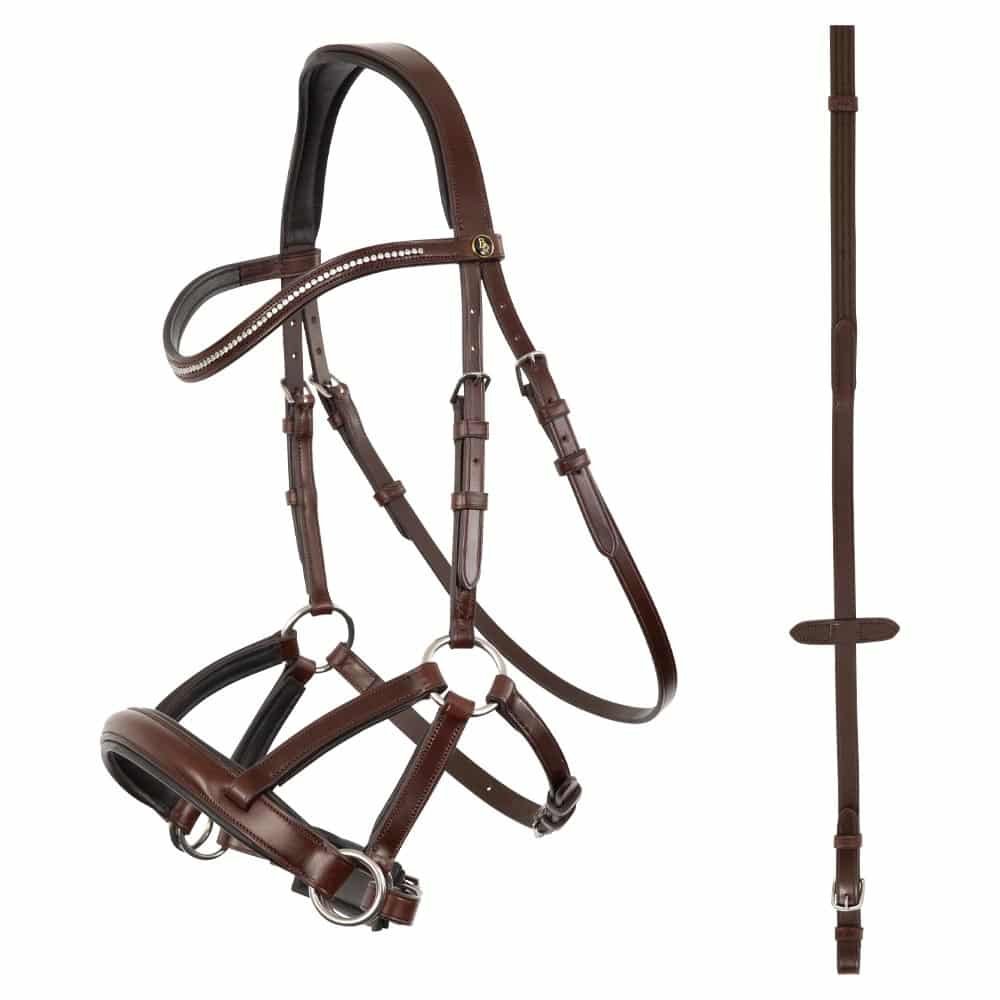
Drop noseband bridles are designed to hold the horse’s mouth closed, similar to the figure-eight design, but with a simpler structure. The noseband sits lower on the horse’s face, offering control without excessive pressure. These are often used in dressage or with younger horses that are still learning to accept the bit.
- Role: Keeps the horse’s mouth closed during riding, promoting better contact with the bit.
- Use: Commonly seen in dressage or with younger, less experienced horses.
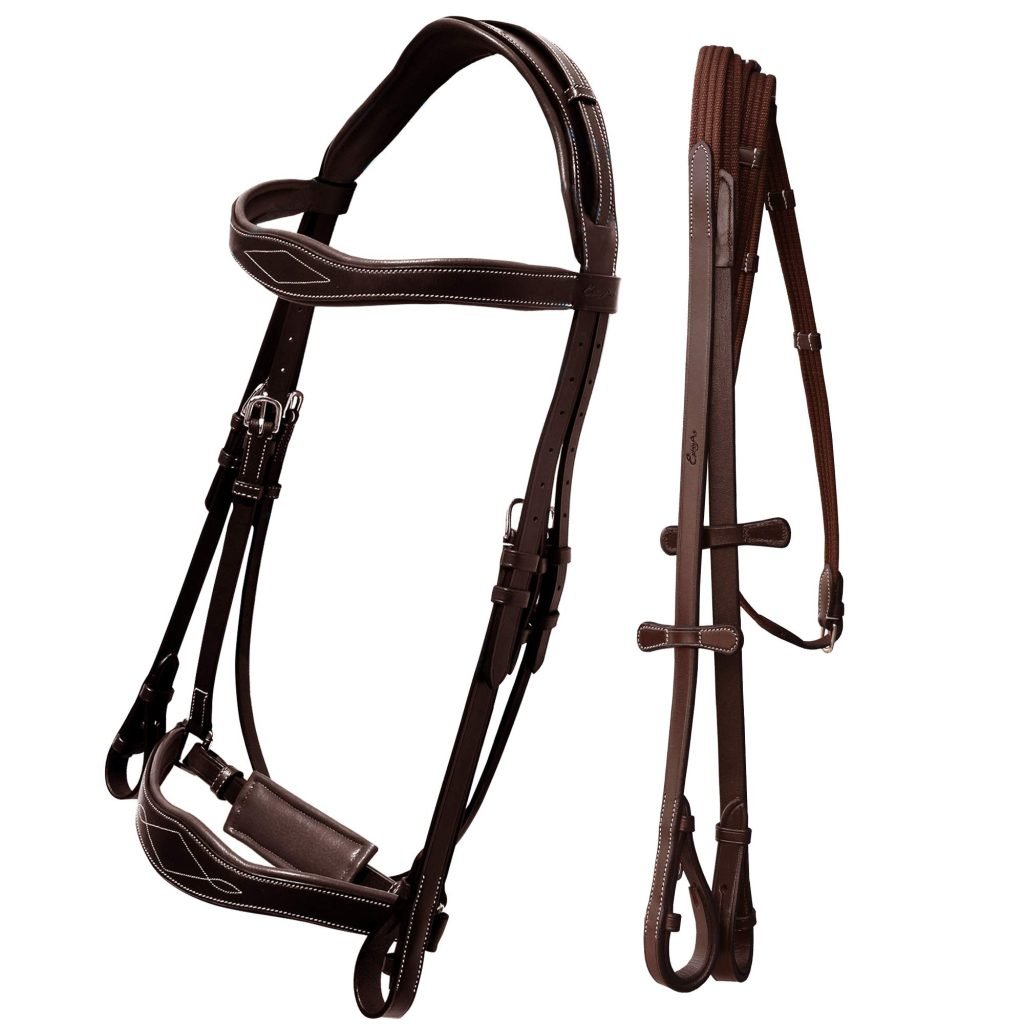
By understanding these different types of English horse bridles, you can better determine which is right for your horse and riding style. Whether you’re looking for a bridle for general riding, jumping, or advanced dressage, there’s an option tailored to your needs.
How to Put a Horse Bridle on a Horse
Bridling a horse might seem straightforward, but it’s a process that requires attention to detail and a gentle hand. The way you put on the bridle can affect your horse’s comfort and your control during riding. Here’s a clear, step-by-step guide to ensure you do it correctly, along with some common mistakes to avoid.
Step-by-Step Guide to Putting on a Horse Bridle
Prepare the Horse:
- Start with Grooming: Before you even think about the bridle, make sure your horse is comfortable and calm. A quick grooming session can help your horse relax and remove any dirt or sweat that might cause discomfort under the bridle.
- Position the Horse: Lead your horse to a quiet area, preferably in the stable or a grooming area, where it feels safe. Stand on the left side of the horse, known as the “near side,” as this is the standard position for handling horses.
Place the Reins Over the Horse’s Neck:
- Slip the Reins Over Start by placing the reins over the horse’s head, letting them to rest on the horse’s neck. This helps you maintain control of the horse while you’re working with the bridle.
- Hold the Bridle Correctly: Hold the bridle in your right hand by the crownpiece, with the bit hanging down. Make sure the bridle is untangled and all the parts are in their correct positions.
Introduce the Bit:
- Encourage the Horse to Accept the Bit: Use your left hand to hold the bit and gently bring it up to the horse’s mouth. Most horses will open their mouths willingly, but if your horse is hesitant, you can gently insert your thumb into the side of its mouth, where there are no teeth, to encourage it to open up.
- Slide the Bit in Place: Once the horse’s mouth is open, slide the bit into place. Make sure it’s positioned correctly in the horse’s mouth, resting comfortably on the bars (the gums where there are no teeth).
Lift the Bridle Over the Horse’s Ears:
- Position the Crownpiece: With the bit in place, lift the crownpiece over the horse’s ears, one at a time. Be gentle with the ears, as they are sensitive. Ensure the browband is lying flat across the horse’s forehead.
- Adjust the Cheekpieces: The cheekpieces should run down the sides of the horse’s face, connecting to the bit. Check that everything is symmetrical and not twisted.
Secure the Throatlatch and Noseband:
- Fasten the Throatlatch: The throatlatch helps keep the bridle in place but should not be too tight. A good rule of thumb is to leave enough room for four fingers to fit between the throatlatch and the horse’s throat.
- Adjust the Noseband: If your bridle has a noseband, adjust it so that it’s snug but not too tight. You should be able to fit two fingers between the noseband and the horse’s nose.
Final Check:
- Ensure Proper Fit: Before moving on, check that all parts of the bridle are correctly fitted and comfortable for the horse. The bit should rest gently in the horse’s mouth without pulling the corners too tightly, and the bridle should not pinch or rub.
Common Mistakes to Avoid When Putting on a Horse Bridle
- Rushing the Process: One of the biggest mistakes is rushing through the process. Take your time to ensure the bridle is placed correctly and the horse is comfortable.
- Improper Bit Placement: Make sure the bit is sitting properly in the horse’s mouth. If it’s too high, it will cause discomfort; too low, and it may not be effective.
- Tight Throatlatch or Noseband: A too-tight throatlatch can restrict the horse’s breathing, while an overly tight noseband can cause discomfort and even pain.
- Forgetting to Check the Fit: Always double-check the fit before riding. A poorly fitted bridle can lead to discomfort for the horse and can affect your control while riding.
By following this guide, you can ensure that your horse is comfortable and that the bridle is secure, setting you both up for a successful and enjoyable ride.
Maintenance Tips for Horse Bridles
Maintaining your horse bridle isn’t just about preserving its appearance—it’s crucial for the comfort and safety of both you and your horse. A well-maintained bridle will last longer, work more effectively, and ensure that your horse remains comfortable during rides. Here’s how to take care of your horse bridles properly.
Regular Cleaning: Keeping Horse Bridles in Top Condition
Cleaning your horse’s bridle regularly is one of the most important aspects of maintenance. Over time, sweat, dirt, and saliva can build up on the bridle, leading to wear and tear. Not only can this cause discomfort for your horse, but it can also reduce the lifespan of your bridle.
- Wipe Down After Every Ride: After each ride, take a few minutes to wipe down the bridle with a damp cloth. Focus on areas that come into contact with sweat and saliva, such as the bit and the noseband.
- Weekly Deep Cleaning: At least once a week, disassemble the bridle and thoroughly clean it. Use a mild soap specifically designed for leather to clean the leather parts and rinse the bit under warm water to remove any residue.
Leather Conditioning: Keeping Horse Bridles Soft and Supple
Leather bridles require conditioning to stay soft, supple, and free from cracks. Without proper conditioning, leather can dry out and become brittle, which not only shortens the lifespan of the bridle but can also make it uncomfortable for the horse.
- Condition Regularly: After cleaning your bridle, apply a quality leather conditioner to all leather parts. Use a soft cloth to gently work the conditioner into the leather, paying special attention to areas that bend or flex, such as the crownpiece and cheekpieces.
- Avoid Over-conditioning: While it’s important to condition leather regularly, over-conditioning can make the leather too soft, which may affect its strength and durability. A light application every couple of weeks is usually sufficient.
Inspection and Repairs: Ensuring the Integrity of Your Horse Bridles
Regular inspection of your horse bridle is essential to catch any signs of wear and tear before they become serious problems. A small issue can lead to equipment failure during a ride, which could be dangerous.
- Inspect After Every Cleaning: As you clean your bridle, take the time to inspect each part for signs of wear, such as cracks in the leather, fraying stitching, or rust on metal parts.
- Timely Repairs: If you notice any damage, it’s important to address it immediately. Minor issues, like loose stitching, can often be fixed at home, but for more significant damage, such as a cracked leather strap, it’s best to seek professional repairs.
Storage Best Practices: Protecting Horse Bridles from Damage
Proper storage is crucial to maintaining the shape and integrity of your horse bridles. Incorrect storage can lead to deformities in the leather and weaken the overall structure of the bridle.
- Store in a Cool, Dry Place: Always store your bridle in a cool, dry area away from direct sunlight, which can dry out and fade the leather. Avoid damp areas as moisture can cause mold and mildew.
- Use a Bridle Rack: Hang your bridle on a dedicated bridle rack that supports its shape. Avoid hanging it by the bit or reins, as this can stretch and deform the leather.
- Cover the Bridle: If possible, cover your bridle with a cloth or bridle bag to protect it from dust and dirt. This is especially important if you store your bridle in a tack room with other equipment.
By following these maintenance tips, you can extend the life of your horse bridle, keep it looking its best, and ensure it remains comfortable and safe for your horse to wear. Regular care not only protects your investment but also enhances your riding experience by ensuring that your equipment is always in top condition.
FAQs About Horse Bridles
What is the Difference Between a Headstall and a Bridle?
The terms “headstall” and “bridle” are often used interchangeably, but they refer to different components of horse tack. A headstall is a part of the bridle that goes over the horse’s head and holds the bit in place. It consists of the crownpiece, cheekpiece, and throatlatch. On the other hand, a bridle includes the headstall along with additional components like the reins and noseband. In essence, a bridle is the complete set of equipment used for riding or driving a horse, while the headstall is just one part of it.
What is the Difference Between a Bridle and a Halter?
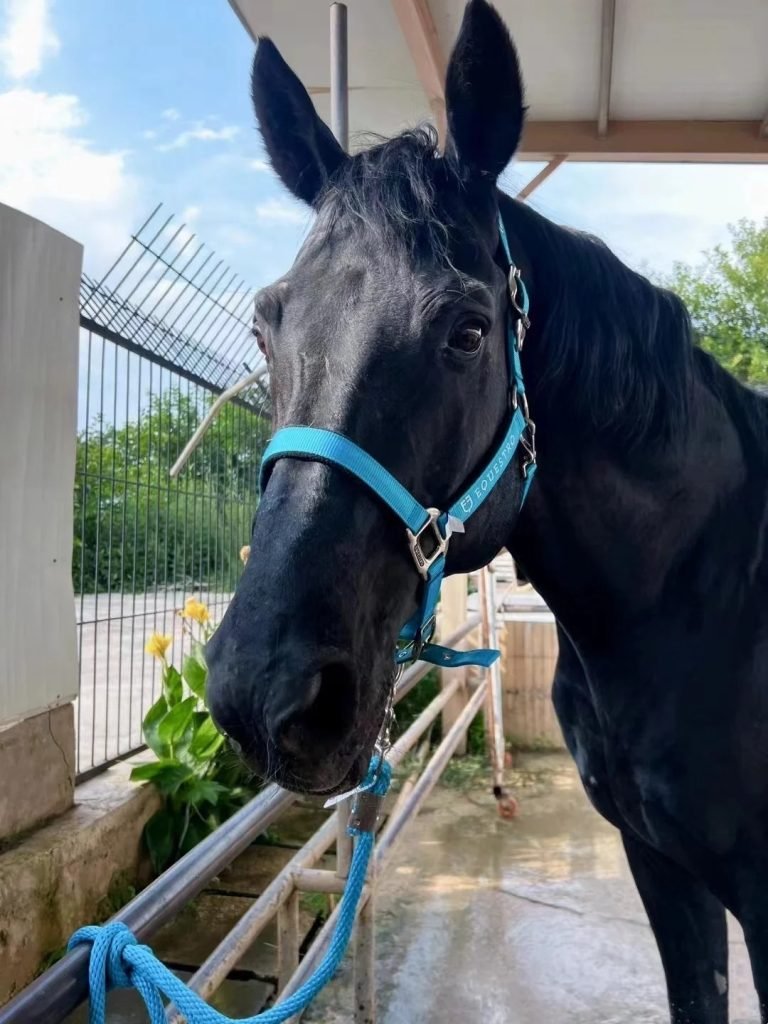
Both bridles and halters are used to control a horse, but they serve different purposes and have distinct designs. A halter is primarily used for leading and tying a horse. It consists of a simple strap system that goes around the horse’s head and does not have a bit. Halters are usually made from softer materials and are designed for handling and grooming. In contrast, a bridle is used for riding and includes a bit that goes into the horse’s mouth. Bridles provide more precise control and communication between the rider and horse due to the bit and other components like the reins and noseband.
How Do You Choose the Right Size Bridle for Your Horse?
Choosing the correct size bridle is essential for both horse comfort and effective communication. You should measure your horse’s head to determine the right size, which can vary among ponies, cobs, and full-sized horses. An ill-fitting bridle can cause discomfort or affect the horse’s performance. Be sure to properly adjust the bridle and check regularly to ensure it remains well-fitted.
Conclusion: Understanding Horse Bridles for Better Riding
In conclusion, understanding horse bridles and their components is essential for effective communication and control while riding. Whether you’re using an English bridle with its variety of types or a Western bridle tailored to different riding styles, knowing the roles and functions of each part helps ensure your horse’s comfort and performance. As discussed, bridles are not just functional tools but key elements that bridge the gap between the rider and horse. They allow for precise control and enhance the overall riding experience.
To maximize your riding experience and ensure your horse’s well-being, invest time in selecting the right bridle, learning how to fit it properly, and adhering to regular maintenance routines. By doing so, you’ll not only improve your riding skills but also contribute to a better, more enjoyable bond with your horse. Ready to find the perfect bridle for you and your horse? Dive into the world of bridles and discover the difference they can make today!