Posted on Leave a comment

How Do You Choose the Right Riding Boots?

Introduction

Have you ever wondered why riding boots are considered essential in equestrian activities? It’s not just about tradition or style; riding boots play a crucial role in ensuring safety, comfort, and performance while riding. They are designed specifically to provide the right support and protection for your feet and legs, making them indispensable for any rider.

Whether you’re a seasoned equestrian or just starting, choosing the right riding boot can significantly enhance your riding experience. The right pair can prevent injuries, provide better grip, and even improve your overall posture on the saddle. So, if you’re serious about riding, investing in a good pair of riding boots is not just an option, it’s a necessity.
What Are Riding Boots?

Definition and Purpose of Riding Boots

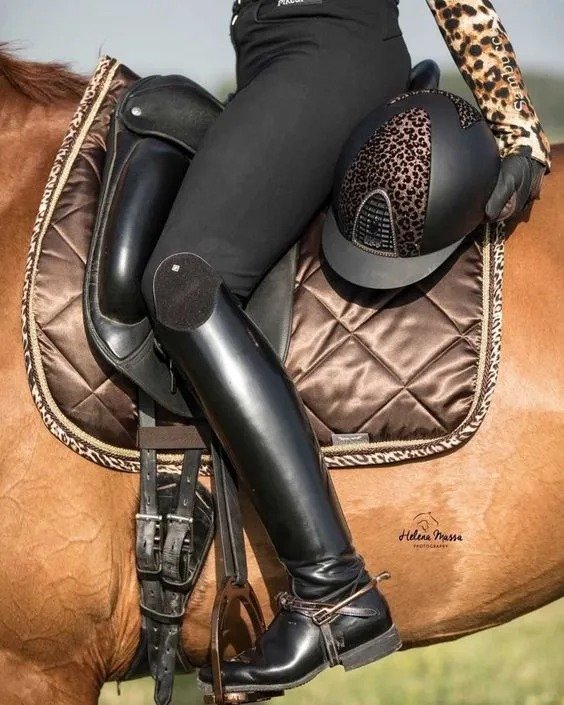
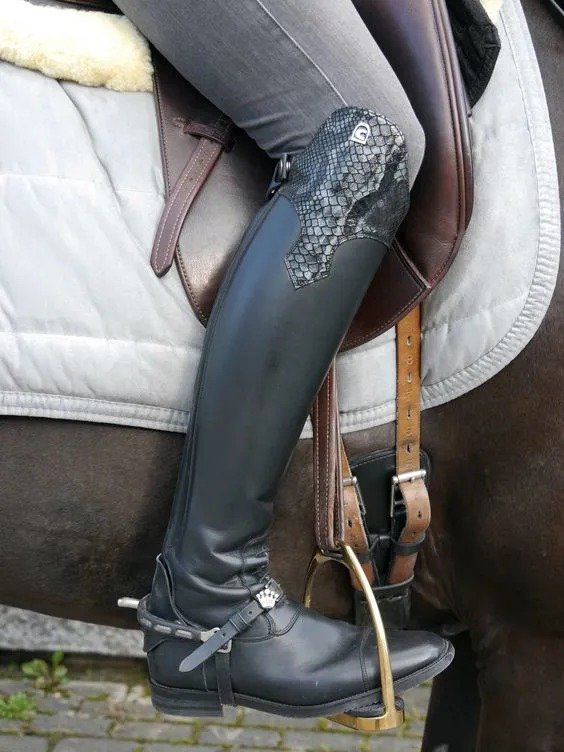
Riding boots are specialized footwear crafted specifically for horseback riding. Unlike regular boot, riding boot meet the unique demands of equestrian activities. They provide optimal grip on the stirrups, protect the rider’s legs from chafing against the saddle, and offer essential support for the rider’s feet and ankles during a ride.

The primary purpose of riding boot is to enhance both safety and comfort while riding. A good pair of riding boots can make all the difference in your riding experience. They ensure that your feet stay secure in the stirrups, reducing the risk of slipping. Additionally, they protect your legs from scrapes and injuries that can occur from constant contact with the horse and the equipment.

🥾These Boots Were Made For Riding

Key Features of Riding Boots

Riding boots are distinguished by several key features that set them apart from other types of footwear:

  • Tall Shaft: Riding boots typically have a tall shaft that extends up to the knee or just below it. This design protects the rider’s legs from friction against the saddle and horse.
  • Heeled Design: The heel on riding boots is usually about an inch high, which is essential for keeping the rider’s feet from sliding through the stirrups. This feature provides stability and prevents accidents.
  • Durable Material: Riding boots are made from sturdy materials like leather or synthetic substitutes that can withstand wear and tear. Leather is a popular choice for its durability and ability to mold to the rider’s foot over time.
  • Smooth Sole: The soles of riding boots are smooth to prevent getting caught in the stirrups, allowing for quick and safe dismounting if necessary.
  • Snug Fit: A good fit is crucial in riding boots. They should be snug around the ankle and calf to provide support and prevent the boot from slipping off during a ride.
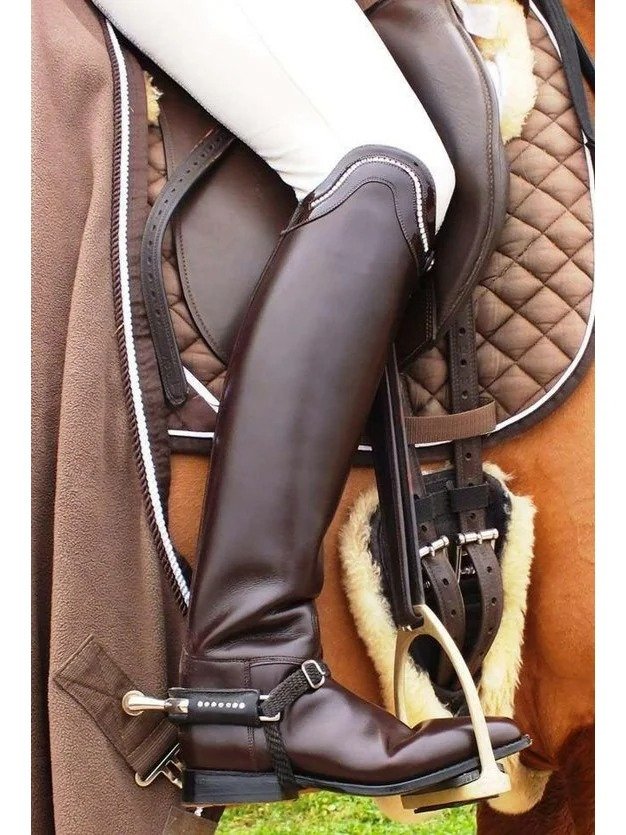
These features are not just about aesthetics—they are designed with the rider’s safety and comfort in mind. Whether you’re participating in casual riding or competitive equestrian sports, understanding the importance and functionality of riding boots is essential. They are a vital piece of gear that enhances your riding experience and keeps you safe.

Why Is Choosing the Right Riding Boots So Important?

Safety: Protecting Your Feet and Legs

Choosing the right riding boots is crucial for your safety while riding. One of the primary functions of riding boots is to protect your feet and lower legs from injuries. The tall shaft of the boots shields your legs from scrapes and bruises caused by rubbing against the saddle or the horse. This protection is essential, especially during long rides, where constant friction can lead to discomfort or even skin damage.

Moreover, the heel of riding boot plays a critical role in preventing your feet from slipping through the stirrups. Without the right heel height, you risk losing control, which can be dangerous. Riding boots ensure your feet stay securely in place, giving you confidence and peace of mind while you ride.

Support: Stability and Fatigue Reduction

The right pair of riding boots provides much-needed stability in the saddle. A snug fit around your ankle and calf helps keep your foot firmly planted, reducing the chances of your foot moving around too much. This stability not only improves your riding posture but also enhances your overall performance.

In addition to stability, riding boots are designed to decrease fatigue during riding. Whether you’re spending hours in the saddle or just enjoying a short ride, the support that riding boots offer can make a significant difference. They provide the necessary arch support and cushioning to reduce strain on your feet and legs, allowing you to ride longer with less discomfort.

Comfort: Essential for Every Ride

Comfort is a key factor when choosing riding boots. The right boots offer cushioning, arch support, and breathability, ensuring that your feet remain comfortable even during extended periods of wear. Riding boots are also designed to be weather-resistant, protecting your feet from rain, mud, and other elements. This durability means you can rely on your boots to last through many rides without compromising on comfort.

The materials used in riding boots, such as leather or synthetic options, are chosen for their ability to mold to the shape of your foot over time, providing a custom fit. This adaptability is crucial for avoiding blisters and discomfort, especially when riding for long periods.

Discipline-Specific Features: Tailoring to Your Needs

Different equestrian disciplines require specific features in riding boots. For example, dressage boots often have a stiffer shaft to provide better leg support and enhance the rider’s position. On the other hand, jumping boots are more flexible, allowing for the mobility needed when navigating obstacles.

The impact of wearing the proper boots for your discipline cannot be overstated. Not only do they enhance your performance, but they also contribute to your overall appearance in the arena. Riders are often judged on their presentation, and the right boots can help you look the part, boosting your confidence and ensuring you’re properly equipped for the task at hand.

In summary, choosing the right riding boots is more than just a fashion choice—it’s a vital aspect of riding that affects your safety, support, comfort, and performance. Whether you’re new to riding or an experienced equestrian, investing in the right pair of boots is essential for enjoying your time in the saddle to the fullest.

Types of Riding Boots

Paddock Boots: Versatile and Practical

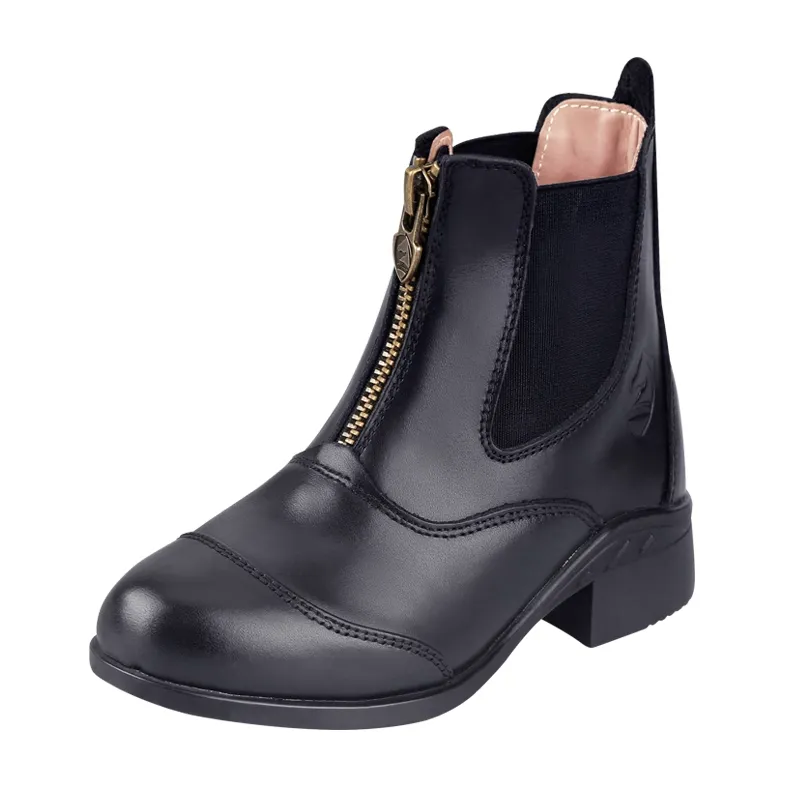
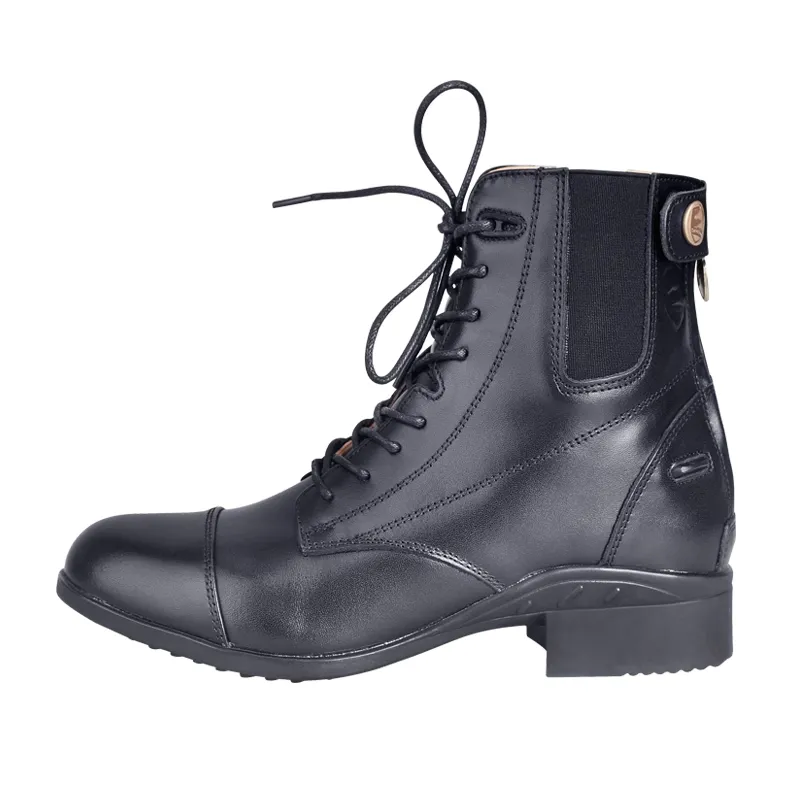
Paddock Boots are a staple in the world of equestrian footwear, known for their versatility and practicality. Typically, these boots are ankle-length and are often used in everyday riding, especially in English riding disciplines. They’re an excellent choice for beginners or for those who spend a lot of time in the barn.

Common Features of Paddock Boots:

  • Lace-up or Zip Styles: Paddock boots come in both lace-up and zip styles, offering different levels of support and ease of use. Lace-up paddock boots provide a more customizable fit around the ankle, while zip styles are quick and convenient for busy riders.
  • Durable Construction: These boots are built to withstand the rigors of daily use, often made from high-quality leather or synthetic materials that can handle the wear and tear of barn chores and riding alike.
  • Comfortable and Supportive: With a focus on comfort, paddock boots typically have cushioned insoles and good arch support, making them ideal for long hours at the barn.

Paddock boots are also versatile enough to be worn outside of riding activities, making them a popular choice for those who want a boot that transitions well from stable to street.
Barn Boots: Rugged and Reliable

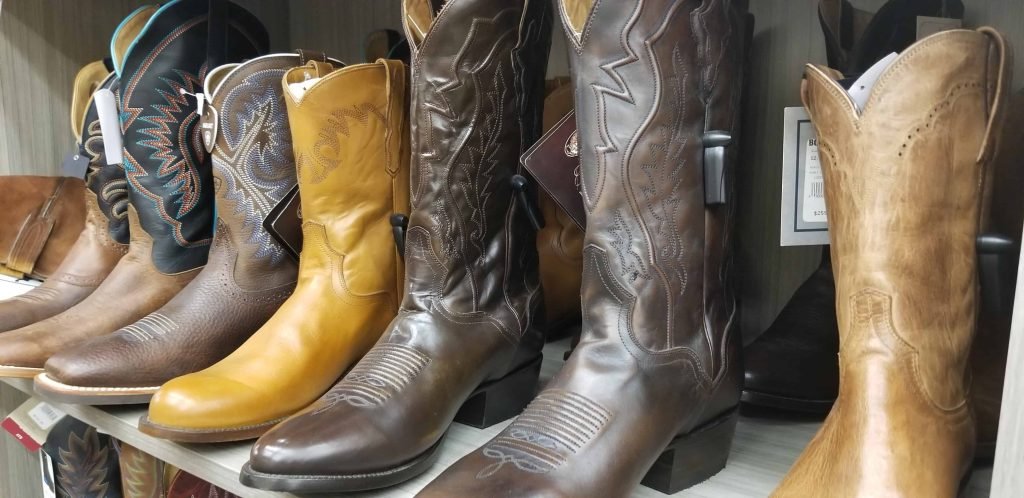
Barn Boots are designed with the working equestrian in mind. These boots are built for the demands of barn life, offering more rugged protection compared to paddock boots.

Key Differences Between Barn Boots and Paddock Boots:

  • Heavier Construction: Barn boots are generally bulkier and more robust than paddock boots, with reinforced soles and waterproof materials to keep your feet dry and protected in muddy or wet conditions.
  • Utility-Focused: These boots are not just for riding but are also ideal for handling all the dirty work around the barn. Their design prioritizes durability and practicality, making them a must-have for any equestrian who spends significant time around the barn.
  • Casual Use: Many riders also use barn boots as casual footwear due to their comfort and durability. They’re perfect for walking through rough terrain or doing chores without worrying about damaging your riding boots.

While barn boots may not have the sleek appearance of other riding boots, their functionality and ruggedness make them indispensable for any serious rider.
Field Boots: A Classic Choice for English Riding

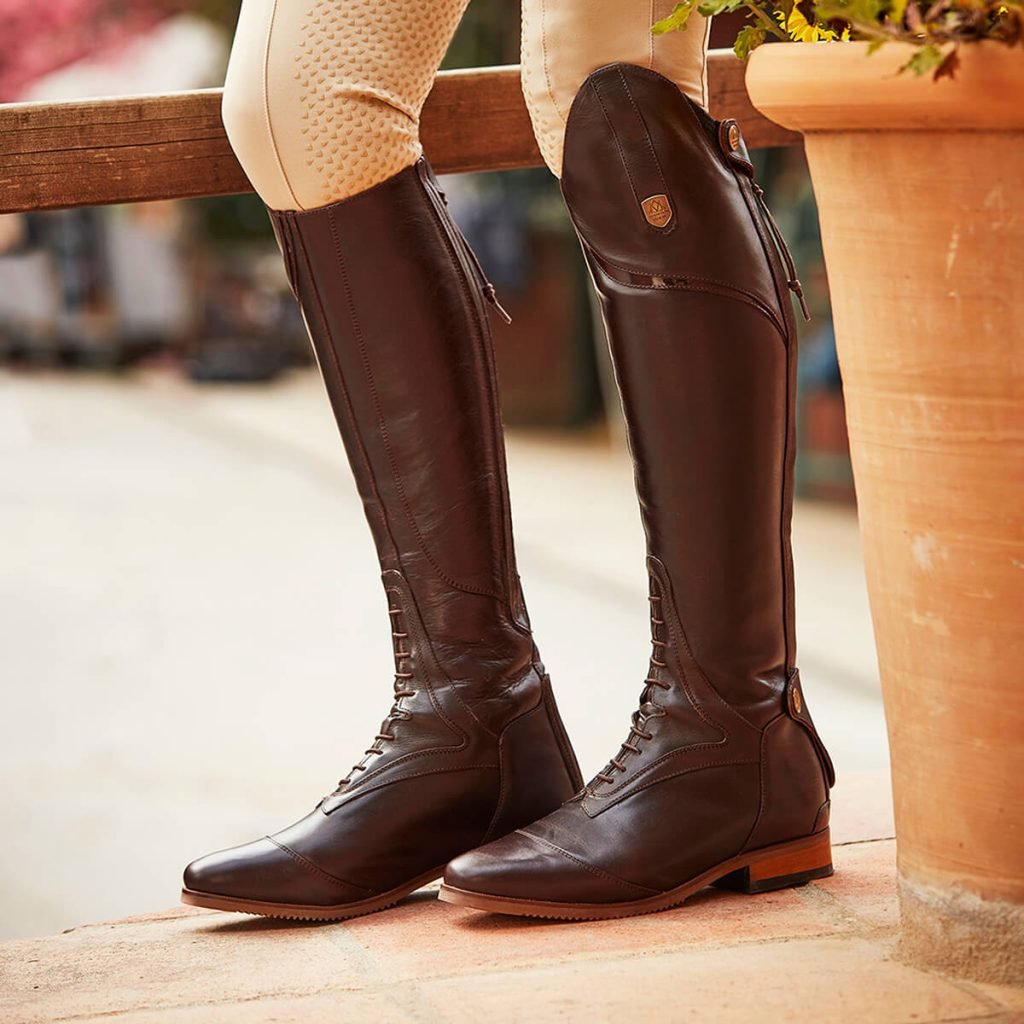
Field Boots are a popular choice in English riding disciplines, especially for jumping and eventing. These boots are knee-high and are designed with features that accommodate the specific needs of English riders.

Characteristics of Field Boots:

  • Laced Front: One of the most distinctive features of field boots is the laced front, which provides flexibility at the ankle. This flexibility is crucial for riders who need to maintain a proper foot position while jumping or navigating through a course.
  • Polished Look: Field boots boast a sleek, polished appearance that makes them a favorite in show rings. Made from high-quality leather, they shine brightly when polished, enhancing the rider’s professional look.
  • Importance in Competitions: Riders need these boots for show jumping and eventing, where judges evaluate both performance and appearance. The combination of flexibility, support, and style makes them a top choice for competitive riders.

Field boots offer the perfect blend of function and form, allowing riders to perform at their best while maintaining a polished look.
Dress Boots: Elegance and Tradition

Dress Boots are the epitome of elegance in the world of riding boots. These boots are typically used in dressage competitions and other formal equestrian events where appearance is just as important as performance.

Comparison with Field Boots:

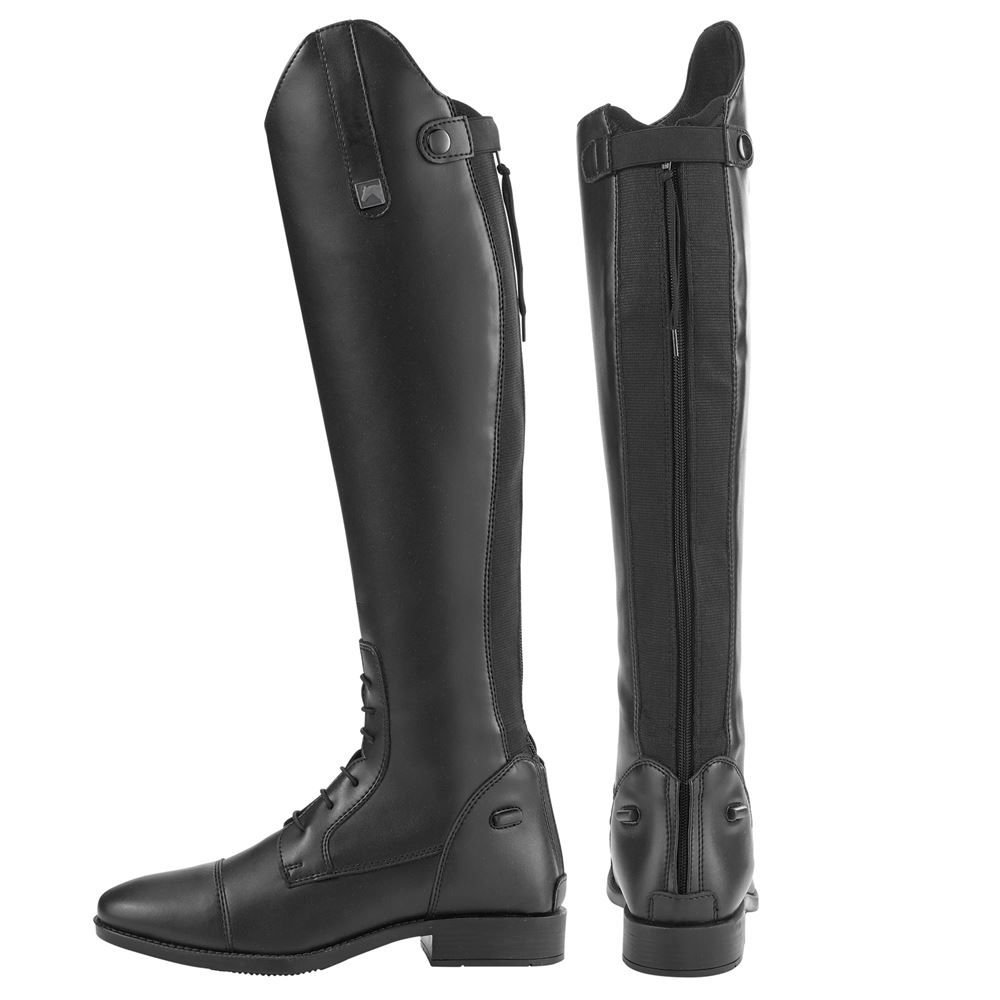
  • Stiffer Construction: Unlike field boots, dress boots do not have laces and are generally stiffer, providing a more streamlined appearance. This stiffness helps in maintaining the rider’s leg position, which is crucial in dressage.
  • Formal Aesthetic: Dress boots are designed with a smooth, elegant finish, often featuring high-quality leather that showcases the craftsmanship involved in their making. This makes them a preferred choice for formal events where presentation is key.
  • Focus on Craftsmanship: The quality of materials and the level of craftsmanship in dress boots are often superior, reflecting their use in high-level competitions. Riders who choose dress boots are often looking for a blend of durability, comfort, and a refined look.

In the world of equestrian sports, dress boots represent a commitment to tradition and excellence. They are not just a piece of equipment but a statement of a rider’s dedication to their discipline. Dress boots ensure style and grace when performing a dressage test or participating in a formal riding event.

How Should Riding Boots Fit?

Finding the perfect fit for your riding boots is crucial for both comfort and performance. A well-fitting pair of riding boots can make all the difference in your riding experience, helping you stay secure in the saddle and preventing discomfort or injury. Here’s a detailed guide to what you should look for when fitting your riding boots.

Length: Support and Protection

When it comes to the length of your riding boot, it’s all about striking the right balance. The height of the boot should provide adequate support while still allowing for a range of motion.

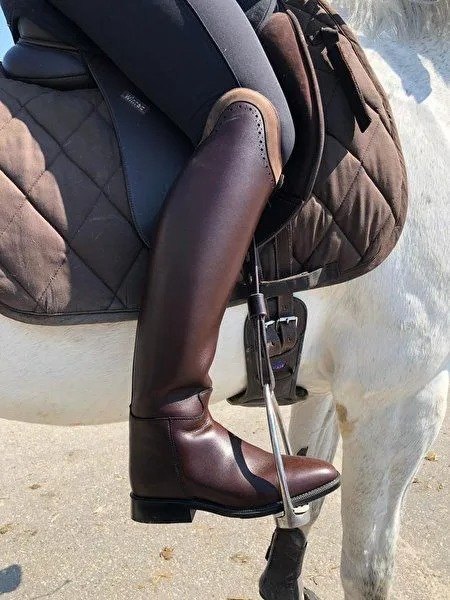
  • Boot Height: Riding boot should ideally come up to just below your knee. This height helps protect your lower legs from rubbing against the saddle and offers support during long rides. If the boots are too short, they won’t provide adequate protection, and if they’re too tall, they can dig into the back of your knee, causing discomfort.
  • Breaking In: Keep in mind that leather boots will break in and drop slightly as they mold to your leg. It’s okay if the boots feel slightly tall at first, as they’ll settle over time.naturally break
Width: A Snug but Comfortable Fit

The width of your riding boots is another key factor in ensuring comfort and stability. A snug fit is important, but you also want to make sure the boots aren’t too tight.

  • Foot and Ankle Fit: The boots should fit snugly around your foot and ankle without being too tight. A boot that’s too loose can lead to instability, while one that’s too tight can cause discomfort and restrict movement. The fit around your ankle should be supportive, offering enough grip to keep your foot secure without pinching.
  • Calf Fit (for Tall Boots): If you’re choosing tall boots like dresses or field boots, pay close attention to the fit around your calf. Measure your calves at their widest point and ensure the boots provide a snug fit without cutting off circulation. Many tall boots come with elastic panels or adjustable laces to accommodate different calf sizes.

Heel Fit: Preventing Blisters and Discomfort

A proper heel fit is crucial to avoiding blisters and ensuring a comfortable riding experience.

  • Minimal Heel Movement: Your heel should have minimal movement within the boot. If your heel slides up and down excessively, it can cause friction and lead to painful blisters. A slight lift is normal, especially when the boots are new, but it should not be excessive. Look for boots with padded insoles or heel grips to reduce movement.
Ankle Fit: Flexibility and Alignment

The fit around your ankle is particularly important in riding boots, as this area needs to offer both support and flexibility.

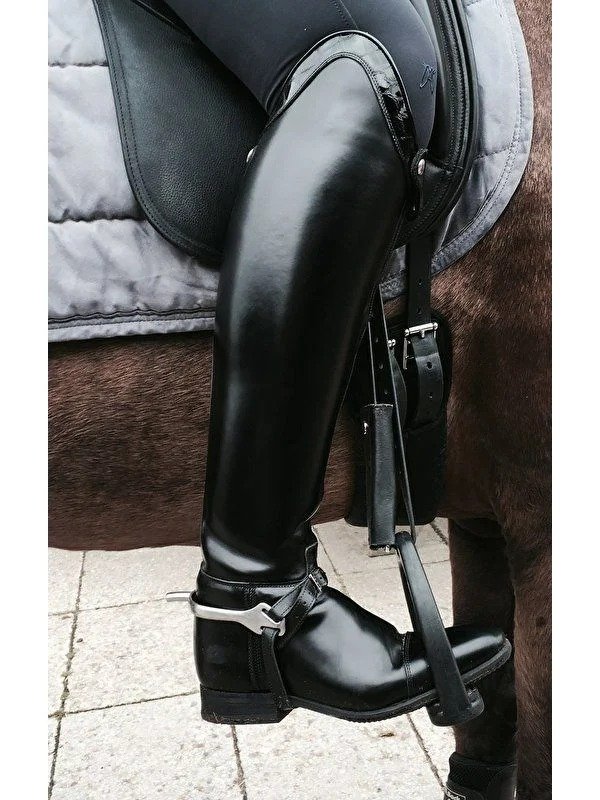
  • Flex Point Alignment: The flex point of the boot should align with your natural ankle joint. This alignment allows for a full range of motion while riding, particularly in disciplines that require a lot of movement like jumping. Boots that are too stiff in this area can restrict your movement, while those that are too loose may not provide enough support.

Toe Room: Comfort for Long Rides

The toe room is often overlooked, but it’s essential for comfort, especially on long rides.

  • Sufficient Space in the Toe Box: Your toes should have enough room to move slightly within the boot without feeling cramped. Too little space can lead to discomfort and even long-term foot issues, while too much space can cause your foot to slide forward, leading to instability. A good rule of thumb is to ensure there’s about a thumb’s width of space between your longest toe and the end of the boot.

Secure Closure: Keeping Everything in Place

The way your riding boots close—whether through laces, zippers, or buckles—plays a big role in the overall fit and security.

  • Secure zippers and laces to prevent the boots from slipping off or becoming loose during your ride. Ensure the zippers glide smoothly and stay in place, and tie the laces snugly without making them too tight. Some boots also come with adjustable buckles or straps to help you achieve a more customized fit.

In conclusion, finding the right fit for your riding boots involves paying attention to several key areas: length, width, heel fit, calf fit, ankle fit, toe room, and secure closure. By focusing on these factors, you can ensure that your boots not only look great but also provide the support and comfort you need for a enjoyable and safe riding experience.
Frequently Asked Questions About Riding Boots

The best materials for riding boots are usually leather or high-quality synthetic alternatives. Full-grain leather is favored for its durability, comfort, and breathability, molding to your foot over time. Synthetic options, like vegan leather, are also popular for their affordability and ease of maintenance, though they might not last as long as real leather. Choose based on your riding environment and maintenance preferences.

Riding boots should be replaced based on usage and care. High-quality leather boots can last several years with proper maintenance, especially if used only for riding. If you ride daily or in tough conditions, consider replacing them every 1-2 years. Signs that it’s time for new boots include cracked leather, broken zippers, or worn-out soles.

Paddock boots are great for everyday riding, but they’re usually not formal enough for competitions, especially in English riding disciplines. For shows, tall boots like field or dress boots are preferred. However, in some lower-level or casual events, paddock boots with half chaps may be acceptable.

Men’s and women’s riding boots differ mainly in fit. Women’s boots typically have a narrower footbed and calf, with a shorter height, while men’s boots are generally wider with a roomier fit. The design might also vary to cater to different styles. Always choose boots that fit comfortably around your feet and legs, regardless of the label.

Conclusion

Choosing the right riding boots is essential for safety, support, and comfort. From understanding the different types of boots to ensuring a proper fit, getting the details right can make a huge difference in your riding experience. Remember, your boots should feel snug yet comfortable, offering the support you need without compromising on style or function.

As you invest in your next pair of riding boots, take the time to find the perfect fit and material that suits your riding style and discipline. Whether you’re in the saddle every day or just on weekends, the right boots can elevate your performance and protect your feet. Happy riding, and may your boots always keep you grounded!

Posted on Leave a comment

What Are the 10 Types of English Riding, and How Do They Differ?

Introduction

Is English riding the epitome of elegance and precision in equestrian sports? For centuries, this style of horseback riding has captivated riders around the world with its rich history and emphasis on technique. From the graceful movements of dressage to the thrilling jumps of show jumping, English riding offers a unique blend of skill and artistry that sets it apart from other disciplines.

In this blog, we’ll dive deep into the fascinating world of English riding, exploring the ten distinct types that define this sophisticated sport. Whether you’re a seasoned rider or just curious about the allure of English riding, you’ll find something here to inspire your equestrian journey. So, let’s get started and discover what makes each type of English riding so special!
What is English Riding?

The Essence of English Horseback Riding

English horseback riding is more than just a method of riding—it’s a tradition steeped in history and elegance. Originating in England, this style of riding has evolved over centuries and is now practiced worldwide. What sets English riding apart is its focus on proper form, technique, and the deep connection between horse and rider. Unlike other styles, English riding demands precision and finesse, making it a favorite among those who appreciate the artistry of equestrian sports.

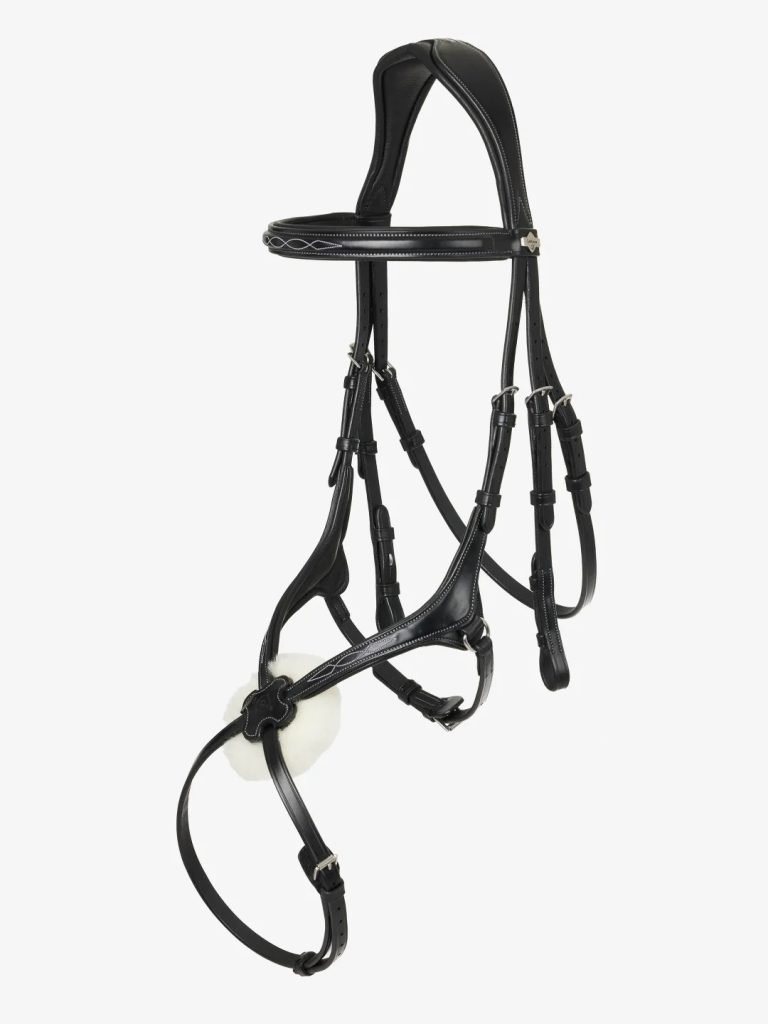
At the heart of English riding is the English saddle. This saddle is designed to be lightweight and allow for closer contact between the rider’s seat and the horse’s back. This feature is crucial, as it enhances communication between the rider and horse, allowing for more subtle cues and commands. Unlike the Western saddle, which is bulkier and designed for comfort during long rides, the English saddle supports a more upright and elegant riding position. This design not only aids in maintaining proper posture but also allows the rider to move in harmony with the horse.

A Closer Look at the English Saddle

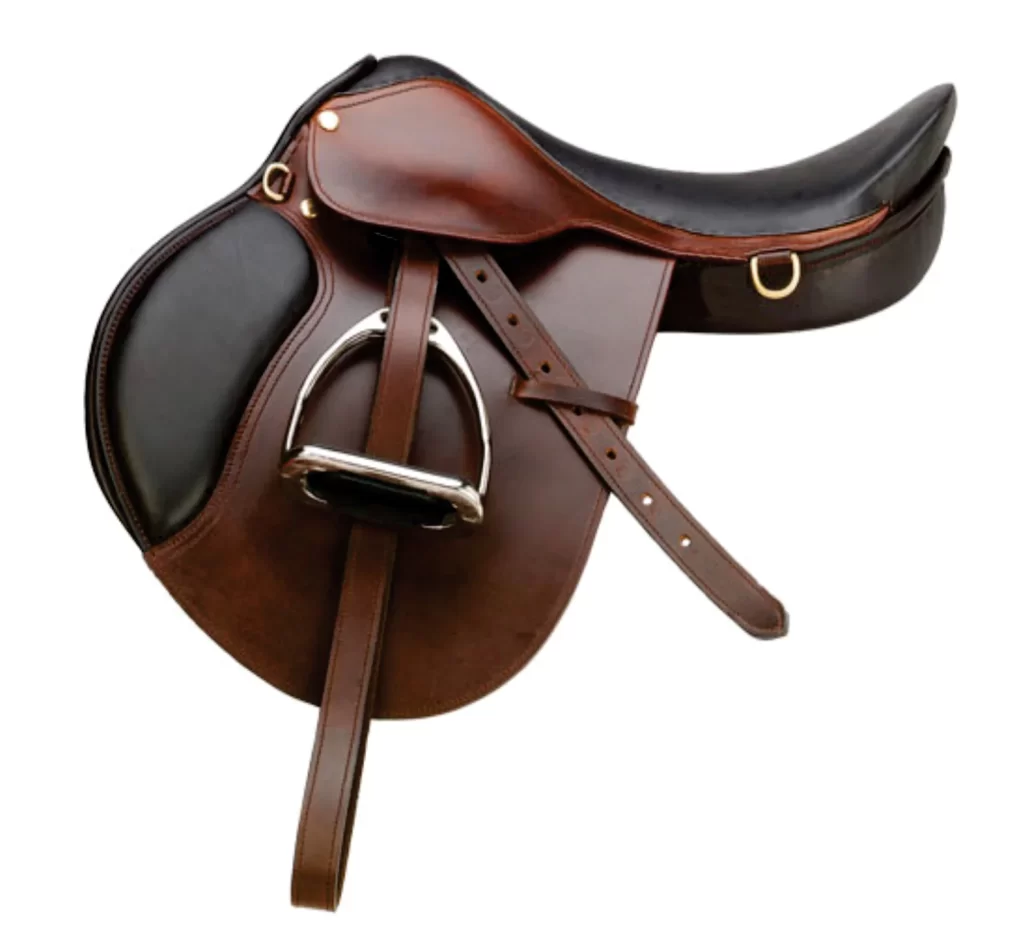
The English saddle is a marvel of design, crafted to support the rider in achieving optimal balance and control. Some key features of the English saddle include:

  • Flat Seat: The flatter seat of the English saddle encourages the rider to sit in a more upright position, promoting better posture and balance.
  • Stirrup Leathers: The stirrup leathers are thinner and allow for greater adjustability, giving the rider more control over their leg position.
  • Knee Rolls: Some English saddles come with knee rolls, which provide additional support and help maintain the rider’s leg position during jumps and movements.

This saddle is a symbol of the elegance and precision that defines English riding. It’s no wonder that this style of riding is synonymous with grace and poise, as every aspect of it, from tack to the techniques, is designed to promote a seamless connection between horse and rider.

Introduction to English Riding Disciplines

English riding isn’t just a single style—it’s a whole world of diverse disciplines that cater to different interests and skill levels. Whether you’re drawn to the elegance of dressage, the thrill of show jumping, or the endurance required for eventing, English riding offers something for everyone. Each discipline has its own set of rules, techniques, and challenges, making English riding a versatile and exciting pursuit.

In both recreational and competitive settings, English riding enjoys widespread popularity. Riders from all over the world engage in these disciplines, either for the love of the sport or the pursuit of excellence in competition. Whether you’re a beginner just learning the basics or an experienced rider honing your skills, there’s a discipline within English riding that will capture your interest and challenge you to grow as a rider.

In this blog, we’ll explore 10 distinct types of English riding, each with its unique appeal:

  1. Dressage
  2. Show Jumping
  3. Eventing
  4. Hunt Seat
  5. Hunter/Jumper
  6. Saddle Seat
  7. Endurance Riding
  8. Equitation
  9. Fox Hunting
  10. Polo

Each of these disciplines offers a unique experience, whether you’re aiming for precision, speed, endurance, or elegance.

The 10 Types of English Riding Explained

Dressage

Dressage is a refined discipline in English riding, rooted deeply in military training. Historically, it was developed to train horses for battle, where precision, control, and harmony were vital. Today, dressage is all about the graceful execution of specific movements, showcasing the horse’s training and the rider’s subtle communication skills.

The primary goal of dressage is to achieve a state of perfect coordination between horse and rider. This bond allows the horse to perform a series of precise movements, often referred to as “tests.” These include patterns like the piaffe, passage, and extended trot. Each movement is performed with elegance and requires a high level of control, emphasizing the harmony between horse and rider.

In dressage competitions, the dress code is formal and emphasizes poise and composure. Riders typically wear:

  • A black or navy coat
  • White breeches
  • Tall black boots
  • A white shirt with a stock tie or choker

This attire not only reflects tradition but also adds to the discipline’s overall elegance.

For beginners, starting with the basics is key. Focus on developing a strong foundation in balance, rhythm, and communication with your horse. Dressage is all about patience and practice, so take your time mastering the fundamentals before advancing to more complex movements.

Show Jumping

Jumping is one of the most thrilling disciplines in English riding. The objective is straightforward: guide your horse through a course of obstacles, aiming for a clear round without faults. Each obstacle tests the horse’s agility, power, and the rider’s ability to navigate the course effectively.

A typical show jumping course includes various types of jumps, such as:

  • Verticals: Simple straight-up jumps.
  • Oxer: A jump with two verticals, creating a wider spread.
  • Combinations: Multiple jumps in quick succession.

Navigating these obstacles requires trust and dedication between horse and rider. The rider must anticipate the horse’s movements and ensure that each jump is approached with precision.

Show jumping competitions vary in difficulty. At the lower levels, courses are simpler with lower fences, making them more accessible to beginners. At higher levels, the fences are taller, the courses more complex, and the time allowed is tighter. This increases the difficulty and requires more advanced skills.

For beginners, it’s best to start with basic courses and lower jumps. Focus on building confidence both in yourself and in your horse. As you improve, gradually increase the height and complexity of the jumps. Remember, show jumping is as much about timing and rhythm as it is about athleticism.

Cross-Country

Cross-country riding is an adventurous and demanding discipline. Unlike show jumping, which takes place in an arena, cross-country is conducted in natural, outdoor settings. Riders must navigate varied terrain and overcome natural obstacles, making it a true test of endurance and skill.

Cross-country courses feature:

  • Natural obstacles: Logs, water jumps, ditches
  • Varied terrain: Hills, forests, open fields

These challenges require a different approach compared to show jumping. Riders need to be prepared for the unexpected, and horses must be conditioned for long distances. Speed, accuracy, and safety are critical in this discipline. Cross-country riding often forms part of eventing, but it can also be enjoyed as a standalone discipline.

For beginners, it’s essential to start with a solid understanding of basic riding skills before venturing into cross-country. Begin with shorter courses and smaller obstacles. As you gain confidence, gradually take on more challenging terrain and higher jumps. Safety should always be your top priority, so make sure both you and your horse are well-prepared.

Eventing (Three-Day Event)

Eventing, often referred to as a three-day event, is the triathlon of English riding. This discipline originated in cavalry training, where horses and riders were tested on multiple skills. Eventing is a comprehensive test of versatility, as it combines three phases:

  1. Dressage: Evaluates precision and control.
  2. Cross-Country: Tests endurance and adaptability.
  3. Show Jumping: Focuses on agility and accuracy.

Each phase challenges both horse and rider in different ways. Success in eventing requires versatility, as the horse must perform well in all three areas. Eventing is considered one of the most challenging English riding disciplines because of the diverse skills required.

For those interested in participating in eventing, start by mastering each discipline separately. Work on your dressage, cross-country, and show jumping skills individually. Once you feel confident in each area, begin integrating them into your training routine. Eventing is all about preparation, so be thorough in your training.

Hunter

The hunter discipline is closely related to show jumping but with a different emphasis. While show jumping is about speed and accuracy, hunters focus on style, movement, and manners. The judging criteria in hunter classes include:

  • Movement: The horse’s fluidity and grace.
  • Style: How the horse approaches and clears the jumps.
  • Manners: The horse’s behavior and attitude.

Hunter classes are designed to showcase the horse’s natural elegance and the rider’s ability to present their horse in the best possible light. Aesthetics play a significant role, with judges looking for a smooth, polished performance.

Compared to show jumping, hunters prioritize a consistent pace and smooth jumping form over speed. This discipline is perfect for riders who enjoy a more measured, graceful approach to jumping.

If you’re interested in the hunter discipline, start by focusing on your horse’s movement and your ability to ride with poise. Practice maintaining a consistent pace and work on perfecting your jump technique. The key to success in hunter classes is a polished, graceful performance that highlights both you and your horse’s abilities.

Fox Hunting

Fox hunting is a traditional English riding discipline with deep historical roots. Originally, it was a means of controlling the fox population, but today it is more about preserving the tradition and enjoying the sport. Fox hunting involves a group of riders, called the “field,” following a pack of hounds that track the scent of a fox or an artificial scent.

A typical fox hunt includes:

  • Horses and riders: The field, dressed in traditional hunting attire.
  • Hounds: Trained to follow the scent.
  • Huntsman and whippers-in: Guide the hounds and manage the field.

Fox hunting is steeped in tradition and etiquette. Riders are expected to follow specific protocols, including dress codes, which often involve wearing red or black coats, white breeches, and tall boots.

For those interested in fox hunting, it’s essential to familiarize yourself with the traditions and etiquette of the sport. Joining a local hunt as a guest can provide valuable experience. Ensure you and your horse are comfortable with long rides over varied terrain. Fox hunting is about enjoying the camaraderie and tradition as much as it is about the ride itself.

Equitation

Equitation focuses on the rider’s skill rather than the horse’s performance. It’s about the rider’s form, position, and effectiveness in communicating with the horse. Judges in equitation classes look for:

  • Position: How well the rider maintains a correct and balanced seat.
  • Form: The rider’s posture and hand position.
  • Effectiveness: The subtlety and precision of the rider’s aids.

Equitation differs from other disciplines in that the horse’s performance is secondary to the rider’s skill. It’s a discipline that emphasizes subtlety, with the best riders appearing almost effortless in their control of the horse.

For beginners looking to excel in equitation, focus on your stance and form. Practice maintaining a balanced seat and develop a light, effective communication style with your horse. Equitation is all about finesse, so take the time to perfect your technique.

Saddle Seat

Saddle seat is a uniquely American discipline within English riding. It is characterized by the horse’s high-head carriage and animated gaits. This discipline is designed to show off the horse’s style and presence, often with a distinctively high-stepping trot.

Saddle seat riding features:

  • High head carriage: The horse carries its head proudly, with a high neck.
  • Animated gaits: Exaggerated, lively movements, especially at the trot.
  • Unique saddle: A flat seat saddle designed to position the rider’s weight over the horse’s center of gravity.

Common breeds in saddle seat competitions include the American Saddlebred, Tennessee Walking Horse, and Morgan. These breeds are chosen for their natural ability to perform the high-stepping gaits that saddle seat riding emphasizes.

If you’re interested in trying saddle seat riding, begin by familiarizing yourself with the unique riding style and tack. Focus on developing your horse’s gaits and learning to ride with the proper posture. The saddle seat is all about showcasing the horse’s natural flair, so make sure your horse is well-trained in the discipline.

Hunt Seat

Hunt seats are another discipline rooted in fox hunting, but it has evolved into a competitive sport in its own right. Seat riding emphasizes a forward-balanced seat that allows the rider to remain in harmony with the horse over jumps and on the flat.

Key elements of hunt seat include:

  • Balanced, forward seat: The rider’s weight is slightly forward, aiding in jumping and galloping.
  • Effective communication: The rider uses subtle aids to guide the horse smoothly and efficiently.
  • Focus on form: Like equitation, the hunt seat also values the rider’s form and position.

Hunt seat differs from other jumping disciplines in its focus on a smooth, flowing ride. It’s not just about clearing the jumps but doing so with style and grace.

For riders looking to improve their hunt seat technique, practice maintaining a forward-balanced seat. Work on your jumping form and ensure that your aids are clear and subtle. Hunt seat is all about effective communication with your horse, so focus on building a strong partnership.

Endurance Riding

Endurance riding is a test of stamina, speed, and fitness. Originating from military long-distance rides, this discipline challenges both horse and rider to cover vast distances, often over rugged terrain, within a set time.

Endurance riding focuses on:

  • Stamina: Both horse and rider must be fit enough to complete long distances.
  • Speed: Maintaining a brisk pace is essential to meet the time requirements.
  • Veterinary checks: Regular stops ensure the horse’s health is monitored throughout the ride.

The courses vary, but can range from 25 to 100 miles, with mandatory veterinary checks at intervals to ensure the horse’s well-being. The challenge of endurance riding lies not only in completing the course but in doing so while keeping the horse in peak condition.

For those interested in starting with endurance riding, begin by gradually increasing the distances you and your horse cover. Enhance your horse’s fitness and understanding the importance of pacing and rest. Endurance riding is as much a mental challenge as it is a physical one, so prepare thoroughly.

Safety Tips for English Riding

The Importance of Safety in English Riding

Safety is crucial in all English riding disciplines, whether you’re practicing dressage or venturing into cross-country. Riding inherently involves risks, so prioritizing safety helps prevent accidents and injuries for both horse and rider. A well-thought-out safety approach ensures a secure and enjoyable experience across all types of English riding.

General Safety Tips for All English Riding Disciplines

Regardless of the discipline, some safety practices apply universally:

  • Wear Proper Gear: Always use a certified riding helmet to protect your head. Additionally, wear gloves to improve grip and boots with heels to prevent your feet from getting caught in the stirrups.
  • Check Equipment Regularly: Inspect your tack and riding equipment before each ride. Ensure everything is secure and in good condition to avoid malfunctions during your ride.
  • Know Your Horse: Understand your horse’s behavior and fitness level. Don’t push them beyond their capabilities and be aware of any signs of discomfort or fatigue.
  • Warm Up and Cool Down: Just like in human sports, warming up your horse before riding and cooling them down afterward is essential for preventing injuries.
  • Ride Within Your Ability: Choose activities and challenges that match your skill level. Overestimating your capabilities can lead to accidents.
  • Stay Aware of Your Surroundings: Always be alert to other riders, obstacles, and environmental conditions. This helps in making quick decisions to avoid potential hazards.

Safety Recommendations for Specific English Riding Disciplines

Dressage

  • Warm Up Thoroughly: Dressage requires precise movements, so a good warm-up helps your horse perform better and reduces the risk of injury.
  • Focus on Smooth Transitions: Avoid sudden movements or commands that can startle your horse. Smooth, clear aids help maintain control and reduce the chance of accidents.
  • Use the Safe Arena: Make sure the arena is well-maintained and free of debris. Ensure proper fencing to prevent any accidental escapes or collisions.

Show Jumping

  • Inspect Jumps: Before starting, check all jumps for stability and safety. Ensure they are properly set up and not damaged.
  • Practice Good Jumping Technique: Train to approach jumps at the correct speed and angle. Proper technique helps avoid refusals and reduces the risk of falls.
  • Maintain Clear Communication: Work on clear communication with your horse to handle the course effectively. Miscommunication can lead to missed jumps or collisions.

Cross-Country

  • Assess Obstacles: Always inspect the course before starting. Familiarize yourself with the types of obstacles and terrain you will encounter.
  • Ride with Caution: Approach obstacles at a controlled pace and be prepared for the unexpected. Cross-country requires navigating natural and often unpredictable elements.
  • Ensure Safety Gear: Both you and your horse should be equipped with safety vests or body protectors. These provide additional protection against falls and impacts.

Eventing (Three-Day Event)

  • Prepare for All Phases: Since eventing combines dressage, cross-country, and show jumping, ensure you and your horse are well-prepared for each phase.
  • Monitor Your Horse’s Condition: Regularly check your horse’s health and fitness throughout the event. Fatigue or discomfort can affect performance and safety.
  • Follow Course Guidelines: Adhere to all course rules and guidelines to avoid penalties and ensure safety during the competition.

Hunter

  • Maintain a Consistent Pace: A steady pace helps you and your horse navigate jumps more smoothly. Avoid sudden speed changes.
  • Practice Proper Form: Focus on perfecting your jumping form. A smooth and controlled approach minimizes the risk of accidents.
  • Dress Appropriately: Wear appropriate attire to ensure you’re both comfortable and safety. Proper clothing can help prevent injuries.

Fox Hunting

  • Follow Traditional Etiquette: Adhere to the traditional fox hunting protocols and dress codes. This helps maintain safety and respect within the hunting group.
  • Prepare for Varied Terrain: Be ready for different types of terrain and obstacles. Ensure your horse is fit and trained for the demands of hunting.
  • Stay Aware of Hounds: Keep a safe distance from the hounds and follow the guidance of the huntsman. This prevents accidents involving the hounds or other riders.

Equitation

  • Focus on Position: Proper riding position is crucial for control and safety. Work on maintaining a balanced, correct posture.
  • Practice Subtle Aids: Effective communication through subtle aids helps you guide your horse safely. Avoid abrupt movements that could confuse or startle your horse.
  • Train Regularly: Regular practice helps improve your equitation skills and overall safety. Consistent training builds confidence and control.

Saddle Seat

  • Use the Correct Tack: Saddle seat riding requires specific tack and equipment. Ensure it’s properly fitted and adjusted to suit both you and your horse.
  • Maintain Proper Posture: A high head carriage and animated gaits are key to a saddle seat. Practice maintaining the correct posture for both comfort and safety.
  • Train with a Professional: Working with a qualified instructor can help you master the nuances of saddle seat riding and ensure safe practices.

Hunt Seat

  • Emphasize Balance: A balanced, forward seat is essential for hunt seat riding. Practice this position to enhance both control and safety.
  • Communicate Clearly: Effective communication with your horse is crucial. Ensure you use clear, consistent aids to navigate jumps and other challenges safely.
  • Prepare for Varied Conditions: Be ready to handle different jumping situations and terrain. Adequate preparation helps manage the varied demands of hunt seat riding.

Endurance Riding

  • Monitor Horse Health: Regular veterinary checks are crucial during endurance rides. Ensure your horse remains in good condition throughout the ride.
  • Pace Yourself: Manage your speed and stamina to avoid exhaustion. An even pace helps maintain energy levels for both you and your horse.
  • Carry Essential Supplies: Bring necessary supplies, such as water and first aid kits, for both you and your horse. Being prepared for emergencies is key to a safe ride.

By following these safety tips, you can ensure a more secure and enjoyable experience in any English riding discipline. Prioritizing safety helps you and your horse stay protected and allows you to focus on improving your skills and enjoying the sport.

Conclusion

So, what makes English riding such a captivating sport? It’s the blend of tradition, precision, and the deep connection between rider and horse. From the elegance of dressage to the thrill of cross-country, each discipline offers its own unique challenges and rewards. English riding not only hones your skills but also builds a lasting bond with your horse.

English riding offers a unique experience whether you seek the challenge or the joy of riding for leisure. Dive into the world of English riding and you’ll find a discipline that’s as diverse and rewarding as it is diverse. Are you ready to start exploring? Your English riding adventure awaits!

Posted on Leave a comment

What Are the Top Equestrian Centers and Cities for Horse Lovers in the U.S.?

Introduction

Have you ever wondered what makes an equestrian center the heart of the horse world? An equestrian center is more than just a place for horses; it’s a sanctuary for horse lovers and a training ground for champions. These centers are where dreams are built, whether you’re a casual rider or aiming for the Grand Prix. As Santiago Lambre, a show jumping Olympian, puts it, “The World Equestrian Center is the best facility in the world,” and that’s no small praise.

For horse enthusiasts and professionals alike, an equestrian center is a hub of activity and passion. From world-class competitions to state-of-the-art training facilities, these centers offer everything you need to immerse yourself in the equestrian lifestyle. Whether you’re looking to train, compete, or simply enjoy the beauty of the sport, equestrian centers are where you can expect to find quality, class, and distinction in every aspect of horsemanship.

What Are Equestrian Centers?

Definition and Purpose of Equestrian Centers

When we talk about equestrian centers, we’re referring to much more than just stables or riding arenas. An equestrian center is a vibrant community hub for horse enthusiasts, offering everything from world-class competitions to specialized training programs. These centers are the beating heart of the equestrian world, where riders of all levels come to hone their skills, compete, or simply enjoy the beauty of the sport.

At its core, an equestrian center serves multiple purposes. Whether you’re a seasoned competitor aiming for international fame or someone looking to spend a peaceful afternoon riding, these centers cater to a wide range of needs. From organizing local horse shows to preparing riders for the Olympics, equestrian centers are designed to support every aspect of equestrian life.

Different Types of Equestrian Centers

Not all equestrian centers are the same—each one has its unique focus and strengths. Here are some common types:

  • Competition-Focused Centers: These are the venues where the magic happens. From beginner shows to Grand Prix-level competitions, these centers host events that draw riders and spectators from around the world. The World Equestrian Center in Ocala, Florida, for example, is renowned for its top-tier events and has been praised as “the best facility in the world” by Olympian Santiago Lambre.
  • Training Centers: Focused on developing skills, these centers are equipped with everything a rider needs to improve. Whether it’s dressage, show jumping, or hunting, these facilities offer the specialized training required to excel. Many of these centers are even recognized as Elite Training Centers by the US Equestrian Federation (USEF), meaning they meet the highest standards for producing world-class athletes.
  • Breeding Centers: These are dedicated to producing the next generation of equestrian stars. With a focus on genetics, health, and performance, breeding centers are vital to the future of the sport.
  • Multi-Purpose Centers: Offering a bit of everything, these centers combine competition, training, and breeding under one roof. They often host social events, educational programs, and community activities, making them a central part of the local equestrian community.

Services and Amenities Offered at Equestrian Centers

Equestrian centers aren’t just about riding—they’re about creating a complete experience for riders, families, and visitors. Here’s what you can typically expect:

  • Boarding: Whether you own a horse or lease one, boarding services are essential. Equestrian centers offer safe, comfortable accommodations for horses, ensuring they’re well-fed, groomed, and exercised.
  • Training: From beginner lessons to advanced coaching, these centers provide expert training across various disciplines. Riders can work with seasoned trainers to improve their skills and prepare for competitions.
  • Breeding: For those looking to invest in future champions, many equestrian centers offer breeding services. This includes everything from selecting the right stallions and mares to ensuring proper care during pregnancy and foaling.
  • Event Hosting: Equestrian centers are ideal venues for horse shows, clinics, and other events. With state-of-the-art arenas, stables, and spectator facilities, these centers can accommodate everything from small local shows to international competitions.
  • Dining and Shopping: The World Equestrian Center, for instance, offers a range of dining options, from casual cafés to fine dining restaurants. Shopping is another big draw, with boutiques selling everything from riding gear to equestrian-themed gifts.
  • Family-Friendly Activities: Equestrian centers often go beyond the horse world to offer activities for the whole family. Think playgrounds, petting zoos, and even spas where parents can relax while their kids enjoy the excitement of the equestrian lifestyle.

Visiting a center like the World Equestrian Center in Ocala is about more than just horses; it’s about enjoying a full day of activities with your loved ones. With hundreds of acres of horse trails, multiple arenas, and amenities that include spas, shopping, and dining, these centers are designed to provide a complete and memorable experience for everyone involved.

Top Equestrian Centers in the U.S.

1. World Equestrian Center (Ocala, FL & Wilmington, OH)

When it comes to top equestrian centers in the U.S., the World Equestrian Center (WEC) is a standout name. With locations in Ocala, Florida, and Wilmington, Ohio, WEC is built to be a world-class facility for both horses and riders. The Ocala location, often called a “horse lover’s paradise,” covers over 4,000 acres. It features climate-controlled indoor arenas, a stadium that seats thousands, and luxurious accommodations for both horses and their owners. While the Wilmington center is smaller, it is still impressive with its modern arenas and event spaces.

WEC is not just a place to ride. It is a hub for the entire equestrian community. Riders from around the world come to these centers for major competitions, training, or simply to enjoy the facilities. Santiago Lambre, an Olympic rider, described WEC Ocala as “the best facility in the world.” This shows how important it is in the equestrian world. Besides competitions, the centers also host various events, including dog and car shows. This makes them versatile venues for all kinds of activities.

2. Tryon International Equestrian Center (Tryon, NC)

Nestled in the foothills of North Carolina, the Tryon International Equestrian Center (TIEC) is another jewel in the crown of American equestrian centers. With its blend of historical significance and modern amenities, TIEC has become a leading destination for riders and spectators alike. It gained international recognition when it hosted the FEI World Equestrian Games in 2018, an event that drew thousands of visitors and put Tryon on the global equestrian map.

One of the highlights of TIEC is the “Saturday Night Lights” series, a summer tradition that combines high-stakes show jumping with family-friendly entertainment. The center also offers top-notch dining, shopping, and lodging options, ensuring that visitors have a complete and enjoyable experience. Whether you’re competing, training, or just watching, TIEC offers something for everyone.

3. Hamilton Farm (Gladstone, NJ)

Hamilton Farm in Gladstone, New Jersey, holds a special place in the heart of American equestrian history. As the home of the United States Equestrian Team (USET) Foundation, it has been a training ground for some of the country’s finest Olympic and Paralympic athletes. The farm’s stately Georgian architecture and beautifully maintained grounds make it a landmark in the equestrian community.

Beyond its historical significance, Hamilton Farm continues to play an active role in the equestrian world, hosting clinics, competitions, and charity events. The farm’s indoor and outdoor arenas are equipped with the latest technology, making it an ideal venue for year-round training and events. Its contribution to the sport goes beyond just facilities—it’s about nurturing the next generation of equestrian stars.

4. Kentucky Horse Park (Lexington, KY)

If you love horses, visiting the Kentucky Horse Park is something you shouldn’t miss. Located in the heart of the Bluegrass State, this 1,200-acre park is more than just a place for riding. It’s a living museum that celebrates the history and culture of horse sports. Since it opened in 1978, the park has hosted many major events, including the famous Land Rover Kentucky Three-Day Event. This event is one of only six CCI5*-L events in the world.

But the park isn’t only for those who compete. Attractions like the International Museum of the Horse give visitors a deep look into the history of equestrian sports. There are also daily horse-drawn tours that show what life was like in the early days of horse riding. The Kentucky Horse Park celebrates everything about horses, making it a favorite spot for both riders and fans.

5. Shannondale Farm (Alpharetta, GA)

Shannondale Farm in Alpharetta, Georgia, is known for its top-notch dressage training program. Under the expert guidance of trainers like Julie Shannon, the farm has produced numerous high-level competitors, making it a respected name in the dressage community. The farm’s facilities include a large outdoor arena, a covered arena for all-weather training, and extensive trail riding options, providing a comprehensive training environment.

But Shannondale Farm isn’t just about training—it’s also a sought-after venue for weddings and other events. The picturesque setting, with its rolling pastures and beautiful barns, makes it a perfect backdrop for special occasions. Whether you’re there to ride or to celebrate, Shannondale Farm offers a unique and welcoming atmosphere.

6. Green Mountain Horse Association (Woodstock, VT)

The Green Mountain Horse Association (GMHA) in Woodstock, Vermont, is more than just a place for equestrian activities. It’s an organization with a mission to preserve open land and promote equestrian sports. Founded in 1926, GMHA is one of the oldest horse associations in the country. It continues to play an important role in the local community.

GMHA is famous for offering a wide variety of competitions, including eventing and endurance riding. It also has an extensive trail system that gives riders stunning views of the Vermont countryside. In addition to competitions, the association hosts educational clinics and youth programs. These programs help inspire a love of horses in the younger generation. GMHA’s dedication to conservation and education makes it a unique place for equestrians who value tradition and sustainability.

7. Hassler Dressage (Loxahatchee Groves, FL)

Hassler Dressage in Loxahatchee Groves, Florida, is synonymous with excellence in dressage training. Recognized as an Elite Training Center by the USEF, Hassler Dressage offers top-tier coaching from the renowned Hassler family. The facility’s focus on developing both horses and riders to their full potential has made it a go-to destination for serious competitors.

In addition to its regular training programs, Hassler Dressage hosts special clinics and workshops that attract riders from across the country. These events provide a unique opportunity to learn from some of the best in the business, whether you’re a beginner or an advanced rider. The center’s emphasis on personalized coaching and high standards has earned it a reputation as one of the top dressage facilities in the U.S.

8. Diamante Farms (Wellington, FL)

Located in the heart of Wellington, Florida, Diamante Farms is a powerhouse in the world of dressage. Owned and operated by Devon Kane, a U.S. Dressage Federation Gold Medalist, Diamante Farms is known for its exceptional training programs and success in international competitions. The farm’s beautiful facilities include a state-of-the-art dressage arena, lush paddocks, and comfortable stables, all designed to provide the best possible environment for horse and rider.

But Diamante Farms isn’t just about high-level competition. The farm also plays an important role in the community, offering programs for youth and disabled riders. Devon Kane’s commitment to making dressage accessible to all is a key part of the farm’s mission, and her work has made a lasting impact on the sport.

9. North Texas Equestrian Center (Wylie, TX)

The North Texas Equestrian Center (NTEC) in Wylie, Texas, is a versatile and inclusive facility that caters to a wide range of equestrian disciplines. NTEC is particularly known for its Paralympic training program, which has helped many disabled riders achieve their dreams of competing at the highest levels. The center’s commitment to inclusivity and excellence has made it a respected name in the equestrian community.

In addition to its training programs, NTEC offers a robust breeding program and comprehensive boarding services. The center’s well-maintained facilities and experienced staff ensure that every horse receives the best possible care. NTEC’s diverse offerings make it a top choice for riders of all levels and abilities.

10. Avalon Family Charities (Lutz, FL)

Avalon Family Charities in Lutz, Florida, is a unique equestrian center with a mission to rescue horses and support special needs riders. Founded by Pam Roush, a highly respected coach with decades of experience, Avalon Family Charities combines a love of horses with a commitment to community service. The center’s programs focus on therapeutic riding, helping individuals with disabilities build confidence and physical strength through interaction with horses.

Beyond its therapeutic programs, Avalon Family Charities also offers traditional riding lessons, horse boarding, and event hosting. The center’s beautiful facilities and welcoming atmosphere make it a beloved part of the Lutz community. Pam Roush’s dedication to her riders and her horses is evident in everything she does, making Avalon Family Charities a truly special place.

11. Morven Park International Equestrian Center (Leesburg, VA)

Morven Park International Equestrian Center in Leesburg, Virginia, is a historical gem that has transformed into a modern competition venue. Originally an equestrian institute, Morven Park now hosts a variety of events, from dressage and show jumping to polo matches and fox hunting. The center’s picturesque setting, with its rolling hills and stately manor house, adds to its charm and appeal.

The facilities at Morven Park are top-notch, including multiple arenas, cross-country courses, and stabling for hundreds of horses. The center is also home to the Morven Park International Equestrian Institute, which offers training and education for riders of all levels. Morven Park’s blend of history and modernity makes it a standout among American equestrian centers.

Top Equestrian Towns to Live In

1. Ocala, Florida: The “Horse Capital of the World”

When you think of places with top-notch equestrian centers and a strong horse community, Ocala, Florida, should be one of the first to come to mind. Known as the “Horse Capital of the World,” Ocala has a rich equestrian culture that is deeply connected to its history and way of life. The town is home to the World Equestrian Center (WEC), a leading facility that draws riders and enthusiasts from all around the world. Besides WEC, Ocala has many horse farms, training centers, and scenic trails, making it a true paradise for horse lovers.

Living in Ocala means you get to enjoy warm weather all year round, which is perfect for outdoor activities like horseback riding. The town’s equestrian community isn’t just focused on competition; it’s a way of life. Whether you’re a professional rider or someone who simply loves the beauty of horses, Ocala offers a friendly and welcoming environment. Here, you can fully experience the equestrian lifestyle. Plus, with its growing amenities and close-knit community, Ocala is a place where you can truly feel at home.

2. Tryon, North Carolina: A Scenic Equestrian Retreat

If you’re looking for a place that mixes rich equestrian history with stunning natural beauty, Tryon, North Carolina, is the perfect town for you. Nestled in the Blue Ridge Mountains, Tryon has long been a favorite spot for equestrians. The town’s history is deeply connected to horse culture, dating back to the early 20th century. Back then, it became a popular retreat for riders seeking peace and quiet. Today, Tryon remains a lively equestrian community that attracts riders of all types.

One of Tryon’s main highlights is the Tryon International Equestrian Center (TIEC). This world-class facility hosts major competitions, training events, and much more. But TIEC isn’t the only attraction. Tryon also offers miles of scenic trails, charming horse farms, and a mild climate that’s perfect for riding all year long. The town’s mix of small-town charm and strong equestrian passion creates a special place where you can live, ride, and enjoy the beauty of nature.

3. Lexington, Kentucky: The Heart of American Equestrian Culture

Lexington, Kentucky, is a must-see place for anyone who loves equestrian centers and horse culture. Known as the “Horse Capital of the World,” Lexington has a rich equestrian tradition. Its history goes back to the early days of American horse breeding. The town is home to some of the most famous horse farms and training centers in the country. This makes it a key spot for Thoroughbred racing and breeding.

A visit to Lexington wouldn’t be complete without seeing the Kentucky Horse Park. This 1,200-acre paradise is dedicated to all things related to horses. The park hosts many events throughout the year, including the Land Rover Kentucky Three-Day Event. This event attracts competitors and spectators from around the world. Lexington is also famous for its Thoroughbred auctions at Keeneland Sales, where some of the finest racehorses are bought and sold. Living in Lexington means joining a community that lives and breathes horse culture, with all the amenities and opportunities that come with it.

4. Wellington, Florida: An Equestrian Hot Spot with Coastal Charm

Wellington, Florida, is one of the top equestrian towns in the U.S., thanks to its lively equestrian community and world-class events. Located just a short drive from Palm Beach, Wellington offers a unique mix of green pastures and sandy beaches. This makes it the perfect place for those who want the best of both worlds. The town is home to the Winter Equestrian Festival (WEF), the largest and longest-running equestrian competition in the world. This event draws thousands of riders, trainers, and spectators every year.

Wellington is not just a place for competitions. It’s a year-round hub for equestrians. The town hosts the U.S. Open and other major events. Its equestrian facilities are some of the best you’ll find anywhere. Living in Wellington means being part of a close-knit community of horse lovers. You’ll have access to top-notch training, boarding, and veterinary services. The town’s mild climate and beautiful scenery make it a perfect place to live, ride, and enjoy the equestrian lifestyle.

5. Middleburg, Virginia: A Small Town with Big Equestrian Heart

Middleburg, Virginia, may be a small town, but it has a big name in the equestrian world. This charming town is located in the heart of Virginia’s horse country. Middleburg is known for its strong dedication to equestrian sports and its deep-rooted history. The town has long been a center for fox hunting, steeplechase racing, and other top-level equestrian events. Riders and enthusiasts from all over are drawn to Middleburg.

One of the town’s standout features is the National Sporting Library & Museum. This museum has a large collection of equestrian literature and art. Middleburg’s commitment to preserving its equestrian heritage is clear in its well-kept estates, historic farms, and community events. Living in Middleburg means being part of a town where horses are central to everything. This includes local traditions and modern-day life. The town’s blend of small-town charm and deep equestrian passion makes it a truly special place to call home.

Conclusion

Equestrian centers and the towns around them are more than just places to ride. They are the heart of a lively and passionate community. Whether you are an experienced rider or someone just starting out, these centers provide endless chances to grow, learn, and meet others who share your love for horses. From the top-notch facilities at the World Equestrian Center to the charming streets of Middleburg, these towns are where equestrian dreams come to life.

Each location offers its own unique mix of history, culture, and modern amenities. This makes them great places for anyone looking to dive into the equestrian lifestyle. So, if you’re looking for the perfect spot to call home during your equestrian journey, consider exploring these amazing towns and centers. As the saying goes, “The outside of a horse is good for the inside of a man.” There’s no better way to experience this than by being part of a community that celebrates the bond between horse and rider.

Whether you’re attracted to the rolling hills of Lexington or the sunny pastures of Ocala, there’s a place that’s just right for you. So, saddle up and start exploring!

Posted on Leave a comment

Are You Sure Your Saddle Is the Right Fit for Your Horse?

Introduction:

Ever wondered if the saddle you’re using is truly the best choice for your horse? Saddles are more than just a seat; they’re essential for distributing your weight and ensuring a comfortable ride for both you and your horse. But with so many options out there, it’s easy to feel overwhelmed. That’s where this guide comes in—to clear up any confusion and help you understand the importance of a well-chosen and well-maintained saddle.

By the end of this article, you’ll have a solid grasp of everything from saddle materials and types to installation, care, and common fitting issues. Whether you’re a seasoned rider or just starting out, this guide will give you the tools you need to make informed decisions, keeping both you and your horse happy on every ride. So, let’s dive in and ensure you’re set up for a better, safer riding experience!

What is a Saddle?

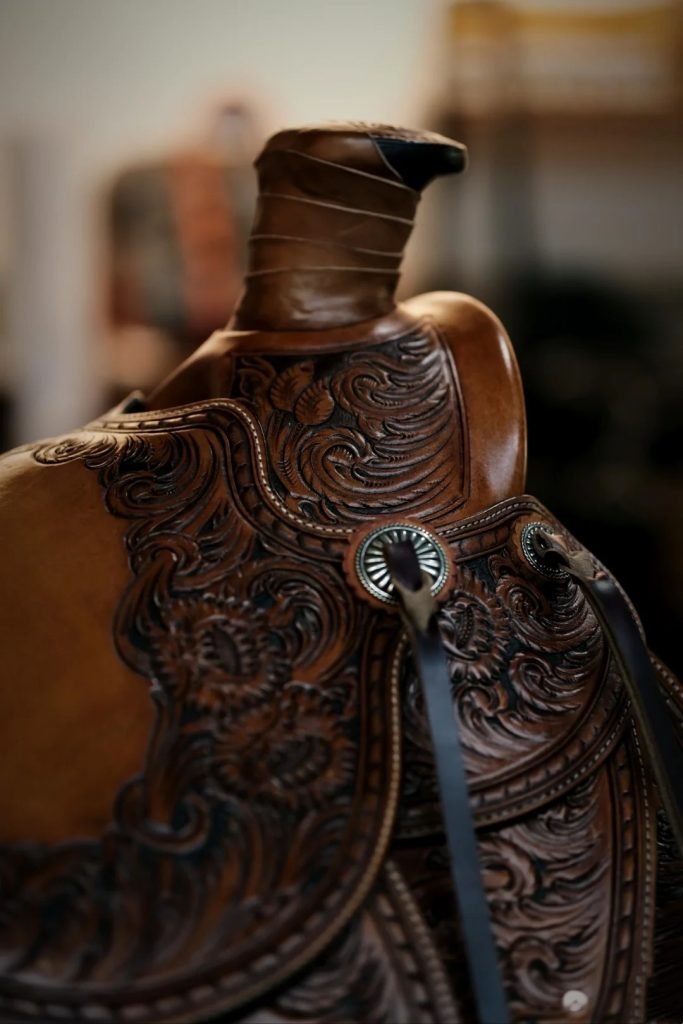
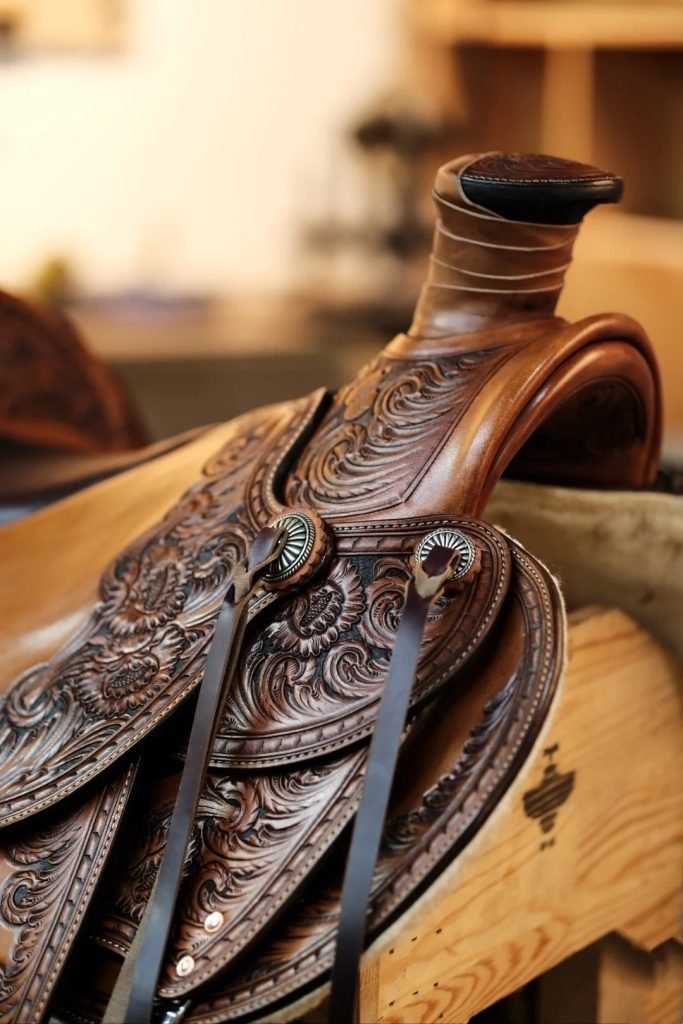
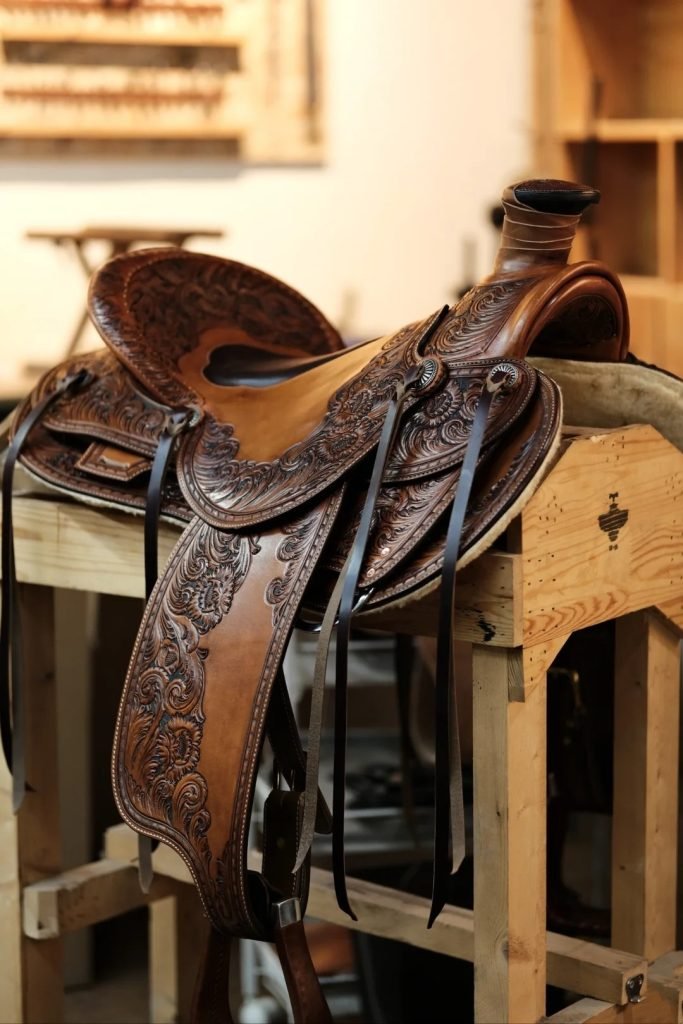
A saddle is a critical piece of tack used in horseback riding, designed to provide a secure seat for the rider while distributing their weight evenly across the horse’s back. This distribution is vital to preventing discomfort or injury to the horse, as well as ensuring the rider’s stability and control. A well-chosen saddle enhances the riding experience, making it more comfortable for both the horse and the rider.

🐴Find the perfect saddle for your needs. Click here to view.

Key Components of a Saddle

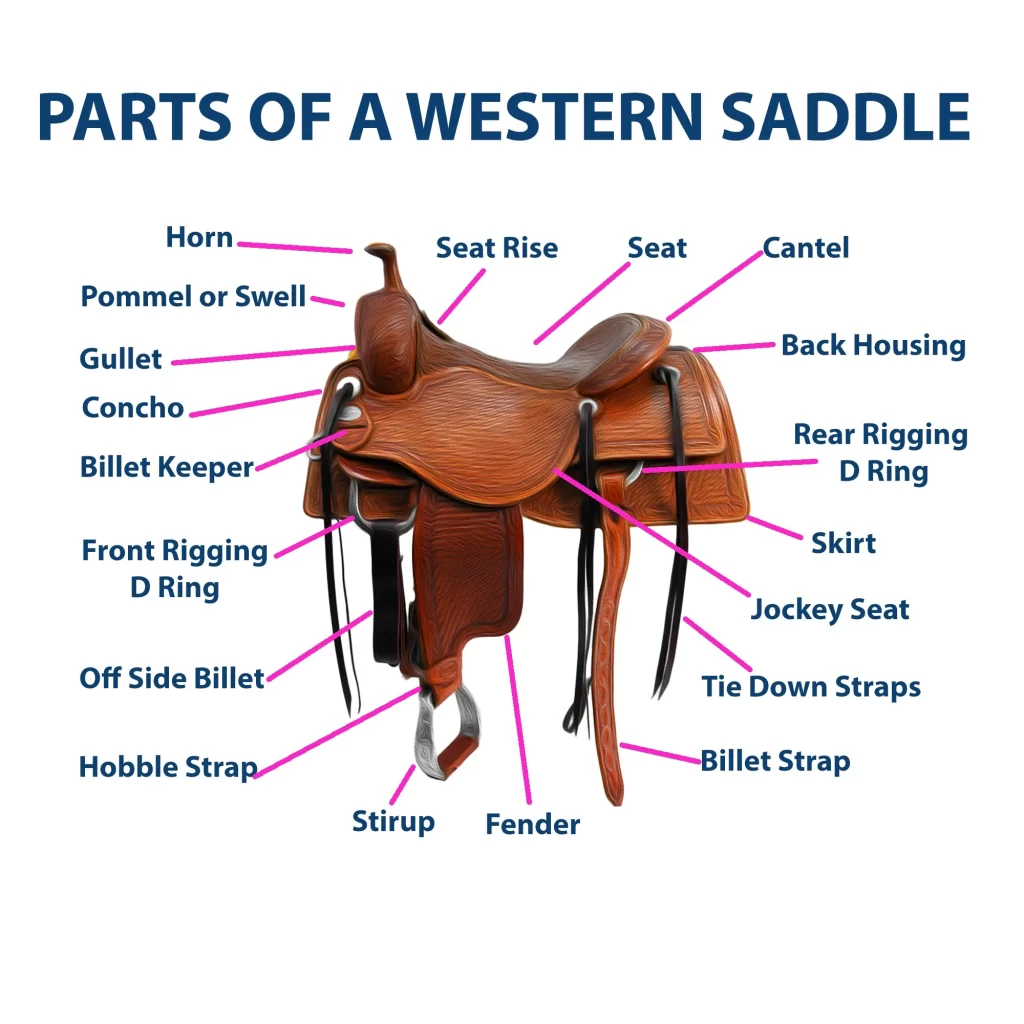
Understanding the saddle‘s key components is essential for selecting the right one and ensuring proper use. Each part has a specific function that contributes to both rider security and horse comfort.

Seat:

  • The seat is the central area where the rider sits.
  • It is typically contoured to support the rider’s pelvis and allow for a balanced position.
  • The design of the seat varies depending on the saddle’s purpose—deeper seats are common in dressage saddles for added stability, while flatter seats are often found in jumping saddles to allow more movement.

Pommel and Cantle:

  • The pommel is the front, slightly raised part of the saddle, located above the horse’s withers. It provides a secure place for the rider’s hand in certain disciplines and helps to anchor the saddle in place.
  • The cantle is the rear part of the saddle, raised to support the rider’s lower back. A higher cantle offers more security, particularly in saddles used for trail riding or dressage.

Stirrups:

  • Stirrups are metal or composite loops that hang from the saddle and provide a place for the rider’s feet.
  • They assist in maintaining balance and control, especially during mounting, dismounting, and when applying pressure with the legs.
  • Correctly adjusted stirrups are essential for rider comfort and effectiveness.

Girth/Cinch:

  • The girth (or cinch in Western riding) is a wide strap that runs under the horse’s belly, securing the saddle in place.
  • A properly tightened girth prevents the saddle from slipping sideways or backward, ensuring safety.
  • Girths are usually made from leather, synthetic materials, or fabric, with some featuring elastic ends to allow for the horse’s natural expansion as they move.

Each of these components works together to ensure that the saddle stays in place, the rider remains secure, and the horse experiences minimal discomfort. A well-maintained and correctly adjusted saddle is crucial for the longevity of the tack and the well-being of the horse.

Saddle Materials: Understanding Your Options

Choosing the right material for a saddle is essential for both performance and longevity. The material not only affects the saddle’s durability but also its maintenance requirements, weight, and overall appearance. Below, we explore the most common materials used in saddle construction, including their benefits and potential drawbacks.

Leather Saddles: The Gold Standard

Leather saddles have long been the preferred choice for riders due to their durability, flexibility, and classic appeal. These saddles are typically made from high-quality hides, such as:

  • Full-Grain Leather: Known for its strength and natural texture, full-grain leather is the most durable and breathable option.
  • Top-Grain Leather: Slightly more processed than full-grain, this leather is sanded and buffed to remove imperfections, offering a smoother finish.
  • Calfskin Leather: Often used for the seat and knee rolls, calfskin is softer and more supple, providing comfort and a luxurious feel.

Pros:

  • Durability: Leather saddles are known for their long lifespan, often lasting decades with proper care.
  • Comfort: Over time, leather molds to the rider’s shape, offering a customized fit that enhances comfort.
  • Aesthetic Appeal: The rich, traditional look of leather saddles is unmatched, adding a timeless elegance to your tack.

Cons:

  • Maintenance: Leather requires regular cleaning, conditioning, and protection from moisture to prevent cracking and wear.
  • Cost: Leather saddles are generally more expensive than their synthetic counterparts, reflecting the quality of the material and the craftsmanship involved.

Synthetic Saddles: Modern Convenience

Synthetic saddles are constructed from materials like synthetic leather, nylon, and other man-made composites. These saddles are designed to mimic the appearance of leather while offering unique advantages

Pros:

  • Lightweight: Synthetic saddles are significantly lighter than leather, making them easier to handle and carry, especially beneficial for younger riders or those with physical limitations.
  • Low Maintenance: Unlike leather, synthetic materials are resistant to moisture and do not require regular conditioning, making them easy to clean with just water and mild soap.
  • Affordability: Generally more budget-friendly, synthetic saddles are a practical choice for those new to riding or for equestrians on a budget.

Cons:

  • Durability: While synthetic materials are robust, they may not offer the same longevity as high-quality leather, particularly under heavy use.
  • Appearance: Some riders prefer the traditional look of leather, and synthetic saddles may not fully replicate this aesthetic, though they are available in various colors and styles.

Hybrid Saddles and Modern Materials: The Future of Saddle Design

In recent years, the equestrian world has seen the introduction of hybrid saddles and those made from innovative materials like carbon fiber. These modern designs combine the best of both worlds, offering the strength and flexibility of traditional materials with the benefits of new technology.

Choosing the right saddle material depends on your specific needs and preferences. Whether you choose the timeless appeal of leather, the convenience of synthetics, or the cutting-edge advantages of hybrid designs, understanding the characteristics of each material will help you make an informed decision that enhances your riding experience.

Understanding the Different Types of Saddles

Choosing the right saddle is vital for both rider comfort and the horse’s performance. Below, we explore various saddle types, each designed for specific riding disciplines and needs. This guide will help you understand the key features, uses, and benefits of different saddles, ensuring you make an informed decision.

English Saddles: Precision and Control

English saddles are designed for a variety of equestrian sports that require a high degree of control and communication between horse and rider. These saddles are generally lighter and smaller than Western saddles, making them suitable for activities that demand close contact and precision.

Dressage Saddles

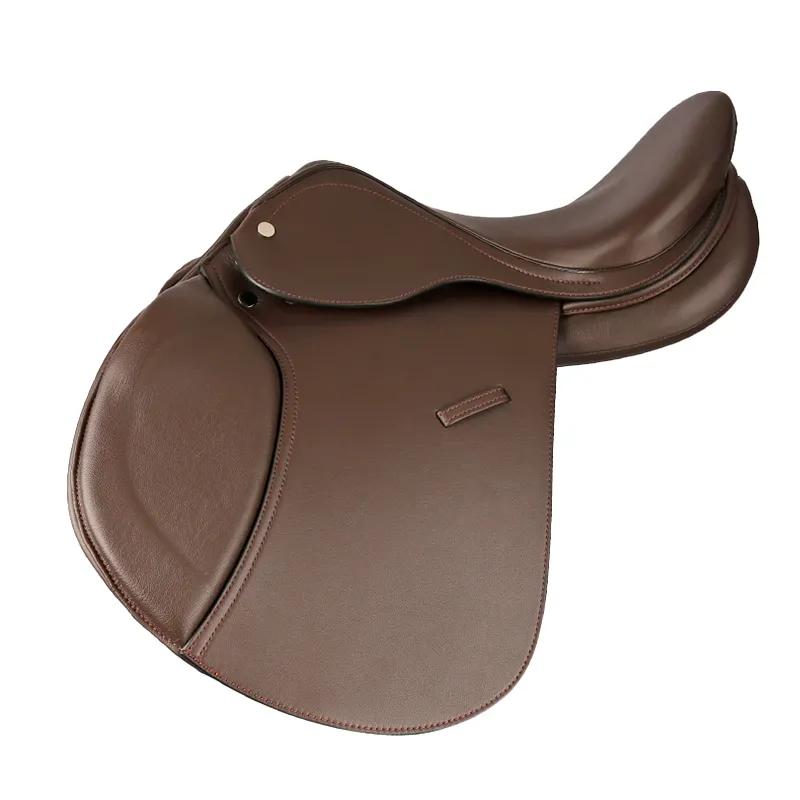
Features: Dressage saddles have a deep seat, long straight-cut flaps, and a high pommel and cantle. The design encourages a long leg position and an upright posture, which are essential in dressage.

Purpose: Ideal for dressage, where the focus is on the rider’s ability to communicate subtle cues to the horse. The deep seat provides stability, while the long flaps allow the rider’s leg to stay close to the horse, facilitating precise commands.

Jumping Saddles

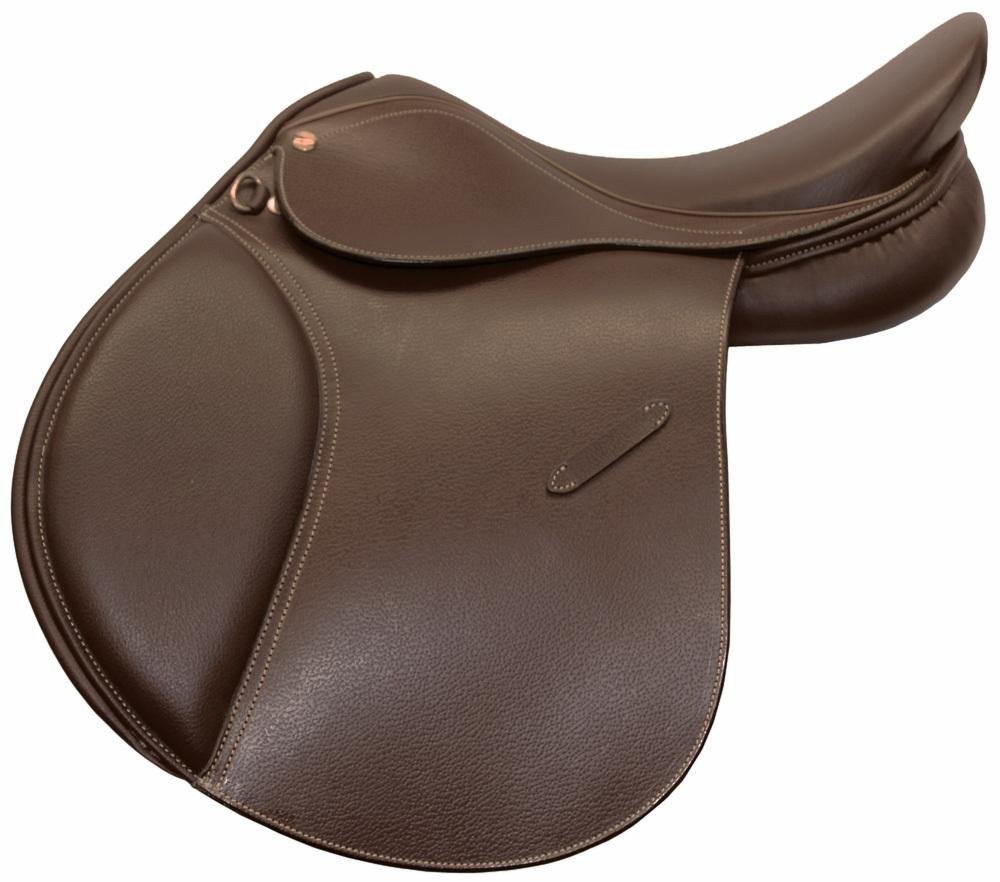
Features: These saddles are characterized by a flatter seat, forward-cut flaps, and a lower pommel and cantle. The shorter flaps are designed to accommodate the bent knee position of a rider in jump events.

Purpose: Specifically made for show jumping and eventing. The design supports the rider during jumps, allowing for easy movement and maintaining balance. The forward-cut flaps give more freedom to the rider’s legs, essential for achieving the forward-leaning posture needed in jumps.

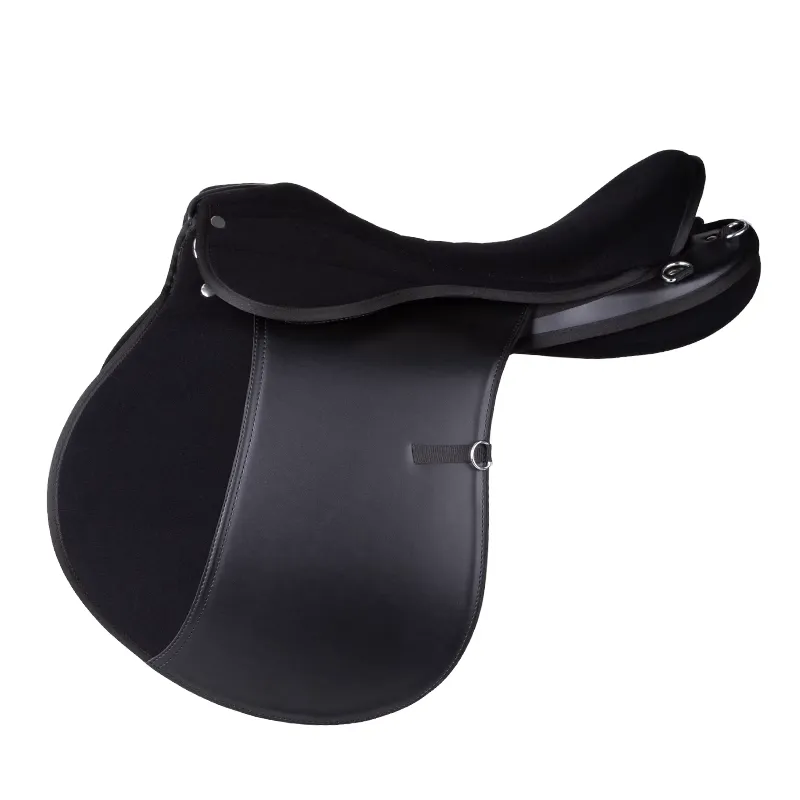
General-Purpose (All-Purpose) Saddles

Features: A blend of features from both dressage and jumping saddles, this saddle has a moderately deep seat and flaps that are slightly forward but not as extreme as in jumping saddles.

Purpose: Versatile and suitable for riders who participate in multiple disciplines such as flatwork, jumping, and casual trail riding. This saddle is often preferred by beginners or those who need a saddle for a variety of activities without specializing in one discipline.

Western Saddles: Durability and Comfort

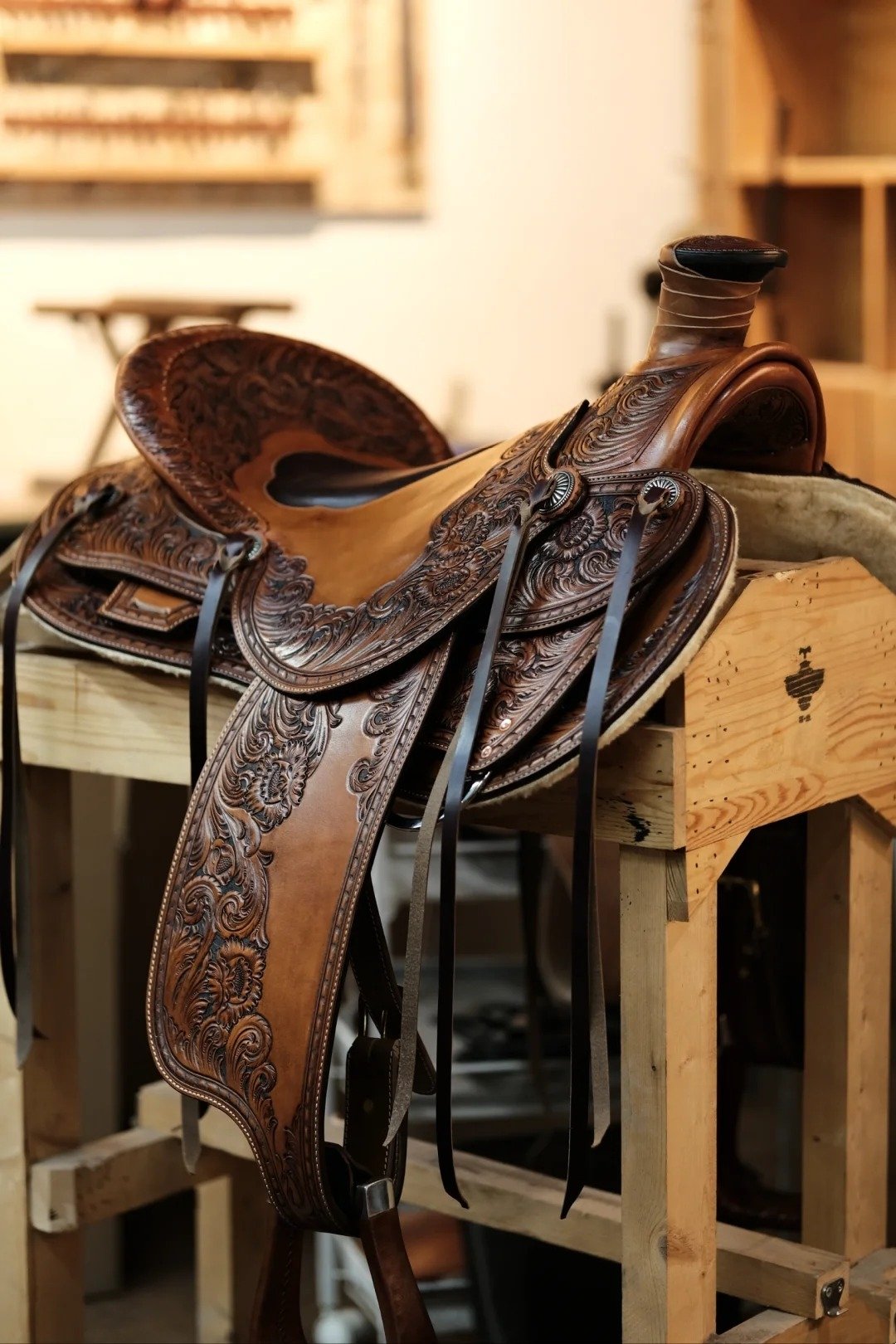
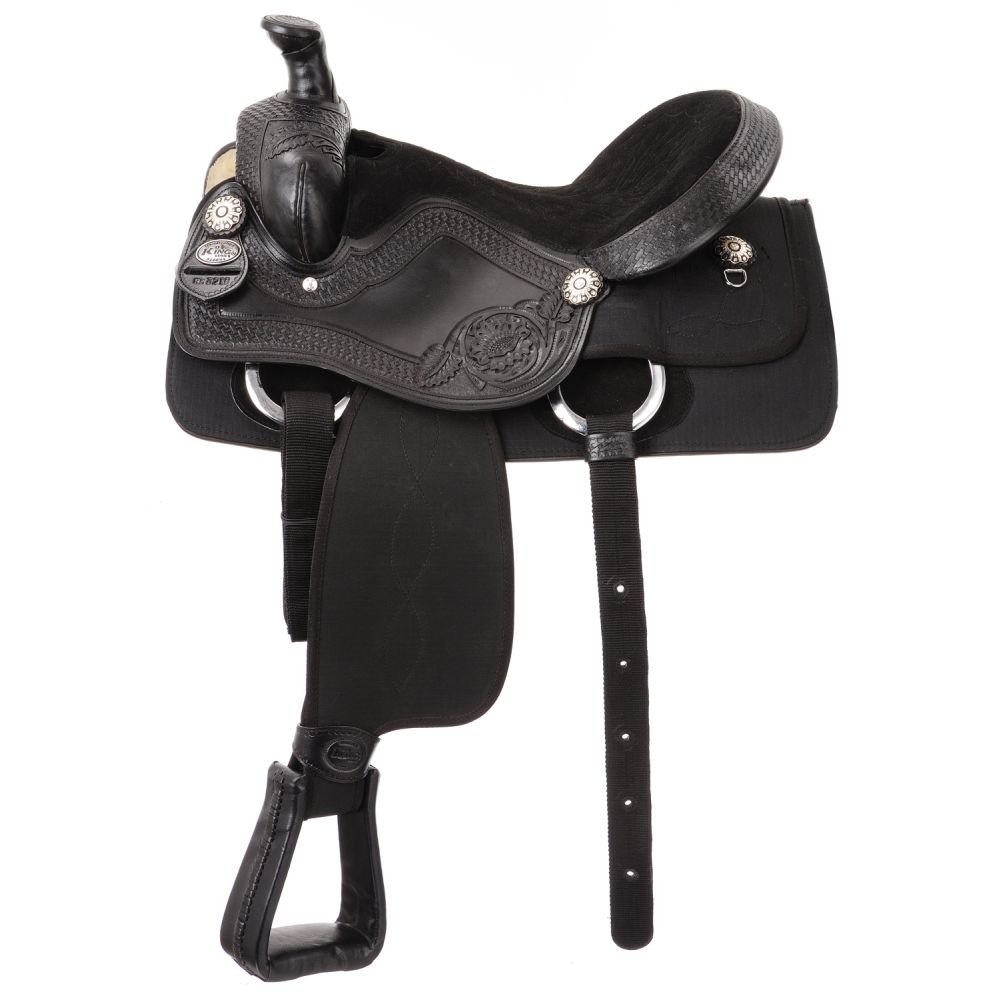
Western saddles are built for long hours of riding and are often used in ranch work and competitive Western events. These saddles are larger and more substantial, designed to distribute the rider’s weight over a larger area, which reduces the strain on the horse during extended periods of riding.

Roping Saddles

Features: Designed with a sturdy horn, reinforced tree, and a deep seat to handle the rigors of roping. The stirrups are positioned to provide balance and leverage.

Purpose: Essential for roping cattle, these saddles are built to withstand the stresses of catching and holding livestock. The reinforced horn allows the rider to secure the rope, while the deep seat provides the necessary stability.

Trail Saddles

Features: Lighter than other Western saddles, with a padded seat, multiple attachment points for gear, and often featuring a high cantle for added support.

Purpose: Designed for comfort on long rides, trail saddles prioritize the rider’s comfort and the horse’s ease over rough terrains. The design reduces rider fatigue, and the padded seat ensures a comfortable ride over hours.

Barrel Racing Saddles

Features: These saddles have a deep seat, high cantle, and short, rounded skirts. They are designed to be lightweight and allow for quick, sharp turns.

Purpose: Used in barrel racing, where agility and speed are crucial. The deep seat and high cantle help the rider stay secure while navigating tight turns at high speeds.

Specialty Saddles: Designed for Specific Activities

Specialty saddles are crafted for particular disciplines or unique riding styles, where the demands of the activity require specific features.

Endurance Saddles

Features: Lightweight with a cushioned seat, extended panels, and multiple D-rings for attaching gear. These saddles are designed to evenly distribute the rider’s weight and reduce pressure points on the horse’s back.

Purpose: Ideal for long-distance riding, endurance saddles ensure comfort for both the horse and rider over extended periods. They are built to prevent fatigue and discomfort during endurance events, where both the rider and horse cover long distances over various terrains.

Racing Saddles

Features: Extremely lightweight with a minimalistic design. The saddle has a flat seat and very short stirrup leathers to accommodate the jockey’s crouched position.

Purpose: Specifically for horse racing, where weight and balance are crucial. The design allows jockeys to maintain a low, aerodynamic profile, reducing wind resistance and enhancing speed.

Sidesaddles

Features: Unique design that allows the rider to sit with both legs on one side of the horse. It includes a secure pommel and a flat seat to accommodate this riding style.

Purpose: Traditionally used by women, sidesaddles are still used in specific equestrian events and exhibitions. They allow for a classical riding style that emphasizes elegance and grace while providing stability and security.

This detailed understanding of saddle types ensures that you can select the right saddle for your specific riding needs, whether for precision in English riding, durability in Western disciplines, or specialized activities requiring a unique saddle design. Each type of saddle is engineered to enhance the riding experience, providing comfort, control, and safety for both horse and rider.

Step-by-Step Guide to Proper Saddle Installation

Installing a saddle correctly on your horse is crucial for both horse comfort and rider safety. This section provides a detailed guide to ensure that your saddle is securely and properly placed on your horse.

Preparation Before Installing the Saddle

Checking Your Horse’s Condition

Before beginning the saddling process, it is essential to ensure that your horse is in a calm state and clean. Dirt, mud, or sweat can cause discomfort under the saddle, leading to potential skin irritations or sores. A quick brushing of the horse’s back and sides will remove any debris that might cause friction under the saddle.

Inspecting the Saddle and Equipment

Thoroughly inspect all your equipment before use. Check the saddle for any signs of wear or damage, particularly on the tree, straps, and stitching. Ensure that the girth or cinch, and saddle pad are in good condition and free from excessive wear. Any damaged components should be repaired or replaced to prevent accidents or discomfort.


Step-by-Step Installation Process

1. Placing the Saddle Pad

Start by placing the saddle pad or blanket on the horse’s back. Ensure that it is positioned evenly on both sides and is centered along the horse’s spine. The front of the pad should sit just in front of the withers, with no wrinkles or folds that could cause discomfort or chafing. It is essential that the pad covers the area where the saddle will rest, providing an even layer of protection.

2. Positioning the Saddle Correctly

Lift the saddle and gently place it onto the horse’s back, slightly ahead of the final position. Slide the saddle back until it naturally stops just behind the horse’s shoulder blades. This movement ensures that the horse’s coat lies flat under the saddle, reducing the risk of hair being pulled during riding. The saddle should sit level, with the pommel slightly higher than the cantle, ensuring an even distribution of the rider’s weight.

3. Securing the Girth or Cinch

Once the saddle is in place, attach the girth or cinch. Start by connecting the girth on the horse’s left side, then gradually tighten it on the right side. Make sure to adjust the tension evenly, allowing enough space to fit a flat hand between the girth and the horse’s body. Over-tightening can cause discomfort or restrict breathing, while a loose girth can lead to the saddle shifting during riding. After securing the girth, double-check for even tension and ensure the saddle is still in the correct position.

4. Adjusting Stirrups and Final Components

Adjust the stirrups to the appropriate length for the rider. The stirrups should be level, with the length set so that when the rider sits in the saddle, their knees are slightly bent. Finally, check all the straps, billets, and buckles for security. Before mounting, make sure everything is securely fastened and in good working order.

Common Mistakes to Avoid During Saddle Installation

  • Incorrect Saddle Positioning: Placing the saddle too far forward can impede the horse’s shoulder movement, while placing it too far back can lead to uneven weight distribution and pressure points. Always ensure the saddle is positioned behind the shoulder blades and level.
  • Over-Tightening the Girth: Tightening the girth too much can cause discomfort and restrict the horse’s breathing. It’s important to gradually tighten the girth, allowing the horse to adjust and checking for even tension.
  • Neglecting to Check for Pressure Points: After securing the saddle, run your hands under the saddle and girth to check for any uneven pressure or areas where the saddle might be pinching the horse. Address any issues before riding to prevent soreness or injury.

Proper saddle installation is key to a safe and comfortable ride for both you and your horse. By following these steps carefully, you can ensure that your saddle is properly fitted and securely attached, minimizing the risk of injury and enhancing the overall riding experience.

Comprehensive Guide to Saddle Maintenance: Cleaning and Care Procedures

Maintaining your saddle properly is crucial to ensuring its longevity and functionality. Regular cleaning and care not only protect your investment but also ensure the comfort and safety of both rider and horse. This section provides detailed guidance on how to clean and care for your saddle, addressing both daily routines and more intensive maintenance tasks.

Daily Saddle Care and Maintenance

1. Daily Wiping and Cleaning

After each ride, it’s essential to wipe down your saddle with a damp cloth. This step removes sweat, dust, and dirt that can accumulate on the saddle, particularly on the leather. For leather saddles, this daily cleaning helps prevent the buildup of grime that can cause the leather to dry out or crack over time. For synthetic saddles, a quick wipe down helps maintain the material’s condition and appearance.

2. Regular Inspection for Damage

Daily inspection of your saddle is another critical maintenance routine. Pay close attention to areas prone to wear, such as the stitching, billets, and the leather’s surface. Look for signs of damage, including loose stitching, cracks in the leather, or fraying in the synthetic materials. Identifying and addressing these issues early can prevent them from developing into more significant problems that might require costly repairs.

Deep Cleaning and Conditioning of Saddles

1. Leather Saddle Care

  • Cleaning: Begin by removing surface dirt with a soft brush or cloth. Apply a specialized leather cleaner using a sponge or soft cloth, working it into the leather with gentle circular motions. Be sure to cover the entire saddle, including less visible areas like under the flaps.
  • Conditioning: After cleaning, apply a high-quality leather conditioner to keep the leather supple and moisturized. Use a small amount of conditioner and work it into the leather, allowing it to absorb fully. This step is crucial for preventing the leather from drying out and cracking.
  • Protection: Finally, apply a leather protector or water repellent to shield the saddle from environmental factors like moisture or UV rays. This additional layer helps preserve the saddle’s finish and extend its lifespan.

2. Synthetic Saddle Care

  • Cleaning: Synthetic saddles require different care techniques compared to leather saddles. Use mild soap and water to clean the surface, avoiding harsh chemicals that can damage the synthetic materials. A soft cloth or sponge should be used to wipe down the saddle thoroughly, ensuring all soap residue is removed to prevent discoloration or deterioration.
  • Maintenance: Unlike leather, synthetic saddles don’t require conditioning, but it’s important to ensure they are stored properly to avoid exposure to extreme temperatures, which can cause the materials to warp or crack.

Proper Storage Techniques for Saddles

1. Ideal Storage Conditions

  • Environment: Store your saddle in a cool, dry place, away from direct sunlight, which can cause the leather to fade and weaken over time. A saddle cover is recommended to protect the saddle from dust and accidental scratches while in storage.
  • Saddle Stand: Always store your saddle on a proper saddle stand that supports its shape. Avoid placing heavy objects on top of the saddle, as this can cause the tree to deform.

2. Preventing Damage in Storage

  • Mold Prevention: To avoid mold growth, ensure that the storage area has good air circulation and is free from excessive humidity. If you live in a humid climate, consider using a dehumidifier or moisture-absorbing products in your storage area.
  • Leather Care: For leather saddles, occasional light conditioning during storage periods can prevent the leather from drying out, especially in dry climates. Regularly inspect the saddle even when not in use to catch any signs of mold or dryness early.

Saddle Repair and Restoration

1. Recognizing When to Repair

There are specific signs that indicate when your saddle needs professional attention. If the saddle tree is broken, the leather is severely torn, or the stitching is coming apart, it’s time to seek repair services. Continuing to use a damaged saddle can compromise the safety and comfort of both horse and rider.

2. Restoration Techniques for Older Saddles

Restoring an old saddle to its former condition requires careful attention to detail. Re-dyeing the leather can restore its original color, while re-padding can ensure it remains comfortable for the horse. Restoration might also include replacing worn billets, fixing or replacing damaged stirrup leathers, and even reinforcing or replacing parts of the tree.

Proper maintenance and care of your saddle will significantly extend its life and ensure that it remains safe and comfortable for use. By following these guidelines, you can protect your investment and ensure a better riding experience.

Conclusion

Selecting the right saddle and maintaining it properly is essential for both the rider’s comfort and the horse’s well-being. A well-fitted saddle not only ensures safety during rides but also extends the saddle’s lifespan. By regularly cleaning, inspecting, and properly storing your saddle, you can avoid common issues that lead to wear and tear, ultimately protecting your investment.

If you haven’t checked your saddle’s condition lately, now is the perfect time. Consider investing in a quality saddle or upgrading your current one if it’s showing signs of age. For the best results, seek professional fitting services to ensure your saddle is perfectly suited to both you and your horse. Your comfort, and your horse’s, are worth the extra care.

Posted on Leave a comment

What Are Horse Bridles and How Can They Improve Your Riding Experience?

Introduction

Have you ever wondered why horse bridles are so crucial in horse riding? Whether you’re a seasoned rider or just starting out, the right bridle can make all the difference in your connection with your horse. Horse bridles are not just accessories; they are essential tools that play a significant role in communication and control between you and your horse. Without the proper bridle, even the most well-trained horse may not respond as intended, leading to frustration and potential safety issues.

In this blog, we’ll explore different types of horse bridles and break down their parts, explaining how each component contributes to a better riding experience. In the end, you’ll know exactly what to look for in a bridle to ensure it suits both your needs and your horse’s comfort, setting you up for more enjoyable and effective rides.

What Are Horse Bridles?

Basic Definition of Horse Bridles

A horse bridle is the most essential piece of tack used in horse riding. Simply put, it’s a set of straps that fit over the horse’s head, connecting to the bit and reins. The primary function of a bridle is to allow the rider to communicate with and control the horse. When you gently pull on the reins, the bridle helps transmit signals through the bit in the horse’s mouth, guiding the horse’s movements.

Without a well-fitting and appropriate bridle, it’s nearly impossible to achieve the level of control and communication needed for safe and effective riding. Think of it as the steering wheel of a car—without it, you’re not going anywhere, or at least not where you intend to go.

Sizes and Fitting of Horse Bridles

When it comes to horse bridles, one size doesn’t fit all. They come in various sizes to accommodate different breeds and head shapes. Here’s a quick breakdown:

  • Pony Size: Designed for smaller ponies with more petite head shapes.
  • Cob Size: Suited for medium-sized horses, often used for breeds with shorter heads.
  • Horse (Full) Size: Standard size for most average-sized horses.
  • Oversized: Also known as “Warmblood” size, for larger horses with bigger heads.

Getting the right size is crucial. A poorly fitted bridle can cause discomfort, leading to miscommunication between you and your horse. For instance, if a bridle is too tight, it can pinch the horse’s skin or rub against sensitive areas, making it hard for the horse to respond to your commands. On the other hand, if it’s too loose, it might slip, causing you to lose control at a critical moment.

A well-fitted bridle should sit snugly on the horse’s head without pinching or creating pressure points. The bit should rest comfortably in the horse’s mouth, and the reins should allow you to maintain gentle, clear contact. As the saying goes, “A happy horse is a responsive horse,” and getting the fit right is a big part of that happiness.

By understanding these basic elements, you’ll be better equipped to choose a horse bridle that not only suits your horse but also enhances your overall riding experience.

Types of Horse Bridles

Understanding the different types of horse bridles is key to choosing the right one for your riding style and your horse’s comfort. Let’s dive into the two main categories: English bridles and Western bridles.

English Horse Bridles

English horse bridles are commonly used in English riding disciplines like dressage, jumping, and eventing. These bridles are designed with a focus on precision and control, which is crucial in competitive and technical riding.

  1. Snaffle Bridles:
    • The most basic and widely used type of riding is in English.
    • It consists of a single bit (the snaffle) and a simple arrangement of straps.
    • Snaffle bridles are favored for their direct and straightforward communication between the rider’s hands and the horse’s mouth.
  2. Double Bridles:
    • Used primarily in higher-level dressage.
    • Includes two bits: a snaffle and a curb, each with its own set of reins.
    • This setup provides the rider with more nuanced control over the horse, allowing for more refined movements and adjustments.

English bridles typically include a browband, noseband, and throatlatch, all designed to keep the bridle securely in place while providing a structured, clean appearance.

Western Horse Bridles

Western horse bridles are used in Western riding disciplines like reining, roping, and barrel racing. These bridles are more minimalist, often lacking some of the components that are standard in English bridles.

  1. One-Ear and Two-Ear Bridles:
    • Common in Western riding, these bridles feature a simple headstall with a single or double loop over one or both ears.
    • They do not have a browband or noseband, offering more freedom and flexibility for the horse.
  2. Split-Ear Bridles:
    • A variation of the one-ear design, where the ear loop is split, giving the bridle a distinctive look while still maintaining functionality.

Western bridles generally lack the nosebands and browbands found in English bridles, giving them a more open and unrestricted design. This simplicity aligns with the practical, working nature of Western riding, where comfort and quick adjustments are key.

To order a bridle, please browse our collection by clicking this link.

Comparison of English vs. Western Horse Bridles

While both English and Western horse bridles serve the same fundamental purpose, they cater to different riding styles and requirements.

  • Structure: English bridles are more structured and often include additional components like nosebands and browbands, which help keep the bridle secure and give it a polished look. Western bridles are simpler and less restrictive, designed for ease of use and practicality.
  • Use: English bridles are used in disciplines that require precise communication and control, making them ideal for competitive riding. Western bridles, with their relaxed fit, are perfect for the more laid-back and utilitarian aspects of Western riding.
  • Comfort: Western bridles are often preferred for longer rides, as they place less pressure on the horse’s head. English bridles, while secure and precise, can be more restrictive, making them better suited for shorter, more intense riding sessions.

Each type of horse bridle aligns with the specific needs of different riding disciplines, so choosing the right one depends on your riding style and horse’s comfort.

Parts of an English Horse Bridle

When it comes to English horse bridles, understanding the different components is essential for ensuring proper fit, comfort, and control. Each part plays a specific role in how the bridle functions and communicates with your horse. Let’s break down the key parts of an English horse bridle.

Crownpiece

The crownpiece is the central part of the bridle, running over the top of the horse’s head and holds everything together. It connects to the cheekpieces, browband, and noseband, ensuring the bridle stays in place. A well-fitted crownpiece is crucial as it evenly distributes pressure across the horse’s poll, which is a sensitive area just behind the ears.

Browband

The browband runs across the horse’s forehead, just below the ears, and attaches to the crownpiece. Its main function is to prevent the bridle from sliding back towards the neck. The browband ensures the bridle stays correctly positioned, which is essential for maintaining control and comfort. Many riders also choose decorative browbands, adding a personal touch to their horse’s gear.

Noseband

The noseband wraps around the horse’s nose and plays a significant role in keeping the horse’s mouth closed, preventing it from opening wide or crossing its jaw. This part of the bridle is particularly important for maintaining control, especially in disciplines like dressage where precision is key.

Cavesson

A cavesson is a specific type of noseband, often used in dressage. It sits higher on the horse’s nose than a standard noseband and is designed to apply even pressure across the face. The cavesson helps in refining communication between the rider and the horse, allowing for more precise commands and responses.

Throatlatch

The throatlatch is a strap that goes under the horse’s throat, connecting to the crownpiece. Its purpose is to ensure that the bridle doesn’t slip off over the horse’s head. While it’s not supposed to be tight, it should be snug enough to keep the bridle secure during riding.

Cheekpieces

Cheekpieces are the straps that run down the sides of the horse’s face, connecting the crownpiece to the bit. They play a critical role in aligning the bit correctly in the horse’s mouth. Properly adjusted cheekpieces are essential for effective communication between the rider and the horse.

Reins

The reins are the rider’s direct link to the horse, connecting from the bit to the rider’s hands. They come in various materials, such as leather or synthetic, and are available in different lengths and widths to suit various disciplines. The reins allow the rider to give subtle signals, guiding the horse’s movements with precision.

Bit

The bit is perhaps the most crucial component, as it sits inside the horse’s mouth and directly influences its movement. Bits come in various styles, each designed to suit different horses and riding techniques. The bit’s placement and the rider’s use of the reins determine how effectively the horse responds to commands.

Flash

The flash is a small strap that attaches to the noseband and runs down to stabilize the bit. It helps prevent the horse from opening its mouth too wide and crossing its jaw, thus ensuring better control. The flash is particularly useful in situations where extra stability is needed, such as in competitive riding.

Each part of the English horse bridle has a specific purpose, and together, they create a system that enhances communication, control, and comfort during riding. Understanding these components will help you make more informed decisions about your horse’s gear and improve your overall riding experience.

Types of English Horse Bridles

Understanding the different types of English horse bridles is key to choosing the right one for your riding discipline and your horse’s comfort. Each type of bridle has unique features designed to meet specific needs in various equestrian activities. Let’s dive into the most common types of English horse bridles.

Jumping/Snaffle Bridles

Jumping or Snaffle bridles are among the most commonly used types in English riding, especially in jumping disciplines. These bridles are designed for versatility and simplicity, typically featuring a plain or raised browband and a simple cavesson noseband. The focus here is on allowing clear communication with the horse without too much restriction, which is crucial for the agility required in jumping.

  • Common Uses: Show jumping, general riding.
  • Features: A simple design with a snaffle bit, allowing for clear and direct communication between the rider and horse.

Dressage/Crank Bridles

Dressage or Crank bridles are specifically designed for the precision and finesse required in dressage. These bridles often feature a padded crank noseband that offers more control by applying even pressure around the horse’s nose. This design helps keep the horse’s mouth closed and encourages a relaxed jaw, which is essential for refined movements in dressage.

  • Design: Wider and more padded noseband, often with a crank mechanism.
  • Purpose: To provide better control and promote a relaxed jaw during intricate movements of dressage.
Dressage/Crank Bridles

Figure 8/Mexican/Grackle Bridles

The Figure 8, Mexican, or Grackle bridles are designed to keep the horse’s mouth closed, particularly effective for horses that tend to cross their jaws or resist the bit. The unique figure-eight pattern across the nose provides a secure fit, ensuring that the horse remains responsive to the rider’s commands.

  • Structure: The noseband crosses over the nose in a figure-eight pattern.
  • Usage: Often used in eventing, cross-country, or with horses that require extra control to prevent jaw-crossing.
Figure 8/Mexican/Grackle Bridles

Hunter Bridles

Hunter bridles are known for their traditional and elegant appearance, often used in hunting and show jumping. These bridles are typically more understated, featuring flat leather and simple stitching. The design is meant to be functional yet stylish, fitting the formal requirements of hunter classes.

  • Traditional Look: Flat leather with minimal decoration.
    • Application: Primarily used in hunting and show jumping, where tradition and simplicity are valued.
Hunter Bridles

Weymouth/Double Bridles

Weymouth or Double bridles are used in upper-level dressage and require a skilled hand. These bridles feature two bits – a curb and a bradoon – and two sets of reins, allowing for precise control over the horse’s head and neck position. The combination of bits helps achieve the high level of collection and finesse needed in advanced dressage.

  • Usage: Exclusively in upper-level dressage.
  • Features: Two bits and two sets of reins for refined control and communication.
Weymouth/Double Bridles

Bitless Bridles

Bitless bridles are an alternative for horses that don’t tolerate a bit well. Instead of using a bit, these bridles use pressure points on the horse’s head to communicate commands. They are often used in training or with horses that have sensitive mouths.

  • Description: Operates without a bit, using nose pressure and cheek straps.
  • Reasons for Use: Ideal for horses with mouth sensitivity or for training purposes.

Drop Noseband Bridles

Drop noseband bridles are designed to hold the horse’s mouth closed, similar to the figure-eight design, but with a simpler structure. The noseband sits lower on the horse’s face, offering control without excessive pressure. These are often used in dressage or with younger horses that are still learning to accept the bit.

  • Role: Keeps the horse’s mouth closed during riding, promoting better contact with the bit.
  • Use: Commonly seen in dressage or with younger, less experienced horses.
Drop Noseband Bridles

By understanding these different types of English horse bridles, you can better determine which is right for your horse and riding style. Whether you’re looking for a bridle for general riding, jumping, or advanced dressage, there’s an option tailored to your needs.

How to Put a Horse Bridle on a Horse

Bridling a horse might seem straightforward, but it’s a process that requires attention to detail and a gentle hand. The way you put on the bridle can affect your horse’s comfort and your control during riding. Here’s a clear, step-by-step guide to ensure you do it correctly, along with some common mistakes to avoid.

Step-by-Step Guide to Putting on a Horse Bridle

Prepare the Horse:

  • Start with Grooming: Before you even think about the bridle, make sure your horse is comfortable and calm. A quick grooming session can help your horse relax and remove any dirt or sweat that might cause discomfort under the bridle.
  • Position the Horse: Lead your horse to a quiet area, preferably in the stable or a grooming area, where it feels safe. Stand on the left side of the horse, known as the “near side,” as this is the standard position for handling horses.

Place the Reins Over the Horse’s Neck:

  • Slip the Reins Over Start by placing the reins over the horse’s head, letting them to rest on the horse’s neck. This helps you maintain control of the horse while you’re working with the bridle.
  • Hold the Bridle Correctly: Hold the bridle in your right hand by the crownpiece, with the bit hanging down. Make sure the bridle is untangled and all the parts are in their correct positions.

Introduce the Bit:

  • Encourage the Horse to Accept the Bit: Use your left hand to hold the bit and gently bring it up to the horse’s mouth. Most horses will open their mouths willingly, but if your horse is hesitant, you can gently insert your thumb into the side of its mouth, where there are no teeth, to encourage it to open up.
  • Slide the Bit in Place: Once the horse’s mouth is open, slide the bit into place. Make sure it’s positioned correctly in the horse’s mouth, resting comfortably on the bars (the gums where there are no teeth).

Lift the Bridle Over the Horse’s Ears:

  • Position the Crownpiece: With the bit in place, lift the crownpiece over the horse’s ears, one at a time. Be gentle with the ears, as they are sensitive. Ensure the browband is lying flat across the horse’s forehead.
  • Adjust the Cheekpieces: The cheekpieces should run down the sides of the horse’s face, connecting to the bit. Check that everything is symmetrical and not twisted.

Secure the Throatlatch and Noseband:

  • Fasten the Throatlatch: The throatlatch helps keep the bridle in place but should not be too tight. A good rule of thumb is to leave enough room for four fingers to fit between the throatlatch and the horse’s throat.
  • Adjust the Noseband: If your bridle has a noseband, adjust it so that it’s snug but not too tight. You should be able to fit two fingers between the noseband and the horse’s nose.

Final Check:

  • Ensure Proper Fit: Before moving on, check that all parts of the bridle are correctly fitted and comfortable for the horse. The bit should rest gently in the horse’s mouth without pulling the corners too tightly, and the bridle should not pinch or rub.

Common Mistakes to Avoid When Putting on a Horse Bridle

  1. Rushing the Process: One of the biggest mistakes is rushing through the process. Take your time to ensure the bridle is placed correctly and the horse is comfortable.
  2. Improper Bit Placement: Make sure the bit is sitting properly in the horse’s mouth. If it’s too high, it will cause discomfort; too low, and it may not be effective.
  3. Tight Throatlatch or Noseband: A too-tight throatlatch can restrict the horse’s breathing, while an overly tight noseband can cause discomfort and even pain.
  4. Forgetting to Check the Fit: Always double-check the fit before riding. A poorly fitted bridle can lead to discomfort for the horse and can affect your control while riding.

By following this guide, you can ensure that your horse is comfortable and that the bridle is secure, setting you both up for a successful and enjoyable ride.

Maintenance Tips for Horse Bridles

Maintaining your horse bridle isn’t just about preserving its appearance—it’s crucial for the comfort and safety of both you and your horse. A well-maintained bridle will last longer, work more effectively, and ensure that your horse remains comfortable during rides. Here’s how to take care of your horse bridles properly.

Regular Cleaning: Keeping Horse Bridles in Top Condition

Cleaning your horse’s bridle regularly is one of the most important aspects of maintenance. Over time, sweat, dirt, and saliva can build up on the bridle, leading to wear and tear. Not only can this cause discomfort for your horse, but it can also reduce the lifespan of your bridle.

  • Wipe Down After Every Ride: After each ride, take a few minutes to wipe down the bridle with a damp cloth. Focus on areas that come into contact with sweat and saliva, such as the bit and the noseband.
  • Weekly Deep Cleaning: At least once a week, disassemble the bridle and thoroughly clean it. Use a mild soap specifically designed for leather to clean the leather parts and rinse the bit under warm water to remove any residue.

Leather Conditioning: Keeping Horse Bridles Soft and Supple

Leather bridles require conditioning to stay soft, supple, and free from cracks. Without proper conditioning, leather can dry out and become brittle, which not only shortens the lifespan of the bridle but can also make it uncomfortable for the horse.

  • Condition Regularly: After cleaning your bridle, apply a quality leather conditioner to all leather parts. Use a soft cloth to gently work the conditioner into the leather, paying special attention to areas that bend or flex, such as the crownpiece and cheekpieces.
  • Avoid Over-conditioning: While it’s important to condition leather regularly, over-conditioning can make the leather too soft, which may affect its strength and durability. A light application every couple of weeks is usually sufficient.

Inspection and Repairs: Ensuring the Integrity of Your Horse Bridles

Regular inspection of your horse bridle is essential to catch any signs of wear and tear before they become serious problems. A small issue can lead to equipment failure during a ride, which could be dangerous.

  • Inspect After Every Cleaning: As you clean your bridle, take the time to inspect each part for signs of wear, such as cracks in the leather, fraying stitching, or rust on metal parts.
  • Timely Repairs: If you notice any damage, it’s important to address it immediately. Minor issues, like loose stitching, can often be fixed at home, but for more significant damage, such as a cracked leather strap, it’s best to seek professional repairs.

Storage Best Practices: Protecting Horse Bridles from Damage

Proper storage is crucial to maintaining the shape and integrity of your horse bridles. Incorrect storage can lead to deformities in the leather and weaken the overall structure of the bridle.

  • Store in a Cool, Dry Place: Always store your bridle in a cool, dry area away from direct sunlight, which can dry out and fade the leather. Avoid damp areas as moisture can cause mold and mildew.
  • Use a Bridle Rack: Hang your bridle on a dedicated bridle rack that supports its shape. Avoid hanging it by the bit or reins, as this can stretch and deform the leather.
  • Cover the Bridle: If possible, cover your bridle with a cloth or bridle bag to protect it from dust and dirt. This is especially important if you store your bridle in a tack room with other equipment.

By following these maintenance tips, you can extend the life of your horse bridle, keep it looking its best, and ensure it remains comfortable and safe for your horse to wear. Regular care not only protects your investment but also enhances your riding experience by ensuring that your equipment is always in top condition.

FAQs About Horse Bridles

The terms “headstall” and “bridle” are often used interchangeably, but they refer to different components of horse tack. A headstall is a part of the bridle that goes over the horse’s head and holds the bit in place. It consists of the crownpiece, cheekpiece, and throatlatch. On the other hand, a bridle includes the headstall along with additional components like the reins and noseband. In essence, a bridle is the complete set of equipment used for riding or driving a horse, while the headstall is just one part of it.

Both bridles and halters are used to control a horse, but they serve different purposes and have distinct designs. A halter is primarily used for leading and tying a horse. It consists of a simple strap system that goes around the horse’s head and does not have a bit. Halters are usually made from softer materials and are designed for handling and grooming. In contrast, a bridle is used for riding and includes a bit that goes into the horse’s mouth. Bridles provide more precise control and communication between the rider and horse due to the bit and other components like the reins and noseband.

Choosing the correct size bridle is essential for both horse comfort and effective communication. You should measure your horse’s head to determine the right size, which can vary among ponies, cobs, and full-sized horses. An ill-fitting bridle can cause discomfort or affect the horse’s performance. Be sure to properly adjust the bridle and check regularly to ensure it remains well-fitted.

Conclusion: Understanding Horse Bridles for Better Riding

In conclusion, understanding horse bridles and their components is essential for effective communication and control while riding. Whether you’re using an English bridle with its variety of types or a Western bridle tailored to different riding styles, knowing the roles and functions of each part helps ensure your horse’s comfort and performance. As discussed, bridles are not just functional tools but key elements that bridge the gap between the rider and horse. They allow for precise control and enhance the overall riding experience.

To maximize your riding experience and ensure your horse’s well-being, invest time in selecting the right bridle, learning how to fit it properly, and adhering to regular maintenance routines. By doing so, you’ll not only improve your riding skills but also contribute to a better, more enjoyable bond with your horse. Ready to find the perfect bridle for you and your horse? Dive into the world of bridles and discover the difference they can make today!