Introduction:
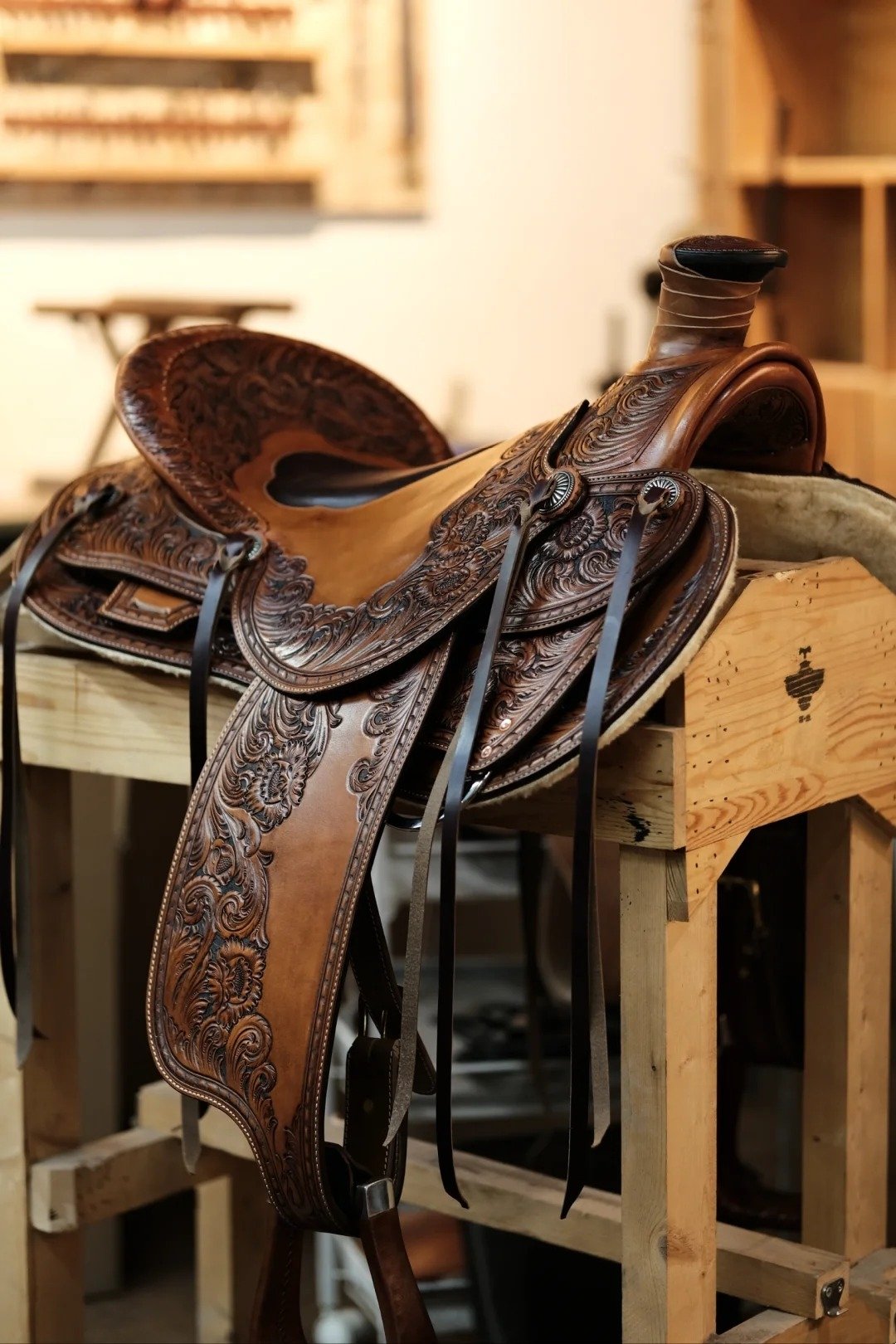
Ever wondered if the saddle you’re using is truly the best choice for your horse? Saddles are more than just a seat; they’re essential for distributing your weight and ensuring a comfortable ride for both you and your horse. But with so many options out there, it’s easy to feel overwhelmed. That’s where this guide comes in—to clear up any confusion and help you understand the importance of a well-chosen and well-maintained saddle.
By the end of this article, you’ll have a solid grasp of everything from saddle materials and types to installation, care, and common fitting issues. Whether you’re a seasoned rider or just starting out, this guide will give you the tools you need to make informed decisions, keeping both you and your horse happy on every ride. So, let’s dive in and ensure you’re set up for a better, safer riding experience!
What is a Saddle?
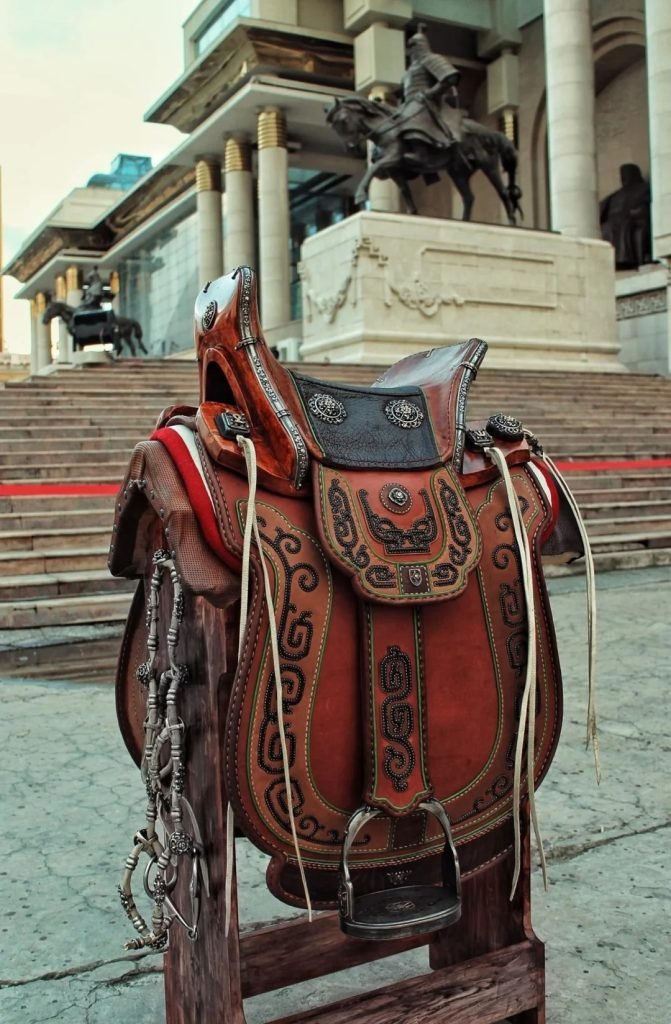
A saddle is a critical piece of tack used in horseback riding, designed to provide a secure seat for the rider while distributing their weight evenly across the horse’s back. This distribution is vital to preventing discomfort or injury to the horse, as well as ensuring the rider’s stability and control. A well-chosen saddle enhances the riding experience, making it more comfortable for both the horse and the rider.
🐴Find the perfect saddle for your needs. Click here to view.
Key Components of a Saddle
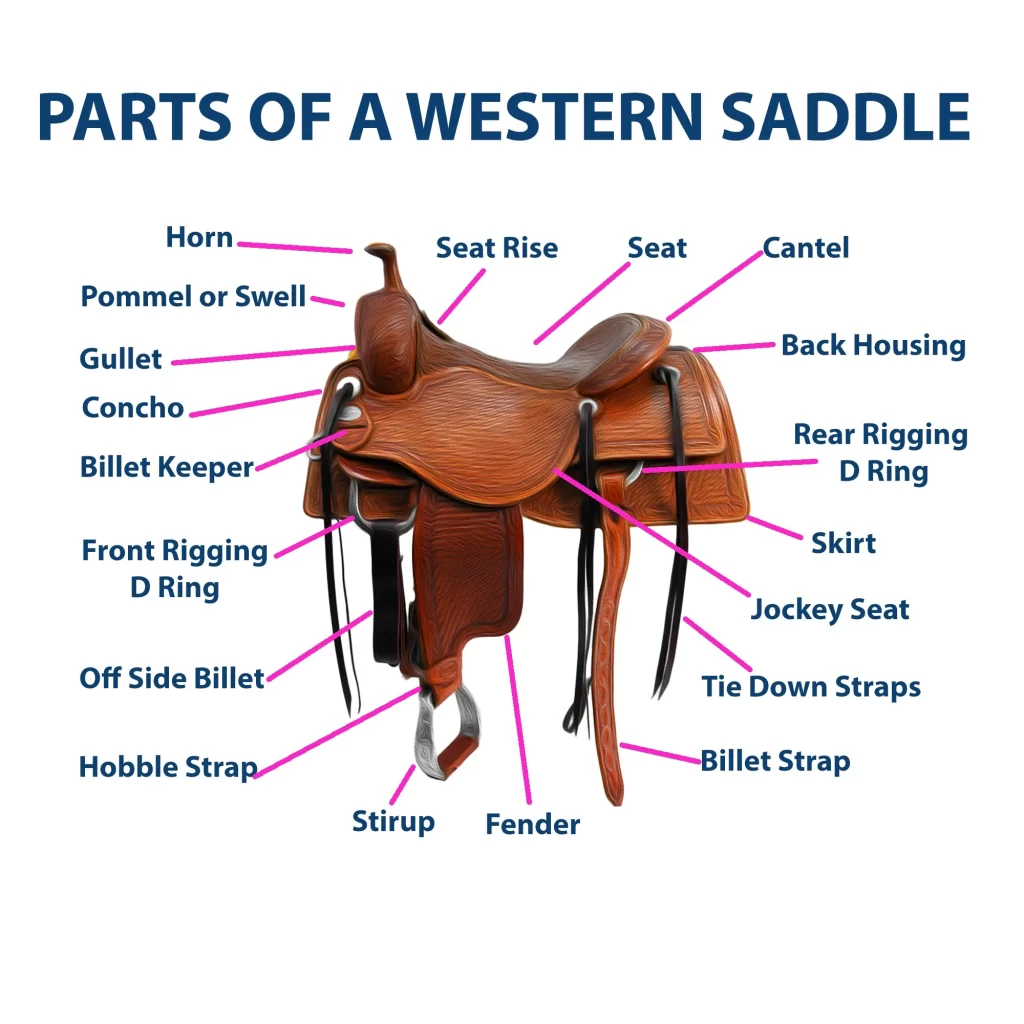
Understanding the saddle‘s key components is essential for selecting the right one and ensuring proper use. Each part has a specific function that contributes to both rider security and horse comfort.
Seat:
- The seat is the central area where the rider sits.
- It is typically contoured to support the rider’s pelvis and allow for a balanced position.
- The design of the seat varies depending on the saddle’s purpose—deeper seats are common in dressage saddles for added stability, while flatter seats are often found in jumping saddles to allow more movement.
Pommel and Cantle:
- The pommel is the front, slightly raised part of the saddle, located above the horse’s withers. It provides a secure place for the rider’s hand in certain disciplines and helps to anchor the saddle in place.
- The cantle is the rear part of the saddle, raised to support the rider’s lower back. A higher cantle offers more security, particularly in saddles used for trail riding or dressage.
Stirrups:
- Stirrups are metal or composite loops that hang from the saddle and provide a place for the rider’s feet.
- They assist in maintaining balance and control, especially during mounting, dismounting, and when applying pressure with the legs.
- Correctly adjusted stirrups are essential for rider comfort and effectiveness.
Girth/Cinch:
- The girth (or cinch in Western riding) is a wide strap that runs under the horse’s belly, securing the saddle in place.
- A properly tightened girth prevents the saddle from slipping sideways or backward, ensuring safety.
- Girths are usually made from leather, synthetic materials, or fabric, with some featuring elastic ends to allow for the horse’s natural expansion as they move.
Each of these components works together to ensure that the saddle stays in place, the rider remains secure, and the horse experiences minimal discomfort. A well-maintained and correctly adjusted saddle is crucial for the longevity of the tack and the well-being of the horse.
Saddle Materials: Understanding Your Options
Choosing the right material for a saddle is essential for both performance and longevity. The material not only affects the saddle’s durability but also its maintenance requirements, weight, and overall appearance. Below, we explore the most common materials used in saddle construction, including their benefits and potential drawbacks.
Leather Saddles: The Gold Standard
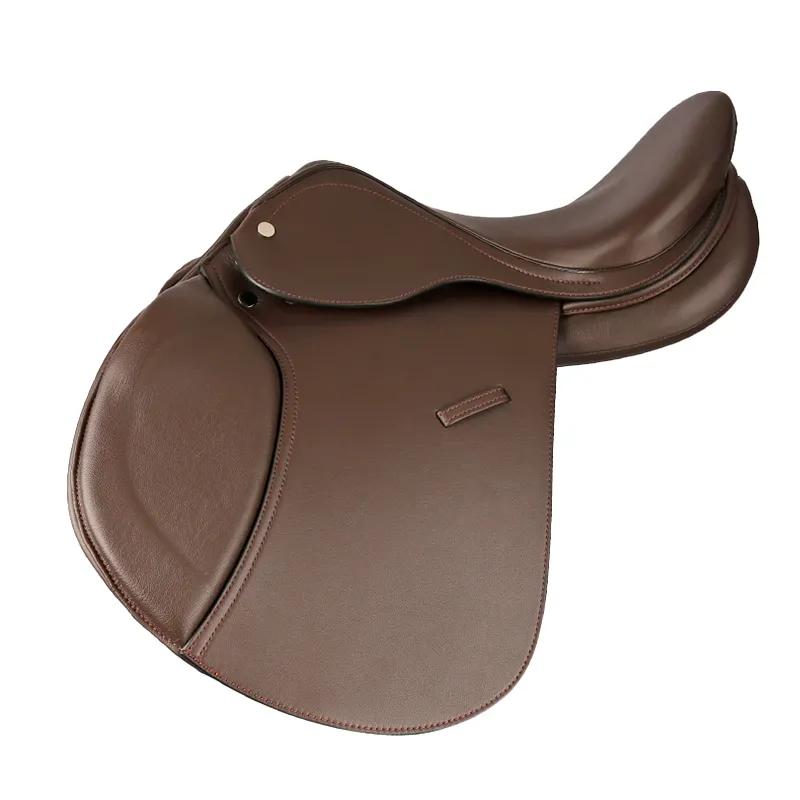
Leather saddles have long been the preferred choice for riders due to their durability, flexibility, and classic appeal. These saddles are typically made from high-quality hides, such as:
- Full-Grain Leather: Known for its strength and natural texture, full-grain leather is the most durable and breathable option.
- Top-Grain Leather: Slightly more processed than full-grain, this leather is sanded and buffed to remove imperfections, offering a smoother finish.
- Calfskin Leather: Often used for the seat and knee rolls, calfskin is softer and more supple, providing comfort and a luxurious feel.
Pros:
- Durability: Leather saddles are known for their long lifespan, often lasting decades with proper care.
- Comfort: Over time, leather molds to the rider’s shape, offering a customized fit that enhances comfort.
- Aesthetic Appeal: The rich, traditional look of leather saddles is unmatched, adding a timeless elegance to your tack.
Cons:
- Maintenance: Leather requires regular cleaning, conditioning, and protection from moisture to prevent cracking and wear.
- Cost: Leather saddles are generally more expensive than their synthetic counterparts, reflecting the quality of the material and the craftsmanship involved.
Synthetic Saddles: Modern Convenience
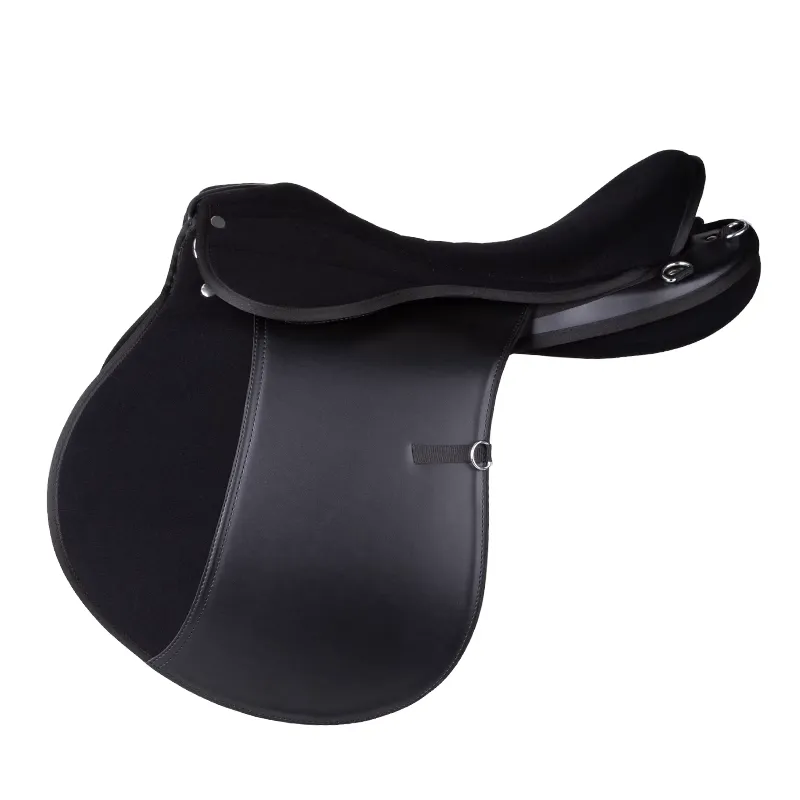
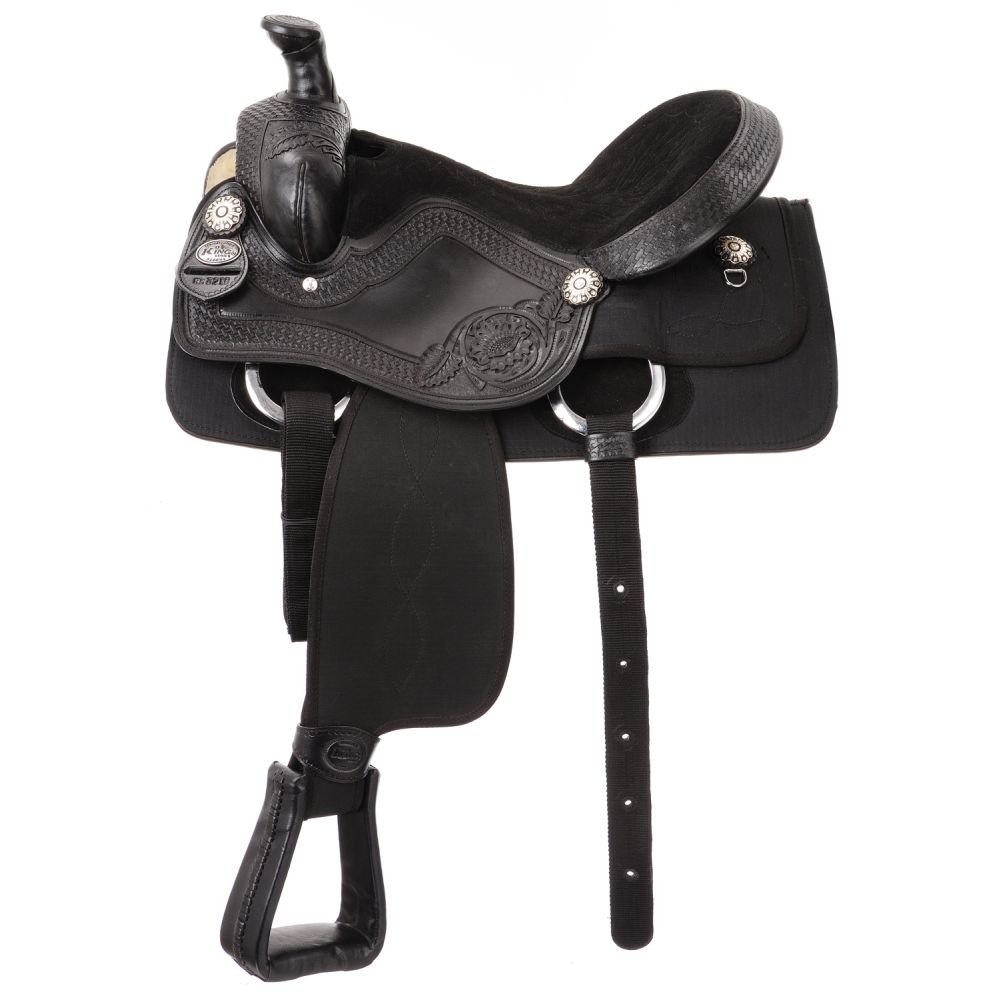
Synthetic saddles are constructed from materials like synthetic leather, nylon, and other man-made composites. These saddles are designed to mimic the appearance of leather while offering unique advantages
Pros:
- Lightweight: Synthetic saddles are significantly lighter than leather, making them easier to handle and carry, especially beneficial for younger riders or those with physical limitations.
- Low Maintenance: Unlike leather, synthetic materials are resistant to moisture and do not require regular conditioning, making them easy to clean with just water and mild soap.
- Affordability: Generally more budget-friendly, synthetic saddles are a practical choice for those new to riding or for equestrians on a budget.
Cons:
- Durability: While synthetic materials are robust, they may not offer the same longevity as high-quality leather, particularly under heavy use.
- Appearance: Some riders prefer the traditional look of leather, and synthetic saddles may not fully replicate this aesthetic, though they are available in various colors and styles.
Hybrid Saddles and Modern Materials: The Future of Saddle Design
In recent years, the equestrian world has seen the introduction of hybrid saddles and those made from innovative materials like carbon fiber. These modern designs combine the best of both worlds, offering the strength and flexibility of traditional materials with the benefits of new technology.
Choosing the right saddle material depends on your specific needs and preferences. Whether you choose the timeless appeal of leather, the convenience of synthetics, or the cutting-edge advantages of hybrid designs, understanding the characteristics of each material will help you make an informed decision that enhances your riding experience.
Understanding the Different Types of Saddles
Choosing the right saddle is vital for both rider comfort and the horse’s performance. Below, we explore various saddle types, each designed for specific riding disciplines and needs. This guide will help you understand the key features, uses, and benefits of different saddles, ensuring you make an informed decision.
English Saddles: Precision and Control
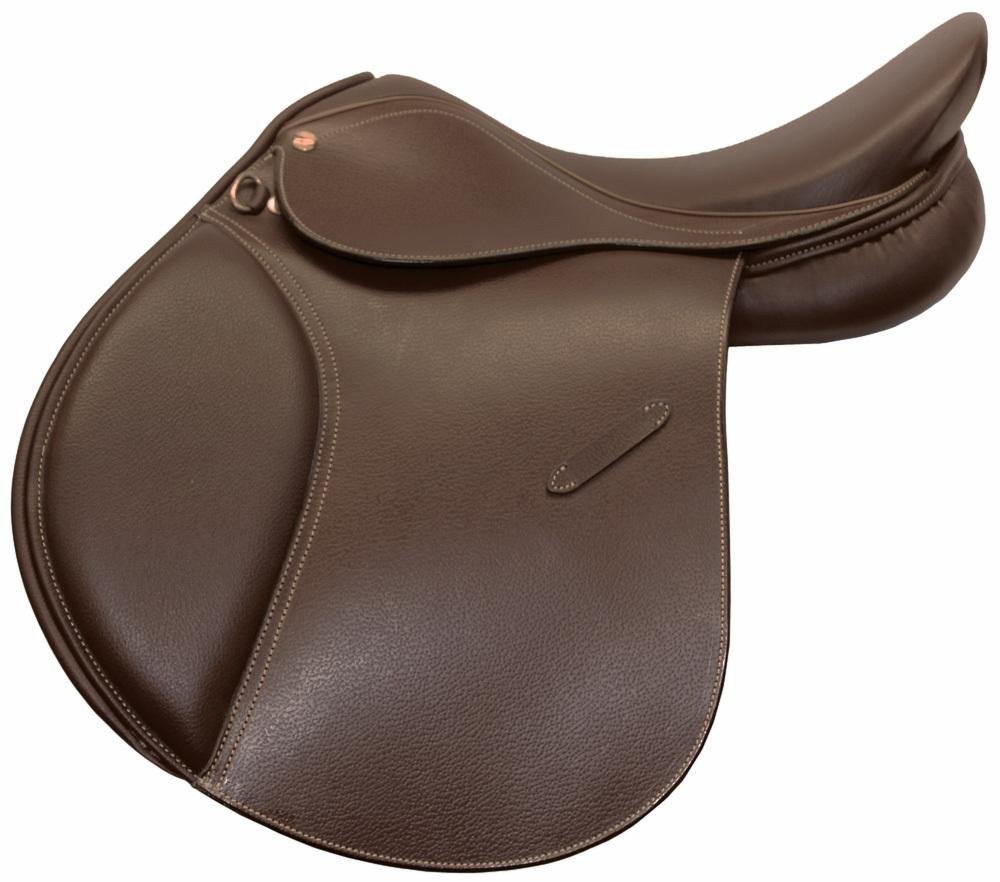
English saddles are designed for a variety of equestrian sports that require a high degree of control and communication between horse and rider. These saddles are generally lighter and smaller than Western saddles, making them suitable for activities that demand close contact and precision.
Dressage Saddles
Features: Dressage saddles have a deep seat, long straight-cut flaps, and a high pommel and cantle. The design encourages a long leg position and an upright posture, which are essential in dressage.
Purpose: Ideal for dressage, where the focus is on the rider’s ability to communicate subtle cues to the horse. The deep seat provides stability, while the long flaps allow the rider’s leg to stay close to the horse, facilitating precise commands.
Jumping Saddles
Features: These saddles are characterized by a flatter seat, forward-cut flaps, and a lower pommel and cantle. The shorter flaps are designed to accommodate the bent knee position of a rider in jump events.
Purpose: Specifically made for show jumping and eventing. The design supports the rider during jumps, allowing for easy movement and maintaining balance. The forward-cut flaps give more freedom to the rider’s legs, essential for achieving the forward-leaning posture needed in jumps.
General-Purpose (All-Purpose) Saddles
Features: A blend of features from both dressage and jumping saddles, this saddle has a moderately deep seat and flaps that are slightly forward but not as extreme as in jumping saddles.
Purpose: Versatile and suitable for riders who participate in multiple disciplines such as flatwork, jumping, and casual trail riding. This saddle is often preferred by beginners or those who need a saddle for a variety of activities without specializing in one discipline.
Western Saddles: Durability and Comfort
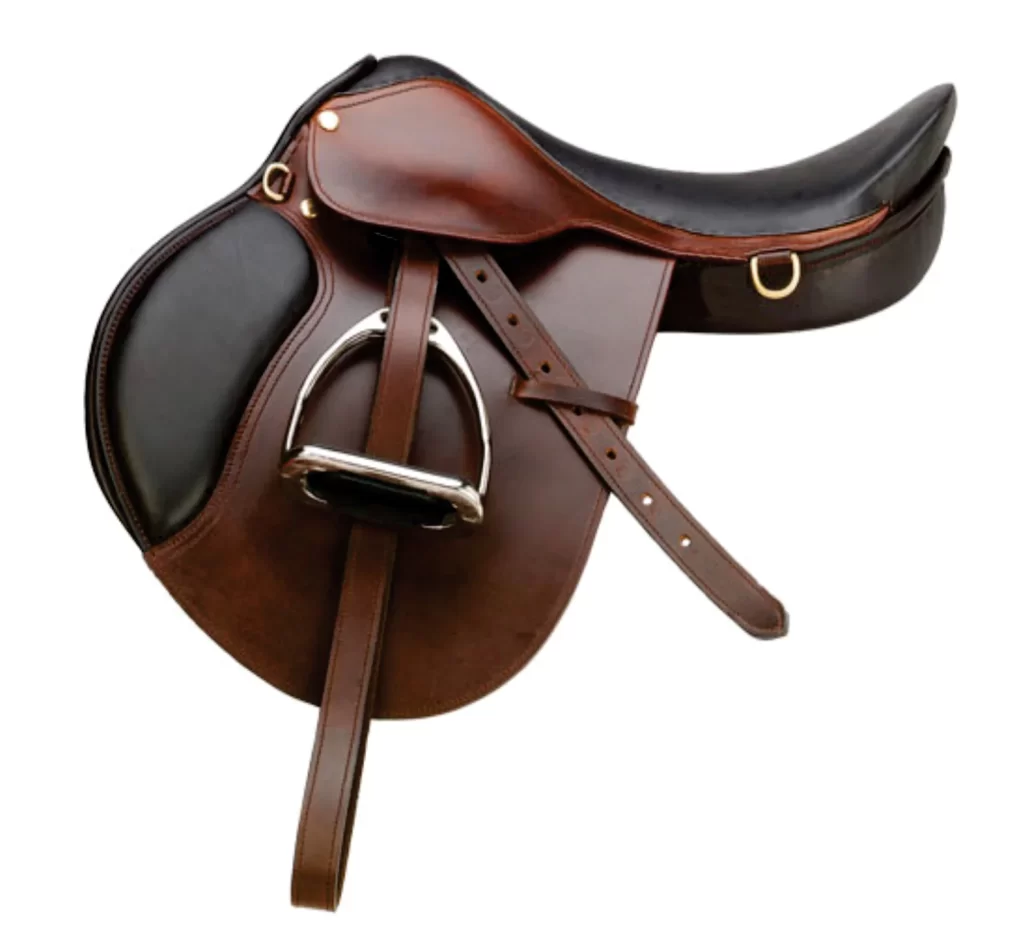
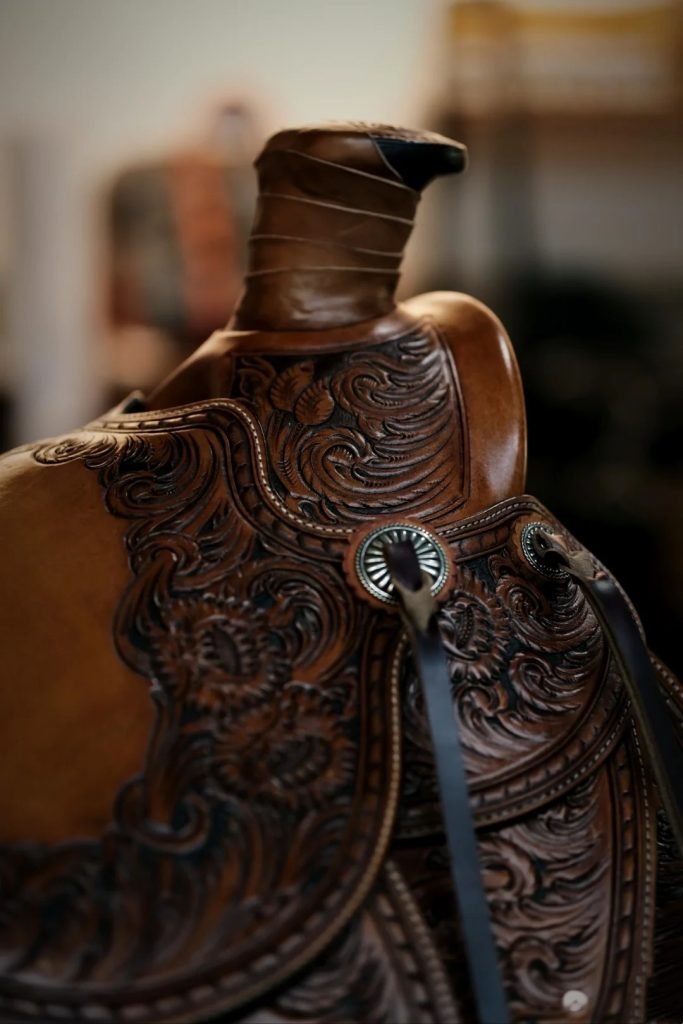
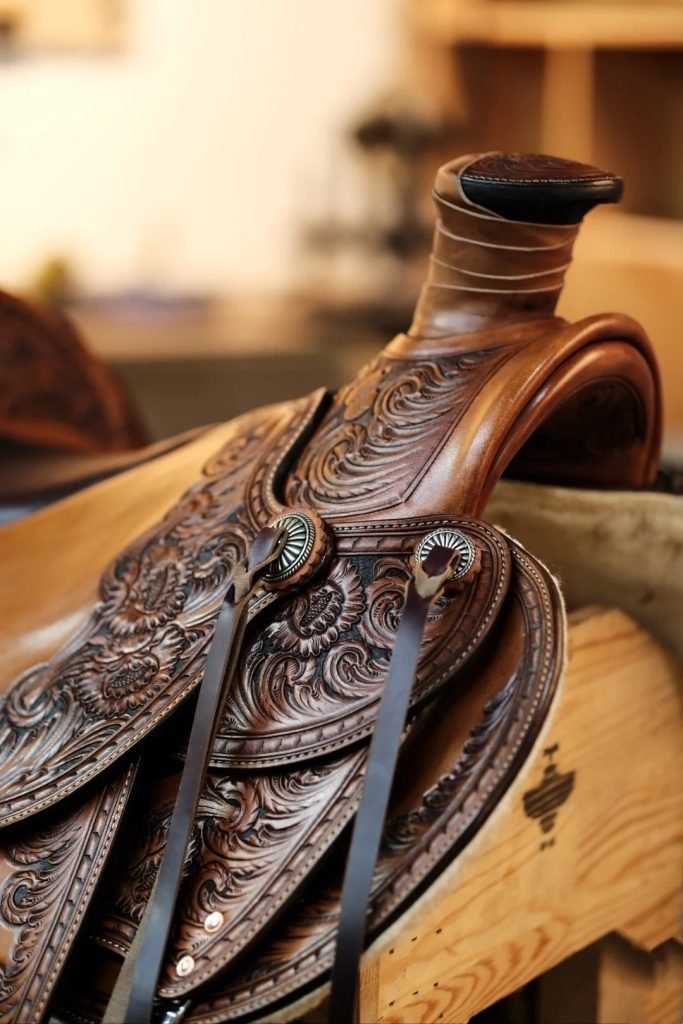
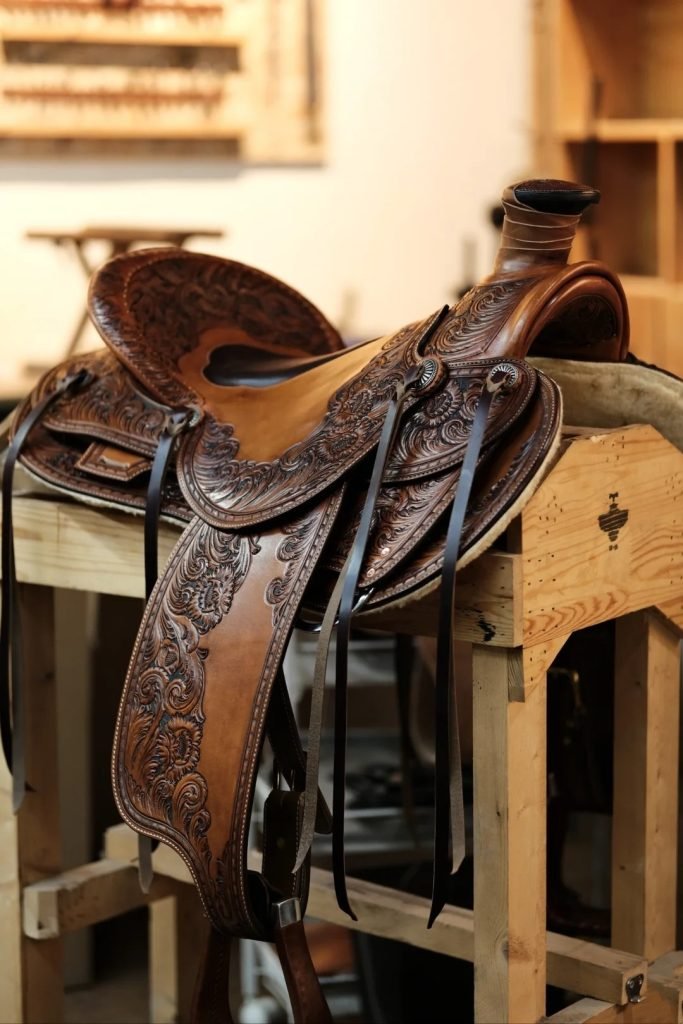
Western saddles are built for long hours of riding and are often used in ranch work and competitive Western events. These saddles are larger and more substantial, designed to distribute the rider’s weight over a larger area, which reduces the strain on the horse during extended periods of riding.
Roping Saddles
Features: Designed with a sturdy horn, reinforced tree, and a deep seat to handle the rigors of roping. The stirrups are positioned to provide balance and leverage.
Purpose: Essential for roping cattle, these saddles are built to withstand the stresses of catching and holding livestock. The reinforced horn allows the rider to secure the rope, while the deep seat provides the necessary stability.
Trail Saddles
Features: Lighter than other Western saddles, with a padded seat, multiple attachment points for gear, and often featuring a high cantle for added support.
Purpose: Designed for comfort on long rides, trail saddles prioritize the rider’s comfort and the horse’s ease over rough terrains. The design reduces rider fatigue, and the padded seat ensures a comfortable ride over hours.
Barrel Racing Saddles
Features: These saddles have a deep seat, high cantle, and short, rounded skirts. They are designed to be lightweight and allow for quick, sharp turns.
Purpose: Used in barrel racing, where agility and speed are crucial. The deep seat and high cantle help the rider stay secure while navigating tight turns at high speeds.
Specialty Saddles: Designed for Specific Activities
Specialty saddles are crafted for particular disciplines or unique riding styles, where the demands of the activity require specific features.
Endurance Saddles
Features: Lightweight with a cushioned seat, extended panels, and multiple D-rings for attaching gear. These saddles are designed to evenly distribute the rider’s weight and reduce pressure points on the horse’s back.
Purpose: Ideal for long-distance riding, endurance saddles ensure comfort for both the horse and rider over extended periods. They are built to prevent fatigue and discomfort during endurance events, where both the rider and horse cover long distances over various terrains.
Racing Saddles
Features: Extremely lightweight with a minimalistic design. The saddle has a flat seat and very short stirrup leathers to accommodate the jockey’s crouched position.
Purpose: Specifically for horse racing, where weight and balance are crucial. The design allows jockeys to maintain a low, aerodynamic profile, reducing wind resistance and enhancing speed.
Sidesaddles
Features: Unique design that allows the rider to sit with both legs on one side of the horse. It includes a secure pommel and a flat seat to accommodate this riding style.
Purpose: Traditionally used by women, sidesaddles are still used in specific equestrian events and exhibitions. They allow for a classical riding style that emphasizes elegance and grace while providing stability and security.
This detailed understanding of saddle types ensures that you can select the right saddle for your specific riding needs, whether for precision in English riding, durability in Western disciplines, or specialized activities requiring a unique saddle design. Each type of saddle is engineered to enhance the riding experience, providing comfort, control, and safety for both horse and rider.
Step-by-Step Guide to Proper Saddle Installation
Installing a saddle correctly on your horse is crucial for both horse comfort and rider safety. This section provides a detailed guide to ensure that your saddle is securely and properly placed on your horse.
Preparation Before Installing the Saddle
Checking Your Horse’s Condition
Before beginning the saddling process, it is essential to ensure that your horse is in a calm state and clean. Dirt, mud, or sweat can cause discomfort under the saddle, leading to potential skin irritations or sores. A quick brushing of the horse’s back and sides will remove any debris that might cause friction under the saddle.
Inspecting the Saddle and Equipment
Thoroughly inspect all your equipment before use. Check the saddle for any signs of wear or damage, particularly on the tree, straps, and stitching. Ensure that the girth or cinch, and saddle pad are in good condition and free from excessive wear. Any damaged components should be repaired or replaced to prevent accidents or discomfort.
Step-by-Step Installation Process
1. Placing the Saddle Pad
Start by placing the saddle pad or blanket on the horse’s back. Ensure that it is positioned evenly on both sides and is centered along the horse’s spine. The front of the pad should sit just in front of the withers, with no wrinkles or folds that could cause discomfort or chafing. It is essential that the pad covers the area where the saddle will rest, providing an even layer of protection.
2. Positioning the Saddle Correctly
Lift the saddle and gently place it onto the horse’s back, slightly ahead of the final position. Slide the saddle back until it naturally stops just behind the horse’s shoulder blades. This movement ensures that the horse’s coat lies flat under the saddle, reducing the risk of hair being pulled during riding. The saddle should sit level, with the pommel slightly higher than the cantle, ensuring an even distribution of the rider’s weight.
3. Securing the Girth or Cinch
Once the saddle is in place, attach the girth or cinch. Start by connecting the girth on the horse’s left side, then gradually tighten it on the right side. Make sure to adjust the tension evenly, allowing enough space to fit a flat hand between the girth and the horse’s body. Over-tightening can cause discomfort or restrict breathing, while a loose girth can lead to the saddle shifting during riding. After securing the girth, double-check for even tension and ensure the saddle is still in the correct position.
4. Adjusting Stirrups and Final Components
Adjust the stirrups to the appropriate length for the rider. The stirrups should be level, with the length set so that when the rider sits in the saddle, their knees are slightly bent. Finally, check all the straps, billets, and buckles for security. Before mounting, make sure everything is securely fastened and in good working order.
Common Mistakes to Avoid During Saddle Installation
- Incorrect Saddle Positioning: Placing the saddle too far forward can impede the horse’s shoulder movement, while placing it too far back can lead to uneven weight distribution and pressure points. Always ensure the saddle is positioned behind the shoulder blades and level.
- Over-Tightening the Girth: Tightening the girth too much can cause discomfort and restrict the horse’s breathing. It’s important to gradually tighten the girth, allowing the horse to adjust and checking for even tension.
- Neglecting to Check for Pressure Points: After securing the saddle, run your hands under the saddle and girth to check for any uneven pressure or areas where the saddle might be pinching the horse. Address any issues before riding to prevent soreness or injury.
Proper saddle installation is key to a safe and comfortable ride for both you and your horse. By following these steps carefully, you can ensure that your saddle is properly fitted and securely attached, minimizing the risk of injury and enhancing the overall riding experience.
Comprehensive Guide to Saddle Maintenance: Cleaning and Care Procedures
Maintaining your saddle properly is crucial to ensuring its longevity and functionality. Regular cleaning and care not only protect your investment but also ensure the comfort and safety of both rider and horse. This section provides detailed guidance on how to clean and care for your saddle, addressing both daily routines and more intensive maintenance tasks.
Daily Saddle Care and Maintenance
1. Daily Wiping and Cleaning
After each ride, it’s essential to wipe down your saddle with a damp cloth. This step removes sweat, dust, and dirt that can accumulate on the saddle, particularly on the leather. For leather saddles, this daily cleaning helps prevent the buildup of grime that can cause the leather to dry out or crack over time. For synthetic saddles, a quick wipe down helps maintain the material’s condition and appearance.
2. Regular Inspection for Damage
Daily inspection of your saddle is another critical maintenance routine. Pay close attention to areas prone to wear, such as the stitching, billets, and the leather’s surface. Look for signs of damage, including loose stitching, cracks in the leather, or fraying in the synthetic materials. Identifying and addressing these issues early can prevent them from developing into more significant problems that might require costly repairs.
Deep Cleaning and Conditioning of Saddles
1. Leather Saddle Care
- Cleaning: Begin by removing surface dirt with a soft brush or cloth. Apply a specialized leather cleaner using a sponge or soft cloth, working it into the leather with gentle circular motions. Be sure to cover the entire saddle, including less visible areas like under the flaps.
- Conditioning: After cleaning, apply a high-quality leather conditioner to keep the leather supple and moisturized. Use a small amount of conditioner and work it into the leather, allowing it to absorb fully. This step is crucial for preventing the leather from drying out and cracking.
- Protection: Finally, apply a leather protector or water repellent to shield the saddle from environmental factors like moisture or UV rays. This additional layer helps preserve the saddle’s finish and extend its lifespan.
2. Synthetic Saddle Care
- Cleaning: Synthetic saddles require different care techniques compared to leather saddles. Use mild soap and water to clean the surface, avoiding harsh chemicals that can damage the synthetic materials. A soft cloth or sponge should be used to wipe down the saddle thoroughly, ensuring all soap residue is removed to prevent discoloration or deterioration.
- Maintenance: Unlike leather, synthetic saddles don’t require conditioning, but it’s important to ensure they are stored properly to avoid exposure to extreme temperatures, which can cause the materials to warp or crack.
Proper Storage Techniques for Saddles
1. Ideal Storage Conditions
- Environment: Store your saddle in a cool, dry place, away from direct sunlight, which can cause the leather to fade and weaken over time. A saddle cover is recommended to protect the saddle from dust and accidental scratches while in storage.
- Saddle Stand: Always store your saddle on a proper saddle stand that supports its shape. Avoid placing heavy objects on top of the saddle, as this can cause the tree to deform.
2. Preventing Damage in Storage
- Mold Prevention: To avoid mold growth, ensure that the storage area has good air circulation and is free from excessive humidity. If you live in a humid climate, consider using a dehumidifier or moisture-absorbing products in your storage area.
- Leather Care: For leather saddles, occasional light conditioning during storage periods can prevent the leather from drying out, especially in dry climates. Regularly inspect the saddle even when not in use to catch any signs of mold or dryness early.
Saddle Repair and Restoration
1. Recognizing When to Repair
There are specific signs that indicate when your saddle needs professional attention. If the saddle tree is broken, the leather is severely torn, or the stitching is coming apart, it’s time to seek repair services. Continuing to use a damaged saddle can compromise the safety and comfort of both horse and rider.
2. Restoration Techniques for Older Saddles
Restoring an old saddle to its former condition requires careful attention to detail. Re-dyeing the leather can restore its original color, while re-padding can ensure it remains comfortable for the horse. Restoration might also include replacing worn billets, fixing or replacing damaged stirrup leathers, and even reinforcing or replacing parts of the tree.
Proper maintenance and care of your saddle will significantly extend its life and ensure that it remains safe and comfortable for use. By following these guidelines, you can protect your investment and ensure a better riding experience.
Conclusion
Selecting the right saddle and maintaining it properly is essential for both the rider’s comfort and the horse’s well-being. A well-fitted saddle not only ensures safety during rides but also extends the saddle’s lifespan. By regularly cleaning, inspecting, and properly storing your saddle, you can avoid common issues that lead to wear and tear, ultimately protecting your investment.
If you haven’t checked your saddle’s condition lately, now is the perfect time. Consider investing in a quality saddle or upgrading your current one if it’s showing signs of age. For the best results, seek professional fitting services to ensure your saddle is perfectly suited to both you and your horse. Your comfort, and your horse’s, are worth the extra care.